sales@hu-steel.com
 English
 Español
Typical manufacturing processes for carbon steel pipes for water supply include:
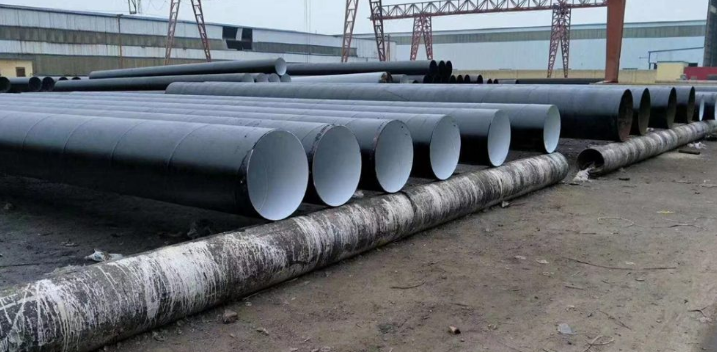
Heating carbon steel plates to a plastic state, then rolling them into a tubular shape and welding them (e.g., forming spiral welded steel pipes); then spraying or centrifugally casting an anti-corrosion coating on the inner and outer walls of the pipe; finally, cooling, curing, and necessary subsequent processing.
5. During transportation and storage, carbon steel pipes should be avoided from colliding or extruding with other items to avoid damaging the pipe surface.
Long-lasting Corrosion Resistance, Safe Water Delivery: High-Performance Carbon Steel Water Supply Pipe Solutions
Does your water supply pipeline face these challenges?
● Pipe corrosion leading to "yellow water" pollution.
● Insufficient pressure resistance, posing a risk of pipe bursts.
● Short service life, frequent replacements, and high overall costs.
● Poor reliability in complex environments (e.g., low temperatures, highly corrosive soil).
Hunan Standard Steel Co., Ltd (HSCO) specializes in producing carbon steel water supply pipes using advanced coating technology. These pipes combine superior strength with excellent corrosion resistance, helping municipal, industrial, and agricultural water supply projects reduce costs and increase efficiency.
Why Choose Our Carbon Steel Water Supply Pipes?
1. Superior Corrosion Resistance: HSCO's water supply pipes are manufactured in strict accordance with the technical standards for internal and external coatings (e.g., epoxy resin/cement mortar) required by pipeline corrosion protection specifications: coating thickness and adhesion requirements. Relevant sanitary permits can be provided to ensure water purity (e.g., drinking water contact material certification).
2. Strong Structural Performance: HSCO's carbon steel water supply pipes possess high pressure resistance and deformation resistance, making them suitable for long-distance, high-drop water transportation. Pressure rating and specification range data sheets are available.
3. Long Service Life and Economic Benefits: Compared to other materials (such as some plastic pipes and uncoated steel pipes), corrosion-resistant carbon steel water supply pipes offer advantages in terms of low maintenance costs and economical total cost of ownership.
4. Convenient Construction Adaptability: Carbon steel pipes offer various connection methods (pipe welding, flange connection), facilitating convenient construction and high installation efficiency, and can handle various complex terrains.
Carbon Steel Water Supply Pipe Product Specifications and Selection Guide:
HSCO offers two main product categories to meet different working conditions and budget requirements:
a. Epoxy Coating Series
The inner wall is coated with high-performance epoxy resin powder, and the outer wall is coated with epoxy coal tar pitch or double-layer fusion-bonded epoxy (FBE). High corrosion resistance, low hydraulic friction, and excellent water quality assurance.
Recommended application scenarios: Municipal main water supply networks, high-quality industrial high-pressure water, direct drinking water projects with strict water quality requirements, and highly corrosive soil environments.
b. Cement Mortar Lining Series
The inner wall is a centrifugally cast cement mortar layer, with external anti-corrosion treatment (such as epoxy coal tar). Economical and practical, with good inner wall stability, it can maintain the pipeline's water delivery capacity for a long time.
Recommended application scenarios: Large-diameter water transmission and distribution pipelines, raw water transportation in large water plants, circulating water systems, long-distance agricultural irrigation main pipelines, and projects prioritizing cost-effectiveness.
1. Common Specifications for Carbon Steel Water Pipe
Material: American standard ASTM A53 Gr.B, A106 Gr.B, etc., or Chinese standard carbon structural steel such as Q235B, Q355B, etc., are provided upon request.
Manufacturing process: Spiral submerged arc welded steel pipe (SSAW), straight seam resistance welded steel pipe (ERW), or straight seam submerged arc welded steel pipe (LSAW).
Diameter range (DN): Φ219mm - Φ3620mm (non-standard customization available).
Wall thickness range: 6mm - 25mm, determined based on design pressure calculations.
Single length: Typically 6m, 9m, 12m, customizable according to transportation and construction conditions.
2. Water Supply Steel Pipe Coating Requirements
|
Coating Type |
Internal Coating Standard and Thickness |
External Coating Standard and Thickness |
Reference Standards |
|
Epoxy Resin Internal Coating |
Liquid Epoxy/Epoxy Powder, ≥250μm |
Double-Layer FBE/Epoxy Coal Tar, ≥400μm |
AWWA C210, GB/T 18593 |
|
Cement Mortar Lining |
Thickness: 6-12mm (depending on pipe diameter) |
Epoxy Coal Tar/Thick-Layer Epoxy, ≥300μm |
AWWA C205, GB/T 17456 |
|
External Corrosion Protection Reinforced Grade |
- |
Three-Layer PE (3PE) Corrosion Protection, Total Thickness ≥2.5mm |
DIN 30670, GB/T 23257 |
In short, carbon steel pipe for water supply is a pipe material with economical, reliable, excellent performance, easy to install and maintain, and is widely used in tap water supply, industrial production, agricultural irrigation and other fields. During use, attention needs to be paid to the safety and normal operation of the pipelines, and regular maintenance and upkeep is required to ensure the cleanliness of the water quality and the service life of the pipelines.
We understand that every project is unique. The above guidelines are for general reference. The most reliable selection comes from direct communication with you: info@hu-steel.com. Choosing us is not just choosing a product, but also choosing a reliable technical partnership.
Read more: ANSI/AWWA C200 Steel Water Pipe or Packaging Methods of Anti-corrosion Spiral Steel Pipes
Related information
Copyright @2017 Hunan Standard Steel Co.,Ltd and Husteel Industry Group All Rights Reserved