What are Coated Carbon Steel Pipes?
Coated carbon steel pipes refer to
carbon steel pipes (CS pipe) with one or more protective coatings applied to their surface (inner wall, outer wall, or both) through a coating process. This coating can be metallic, non-metallic, or a composite material, designed to enhance the pipe's original properties, such as corrosion resistance, wear resistance, and high-temperature oxidation resistance. Carbon steel pipes themselves possess high strength and rigidity, and the addition of a coating makes them even more adaptable to complex and changing industrial environments.
Why Coat Carbon Steel Pipes?
Carbon steel is highly susceptible to corrosion and rust in humid, acidic, and alkaline environments. Direct use can lead to the following problems:
1. Pipe Corrosion and Perforation: This can cause pipe leaks, bursts, water supply interruptions, and safety accidents.
2. Yellow Water Pollution: Rust on the inner wall of the carbon steel pipe and the leaching of heavy metals lead to water pollution, threatening public health and safety.
3. Reduced water transport capacity: Scale and rust buildup on the inner wall of carbon steel pipes increases resistance and energy consumption.
4. Significantly shortened lifespan: Unprotected buried steel pipes are highly susceptible to corrosion and may need replacement within a few years.
Types and Functions of Coated Carbon Steel Pipes:
1) Classification by Coating Location
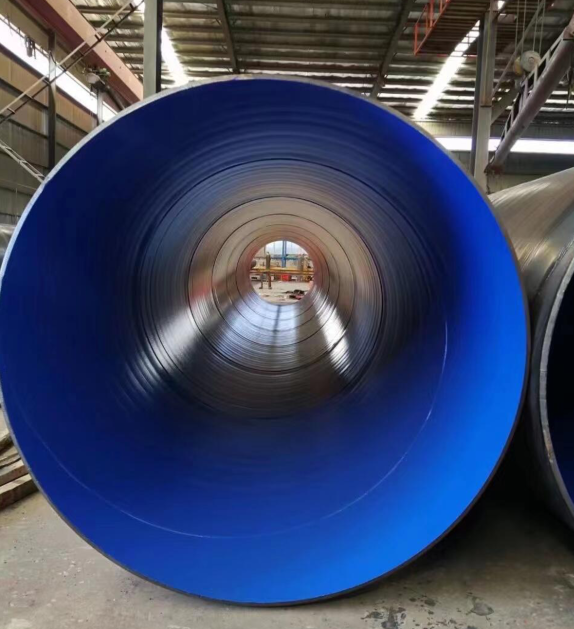
a. Inner coating: Prevents corrosion of the inner pipe wall, protects water quality, reduces fluid resistance, and prevents scale buildup.
Application: Internal coating for pipelines transporting various media such as water, oil, and gas.
b. Outer coating: Prevents corrosion of the outer pipe wall caused by soil, atmosphere, moisture, chemicals, etc.
Application: Buried pipelines, submarine pipelines, and pipelines exposed to the atmosphere or humid environments.
c. Inner and outer coating: Provides comprehensive double protection.
Application: Critical projects with extremely high corrosion resistance requirements, such as important water and oil pipelines traversing corrosive terrain.
2. Classification by Coating Material and Structure
1) Main types of external coatings
3PE Coating: Three-layer polyethylene/polypropylene (bottom epoxy powder + intermediate adhesive layer + top polyolefin layer). 3PE anti-corrosion steel pipes offer the best overall performance, combining the adhesion and corrosion resistance of epoxy with the mechanical strength and impact resistance of polyolefin, making it the preferred standard for buried pipelines. Suitable for long-distance buried water, oil, and gas pipelines, especially in harsh environments.
FBE Coating: Fusion-bonded epoxy powder, characterized by extremely strong adhesion, excellent corrosion resistance, and resistance to cathodic disbondment, but with relatively weak resistance to mechanical damage. Suitable for applications with high operating temperatures (up to 100℃ or higher), or as a base layer for 3PE.
2FBE Coating: Double-layer fusion-bonded epoxy, characterized by adding a toughened epoxy top layer on top of standard FBE, significantly improving impact and scratch resistance. Suitable for environments requiring stronger mechanical protection, such as directional drilling crossings and rocky areas.
Coal tar pitch/epoxy coal tar pitch: A traditional anti-corrosion material, characterized by low cost and simple construction, but with poor environmental performance and mediocre performance, gradually being replaced. Suitable for some minor pipelines or repair projects with low performance requirements.
Polyethylene adhesive tape: Cold-applied tape. Advantages include convenient on-site construction, but overall integrity, sealing, and long-term reliability are generally lower than factory-prefabricated coatings. Commonly used for on-site patching, repairs, or some projects with low requirements.
2) Main types of internal coatings
Liquid epoxy coating: Solvent-free or solvent-based liquid epoxy resin, sprayed or brushed. Characterized by good adhesion, corrosion resistance, smooth surface for drag reduction, and high hygiene level, commonly used in drinking water pipes, food industry pipelines, and chemical fluid pipelines.
Epoxy powder coating: Similar to FBE, formed by electrostatic spraying and fusion bonding. Advantages include dense, non-porous, uniform thickness, and good overall protective performance, commonly used in
oil well pipes, water pipes, and chemical pipes.
Cement mortar lining: A cement mortar layer is formed by centrifugal casting inside the pipe. Its advantages include economic cost, corrosion resistance, long-term water delivery capacity, and a stabilizing effect on water quality. It is commonly used in large-diameter municipal water supply and distribution pipes, raw water pipelines, and circulating water pipelines.
Polyurethane/Polyurea Coating: A high-performance elastomer coating. This coating has excellent wear resistance, impact resistance, and flexibility, and is often used in slurry conveying pipes and under severe wear conditions.
Ceramic/Glass Lining: An inorganic coating with extremely high hardness. This coating has extremely high wear resistance, high temperature resistance, and corrosion resistance, suitable for power plant ash removal pipes and the transportation of highly corrosive chemical media.
3. Classification by Special Functions
a. Anti-corrosion Coating: Primarily used to resist corrosive media in the external environment, such as acids, alkalis, and salts. This type of coating usually uses materials with strong corrosion resistance, such as epoxy resin and polyurethane.
b. Wear-resistant Coating: Forms a hard protective layer on the surface of carbon steel pipes to improve their wear resistance, such as polyurethane, ceramic, and ultra-high molecular weight polyethylene coatings. These types of coatings are commonly used in applications requiring high friction or impact, such as pipelines transporting abrasive materials like ores, slurries, and coal.
c. High-Temperature Coatings: These resist high-temperature oxidation and corrosion, maintaining the stability and service life of the pipe material in high-temperature environments. These coatings often use high-temperature resistant materials, such as ceramics, special FBE, and metal oxides, and are used in pipelines transporting high-temperature media (such as steam and hot oil).
d. Sanitary Coatings: Inner coatings that meet drinking water standards such as NSF 61 and GB 5749 (e.g., liquid epoxy with specific formulations).
e. Thermal Insulation Composite Coatings: An insulation layer, such as polyurethane foam, is added over the anti-corrosion coating; used in centralized heating and chilled water pipes.
4. Classification by Curing/Molding Process
Factory Prefabricated Coatings: Produced in a controlled workshop environment (e.g., 3PE, FBE, centrifugally cast cement linings), offering stable and reliable quality, and are the mainstream choice.
On-site coating: Coating is applied on-site after pipeline installation (e.g., some liquid epoxy, tape). Quality is greatly affected by the environment and is mostly used for patching, repair, or specific situations.
Applications of Coated Carbon Steel Pipes:
1) Municipal and public water supply systems: This is the largest and most demanding application area for coated carbon steel pipes. It ensures water quality safety and reliable delivery throughout the entire process from source to tap, preventing secondary pollution caused by pipeline corrosion.
2) Petrochemical industry: In the petrochemical industry, coated carbon steel pipes are widely used in pipeline systems transporting corrosive media, high-temperature media, and those subjected to high pressure.
3) Construction industry: Used for constructing structural supports for buildings, water supply and drainage systems, and heating and cooling pipeline networks. The coating allows the pipes to better adapt to environmental changes both inside and outside buildings.
4) Power industry: In the power industry, coated carbon steel pipes are used to manufacture components for high-temperature equipment such as
boilers and heat exchangers, as well as pipelines transporting high-temperature steam or cooling water.
5) Industrial processes and chemical industry: Resistant to harsh chemical and physical environments, ensuring continuous production and reducing downtime for maintenance.
6) Water conservancy and agricultural irrigation: Economical and durable, adaptable to outdoor environments, significantly reducing water transport losses and improving water resource utilization.
Read more: Carbon Steel Pipe for Water Supply or AWWA C200 Steel Water Pipe
 sales@hu-steel.com
 English
 Español