sales@hu-steel.com
 English
 Español
Standardized Packaging Methods for Anti-corrosion Spiral Steel Pipes (SSAW):
1. Basic Requirements for Packaging and Bundling
Anti-corrosion spiral steel pipes should be packaged in bundles. The weight, number of pipes, and length of each bundle shall be agreed upon in the purchase and sale contract. Bundling should use steel straps of sufficient strength (usually 19mm or 32mm wide), evenly arranged in at least three layers along the length of the steel pipe (increase according to pipe diameter and single bundle weight), and secured with special locking buckles to ensure they do not loosen during hoisting and transportation. The maximum external dimensions of each bundle of steel pipes must take into account the loading limitations of the transport vehicle.
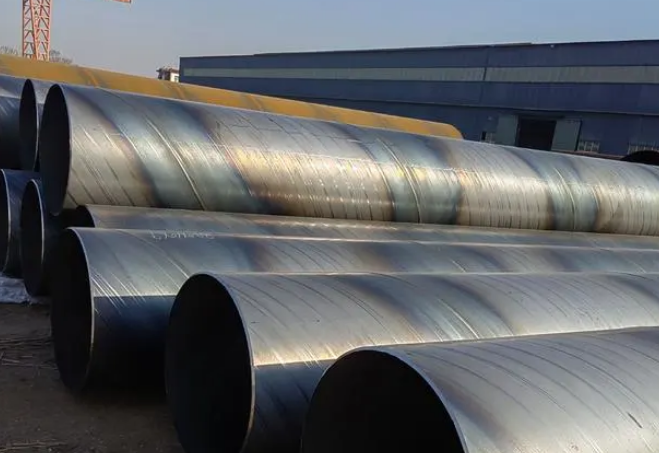
Packaging must ensure that the anti-corrosion spiral steel pipes do not loosen, deform, have their anti-corrosion layer damaged, or rusted during normal loading, unloading, transportation, and storage.
3. Packaging Responsibility Agreement
If the buyer has special requirements for the packaging method (such as bundle weight, protective materials, markings, etc.), these should be clearly stated in the contract or technical agreement; if not specified, the supplier may follow industry-standard practices.
4. Regulatory and Environmental Compliance
All packaging materials (such as wooden pallets and padding) must comply with national environmental protection and import/export quarantine regulations (e.g., wooden packaging must comply with ISPM15 international fumigation standards). Packaging design should avoid waste and minimize environmental impact.
5. Anti-corrosion Layer and Pipe End Protection
To protect the external anti-corrosion layer and pipe ends of steel pipes, the following measures should be taken:
● Pipe End Protection: Install plastic or steel pipe caps to prevent bevel damage and foreign object ingress.
● Anti-corrosion Layer Protection: Use specialized padding materials (such as corrugated cardboard, rubber sheets, PE foam strips) to isolate the steel pipe at the contact points between the steel strapping and the pipe, and between layers of steel pipe, to prevent abrasion and crushing. Traditional materials such as straw rope and fiber cloth are not recommended for use in critical projects due to their poor protective effect and susceptibility to contamination.
6. Protection for Special Pipe Types
● Threaded Pipes: The pipe threads must be fitted with matching thread protectors (metric or imperial), and an appropriate amount of anti-rust grease or thread grease should be applied to the threaded areas.
● Large-diameter thin-walled pipes (easily deformable): To prevent elliptical deformation, temporary internal support frames (such as crosses) can be added inside the pipe, or a reinforcing frame can be installed outside the pipe. An insulating gasket should be added between the support frame and the inner wall of the pipe to prevent electrochemical corrosion.
7. Container Loading Protection
When using container transport, the following measures should be taken:
● Moisture and condensation prevention: Before loading, the inner wall of the container should be checked for dryness and the absence of sharp protrusions. Waterproof plastic sheeting or rust-proof paper can be placed over the steel pipe bundles to isolate condensation from the top.
● Securing and impact protection: The steel pipe bundles should be secured to fixed points inside the container using ropes or additional strapping to prevent displacement and collision during transport. Welding of any kind is strictly prohibited on corrosion-resistant steel pipes.
● Bottom padding: Dry wooden pads or anti-slip material should be laid on the bottom of the container.
8. Packaging Labels
Each bundle of steel pipes shall be affixed with no fewer than two sturdy, waterproof labels, clearly indicating: specifications (outer diameter × wall thickness), material, length, corrosion resistance grade, applicable standards, bundle weight, production batch number, and manufacturer information.
Go here to learn more about " ERW Carbon steel pipe vs. Spiral pipe"
Related information
Copyright @2017 Hunan Standard Steel Co.,Ltd and Husteel Industry Group All Rights Reserved