sales@hu-steel.com
 English
 Español
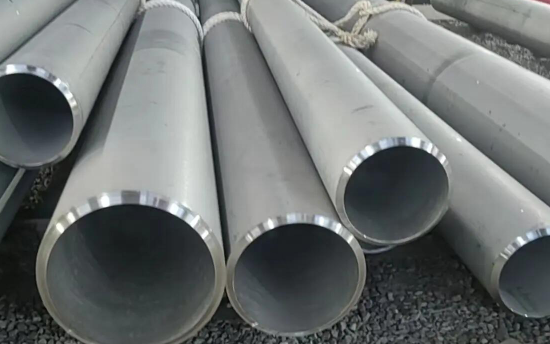
The corrosion resistance of stainless steel seamless pipes depends on the alloying elements. Chromium (Cr) is the key element—when content reaches about 12%, it forms a thin, passive oxide film on the steel surface that prevents further corrosion. Other common alloying elements include nickel (Ni), molybdenum (Mo), titanium (Ti), niobium (Nb), copper (Cu), and nitrogen (N), each added to meet specific structural and performance requirements.
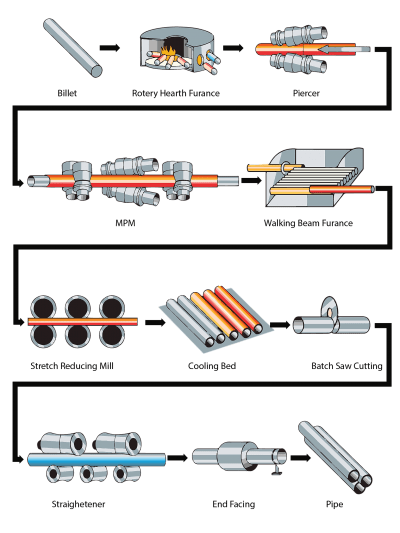
The diagram below illustrates the key stages in the typical hot rolling production line for stainless steel seamless pipes.
Billet → Rotary Hearth Furnace → Piercer → MPM → Walking Beam Furnace → Stretch Reducing Mill → Cooling Bed → Batch Saw Cutting → Straightener → End Facing → (Hydrostatic Test / Inspection) → Pipe
1. Hot Rolling
Hot rolling is the primary method for producing seamless pipes. The process begins with solid round billets, which are inspected, cut to length, and centered. After heating in a rotary hearth furnace, the billet is pierced to form a hollow shell (gross pipe). This shell is then rolled in a multi-stand pipe mill (such as MPM) to reduce wall thickness and increase length. After reheating in a walking beam furnace, the pipe passes through a stretch reducing mill to achieve final dimensions, then cools on a cooling bed. Finally, it is cut, straightened, end-faced, and inspected. More advanced methods use continuous rolling mills for higher efficiency.
2. Cold Rolling and Cold Drawing
For pipes requiring smaller diameters, thinner walls, or better surface quality, cold rolling or cold drawing is employed. Cold rolling uses a two-roll mill with an annular pass to achieve precise dimensions and improved surface finish. Cold drawing, performed on a draw bench (0.5-100T capacity), further refines the pipe's size and surface. These methods are often combined with hot rolling for optimal results.
3. Extrusion
The extrusion method involves heating the billet and pushing it through a die in a closed extrusion cylinder. This process is particularly suitable for producing smaller diameter pipes and certain specialized alloys.
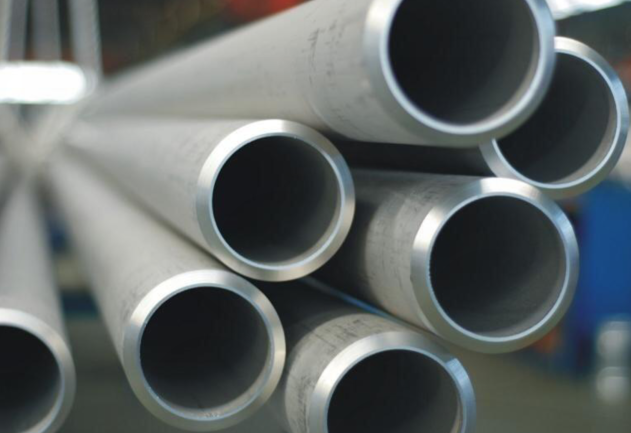
The fundamental difference lies in the starting material and forming method:
To ensure reliability, stainless steel seamless pipes undergo rigorous testing, including:
The most commonly used materials for stainless steel seamless pipes are 304 stainless steel and 316 stainless steel, offering excellent corrosion resistance for a wide range of applications.
Q1: Why is seamless pipe more expensive than welded pipe?
A: The seamless manufacturing process (piercing and rolling solid billets) is more complex, energy-intensive, and has lower production efficiency compared to the continuous coil forming and welding process for welded pipes. This results in higher material and production costs.
Q2: Which manufacturing method is stronger, seamless or welded?
A: In general, seamless pipes offer superior strength and pressure resistance due to their uniform, weld-free structure. However, high-quality welded pipes that have undergone proper heat treatment and testing can also provide excellent strength for a wide range of applications.
Q3: Can seamless pipes be used for all applications?
A: While seamless pipes are highly versatile and ideal for demanding conditions (high pressure, high temperature, corrosive media), they are often over-specified and too expensive for general, low-pressure applications. Welded pipes are a more cost-effective solution for those scenarios.
HSCO Steel supplies high-quality stainless steel seamless pipes in various grades and sizes. For technical support or a quick quote, contact us at sales@hu-steel.com.
Related Resources:
● Schedule 40 Stainless Steel Pipe Dimensions
● Seamless Steel Pipe Sizes and Weights
● Stainless Steel Pipes: Seamless or Welded?
● 304 vs. 316 Stainless Steel: Which is Better?
● Carbon steel tube vs Stainless steel tube
Related information
Copyright @2017 Hunan Standard Steel Co.,Ltd and Husteel Industry Group All Rights Reserved