sales@hu-steel.com
 English
 Español
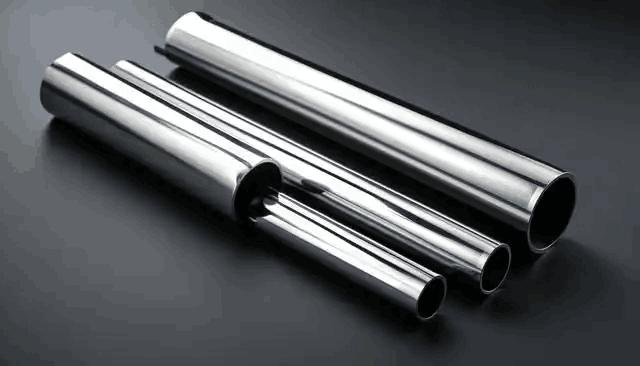
Hunan Standard Steel Co., Ltd (HSCO) has been in the stainless steel pipe industry for many years and supplies both types. Below, we'll discuss how to choose from a practical application perspective.
|
Feature |
Seamless Pipe |
Welded Pipe (ERW/EFW) |
|
Manufacturing Process |
Pierced from solid round billet and cold drawn/rolled (no weld seam) |
Formed from stainless steel coil and welded longitudinally (has a weld seam) |
|
Strength & Pressure Resistance |
Excellent; uniform wall thickness, strong pressure resistance |
Good; weld seam strength can approach base material with proper treatment |
|
Corrosion Resistance |
Consistent throughout; no weld-related risk |
Depends on weld quality; properly treated welds resist corrosion well |
|
Cost |
Higher (complex process) |
Lower (simpler, high-volume process) |
|
Size Range |
Limited; small-diameter, thin-walled pipes are difficult to produce |
Highly flexible; large-diameter, thin-walled pipes are feasible |
|
Typical Applications |
High-pressure, high-temperature, or highly corrosive environments (petrochemical, boiler, hydraulic systems) |
General industrial transport, food machinery, sanitary piping, building decoration, moderate pressure/temperature |
△ For an in-depth technical breakdown of the 6 key differences between ERW and seamless stainless steel pipes—covering raw materials, manufacturing, mechanical properties, and cost—see our detailed comparison: ERW vs Seamless Stainless Steel Pipe.
The selection logic is straightforward: consider the working pressure and the nature of the medium.
Choose Seamless Pipes when:
● Working pressure is high (e.g., > 10 MPa)
● Operating temperature is extreme (high or low)
● Medium is highly corrosive or requires absolute purity
● Application involves critical safety systems (e.g., boilers, pressure vessels)
Choose Welded Pipes when:
● Working pressure is low to moderate (≤ 10 MPa)
● Application involves general fluid transport (water, air, non-corrosive media)
● Project requires large diameters or thin walls
● Cost-effectiveness is a primary concern
● Application is structural or decorative (non-pressure bearing)
Key Point for Welded Pipes: The critical factor is weld seam quality. High-quality welded pipes have weld seams that are treated internally and externally, with strength approaching that of the base material. Inferior welded pipes have weak seams prone to cracking under stress or corrosion. Always source welded pipes from reputable manufacturers who perform solution annealing and non-destructive testing.
HSCO Steel supplies both types of pipes; both 304/316 seamless and welded pipes are in regular stock. For customers requiring sanitary grade pipes (inner wall Ra≤0.4μm), we can provide welded pipes with bright inner and outer walls, commonly used in the food, beverage, and pharmaceutical industries.
A common question is whether to choose 304 or 316 stainless steel. The choice depends on the environment and application.
- Projects with high lifespan requirements and where maintenance is undesirable
△ For a more detailed comparison covering chemical composition, corrosion resistance, and temperature performance, see our in-depth guide: 304 vs. 316 Stainless Steel: What's the Difference?
Many believe 316 is significantly harder and stronger than 304. This is incorrect. Both are austenitic stainless steels, are non-magnetic at room temperature, and have comparable hardness and strength. While 316 has slightly higher tensile and yield strength, the difference is negligible in most practical applications. If hardness is your primary requirement, choosing 316 over 304 is unnecessary and not cost-effective.
A critical reminder for pipe procurement: always verify the actual wall thickness. Some suppliers market pipes with nominal wall thickness (e.g., 3 mm), but the actual measured thickness may be only 2.7 mm or less. Thinner walls will compromise pressure calculations and system safety. For engineering applications, always measure the actual wall thickness, not just the nominal specification.
If you're still unsure, no problem! Just contact HSCO Steel for consultation: info@hu-steel.com. We can help you determine exactly what material is needed for your application and help you calculate the costs, ensuring you don't waste money or run into problems due to insufficient materials.
Related resources:
● 304 vs 304L Stainless Steel Pipe
● Seamless Stainless Steel Pipe Manufacturing Process
Related information
Copyright @2017 Hunan Standard Steel Co.,Ltd and Husteel Industry Group All Rights Reserved