sales@hu-steel.com
 English
 Español
If you've worked with oil and gas wells, you've likely come across the term "API 5CT" on product specifications, procurement documents, and technical data sheets. But what exactly is it?
API 5CT is the primary industry standard that governs the manufacture, testing, and certification of casing and tubing used in oil and gas wells – the steel pipes that form the structural backbone of every wellbore. Published by the American Petroleum Institute (API), this standard ensures that tubular products are safe, reliable, and interchangeable across different manufacturers and regions worldwide.
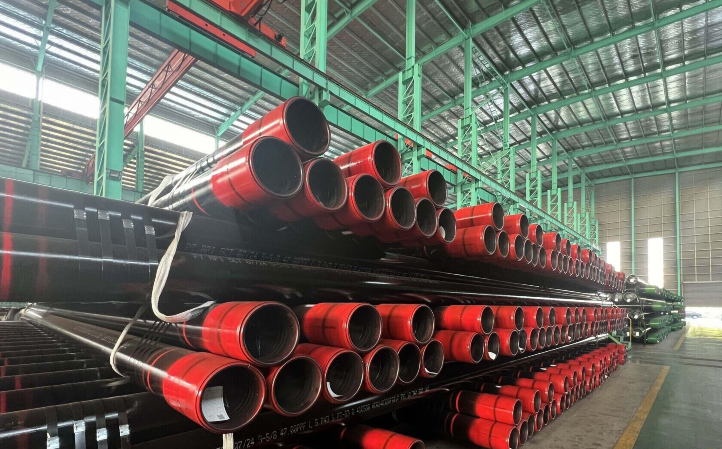
API 5CT covers the key components of the well tubular system. Its scope is not limited to a single product type, but regulates a complete downhole structural system.
● Casing
Casing pipe forms the primary structural backbone of the wellbore. After drilling is completed, casing is run into the well and cemented in place to isolate formations, support the wellbore wall, and prevent collapse. Its key performance requirements include external collapse resistance (to withstand formation pressure), internal pressure resistance (to contain fluid pressure), and corrosion resistance (for environments containing H₂S or CO₂). Different steel grades (such as J55, N80, and P110) essentially correspond to different responses to varying well depths and loading conditions.
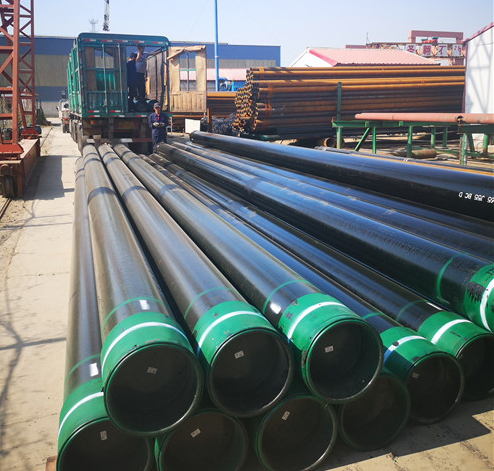
- Pup joints (used for length adjustment)
- Coupling stock
- Special connection accessories
These components are used for length adjustment and structural adaptation, and are an inseparable part of the tubular string system.
| Specification Level | Key Requirements | Typical Application |
|---|---|---|
| PSL 1 | Minimum requirements; basic mechanical property verification; no mandatory full-scale NDT | Relatively stable operating conditions where failure consequences are manageable |
| PSL 2 | Stricter quality control; tighter chemical composition limits; improved mechanical property consistency; mandatory supplementary NDT | Projects requiring higher reliability, such as medium-depth wells or complex geological conditions |
| PSL 3 | Highest specification level; strictest material performance, inspection, and traceability requirements | Extreme service conditions: high pressure, high temperature, sour service (H₂S), deepwater operations, and other high-risk applications |
The differences between PSL levels mainly lie in three aspects: inspection scope, consistency control, and traceability requirements.
API 5CT grades are classified by their minimum yield strength — the number in the grade designation (e.g., the "80" in N80) represents the minimum yield strength in 1,000 psi.
| Grade | Min. Yield (psi) | Typical Well Depth | Typical Pressure | Typical Application | Sour Service Suitability |
|---|---|---|---|---|---|
| J55 | 55,000 | < 2,000 m | Low | Shallow wells, cost-driven | Not recommended |
| K55 | 55,000 | < 2,000 m | Low | Similar to J55; buffer option | Not recommended |
| N80 | 80,000 | 2,000 – 4,000 m | Medium | Medium-depth wells | Requires treatment |
| L80 | 80,000 | 2,500 – 4,500 m | Medium | Sour service (H₂S) | Suitable |
| P110 | 110,000 | 4,000 – 6,000 m | High | Deep, high-pressure (HPHT) wells | Not recommended |
| Q125 | 125,000 | > 5,000 m | Ultra-high | Ultra-deep, extreme wells | Requires evaluation |
(1) J55 and K55
J55 and K55 are generally regarded as entry-level steel grades. They offer cost efficiency and stable manufacturability, making them suitable for large-volume applications where high strength is not critical. K55 offers similar performance to J55 but is often used as an alternative based on supply availability or design margins. ▶[For a detailed comparison, see our J55 vs K55 comparison guide.)
(2) N80
N80 is widely used in medium-depth wells or applications requiring higher strength performance, particularly where increasing depth and formation pressure exceed the limits of J55/K55. N80 is further classified into N80-1 (as-rolled condition) and N80Q (quenched and tempered), with N80Q generally demonstrating better performance and stability.
N80 is further classified into N80-1 (as-rolled condition) and N80Q (quenched and tempered). This distinction reflects differences in heat treatment and performance stability rather than chemical composition. N80Q generally demonstrates better performance in sour service environments compared to N80-1. ▶ Engineers often compare N80-1 and N80Q when selecting grades for medium-depth wells: [N80-1 vs N80Q Comparison Guide].
(3) L80
L80 is specifically designed for sour service environments containing H₂S. It has stricter requirements for resistance to sulfide stress cracking (SSC) and controlled hardness (≤23.0 HRC). In deep well and sour gas field projects, L80 is often selected as a safety-oriented grade.
(4) P110
P110 is used in high-pressure and deep well applications where operating conditions approach design limits. With increased strength requirements, manufacturing processes, heat treatment control, and inspection standards become significantly more demanding. ▶ [Learn more about API 5CT P110 Casing Pipe]
In field failure cases, connection failures occur more frequently than pipe body failures. The connection is often the weakest point in the entire tubular string system. While API 5CT defines requirements for the pipe body, thread dimensions and tolerances are governed by API 5B.
Casing connections are typically categorized into:
| Connection Type | Description | Application |
|---|---|---|
|
SC (Short Round Thread Casing) |
Standard round threads | Conventional applications |
|
LC (Long Round Thread Casing) |
Extended thread length | Higher axial load conditions |
|
BC (Buttress Thread Casing) |
Square-shaped threads | Highest axial load capacity |
Tubing connections include NU (Non-upset), EU (External Upset), and IJ (Integral Joint) types. Selection generally involves trade-offs between connection strength and space limitations. EU provides higher connection strength, but its larger outer diameter may become a constraint in restricted wellbore conditions.
API 5CT specifies standardized outer diameters ranging from 4-1/2″ (114.3 mm) up to 20″ (508 mm) for casing. For each diameter, multiple wall thickness options are available, identified by nominal weight in pounds per foot (lb/ft). Tubing typically has smaller diameters, generally 4-1/2″ or less. ▶ Refer to our OCTG casing size chart for complete dimensions and weight data.
Length specifications are divided into three ranges:
| Length Range | Casing | Tubing |
|---|---|---|
| R1 | 4.88 – 7.62 m | 6.10 – 7.32 m |
| R2 | 7.62 – 10.36 m | 8.53 – 9.75 m |
| R3 | 10.36 – 14.63 m | — |
In international projects, API 5CT is not the only applicable standard. ISO 11960 is also widely adopted in many regions. While the two standards are largely aligned in terms of core technical requirements, differences exist in details such as testing requirements, documentation systems, and the expression of certain performance criteria. For cross-border projects, these differences can sometimes directly affect procurement and acceptance procedures.
API 5CT continues to evolve with industry needs. The 11th edition, published in December 2023 with an addendum released in May 2025, introduced significant updates including:
● High collapse products with enhanced performance ratings
● New pipe grade C125 for demanding applications
● New grade L80 3Cr, specifically designed for mildly corrosive downhole environments
● Streamlined PSL levels better aligned with market preferences
● Advanced automated inspection techniques for enhanced flaw detection
● End sizing and thermal recovery requirements
● Simplified Charpy impact energy provisions for thick-walled pipes
● Enhanced thread protector quality for transport protection
These updates reinforce the role of casing and tubing as primary and secondary barriers that maintain wellbore integrity and contain hydrocarbons within the intended flow path during both well construction and production operations.
When specifying or procuring API 5CT products, consider these key points:
1. Match grade to well conditions — Deeper, higher-pressure wells require higher steel grades. Sour service demands L80, C90, or T95 grades.
2. Understand the PSL difference — PSL-2 or PSL-3 may be required for critical or complex wells, not just PSL-1.
3. Pay attention to connections — Connection selection is as important as pipe body grade. Ensure threads are compatible with API 5B requirements.
4. Verify certification — API monogram on products indicates independent audit and conformity verification.
5. Check for the latest edition — API standards are periodically updated. Always reference the most current edition for compliance.
▶ For a detailed breakdown of common casing sizes and their applications, refer to our drilling casing specifications and dimensions guide.
The following tables provide reference data for common API 5CT steel grades. For a more detailed mechanical properties and chemical composition table, refer to our ▶ [API 5CT Data Sheet – Casing & Tubing Properties and Tolerances].
The following tables provide reference data for the most commonly used API 5CT steel grades. These values are for preliminary screening only — final design calculations must consider wall thickness, loading conditions, and applicable safety factors.
Mechanical Properties (Typical Ranges):
| Grade | Yield Strength (MPa) | Tensile Strength (MPa) | Hardness (HRC max) |
|---|---|---|---|
| J55 | 379 – 552 | ≥ 517 | — |
| K55 | 379 – 552 | ≥ 655 | — |
| N80 | 552 – 758 | ≥ 689 | — |
| N80Q | 552 – 758 | ≥ 689 | — |
| L80 | 552 – 655 | ≥ 655 | ≤ 23.0 |
| P110 | 758 – 965 | ≥ 862 | — |
| Grade | C (%) | Mn (%) | P (max) | S (max) | Cr (%) | Mo (%) | Notes |
|---|---|---|---|---|---|---|---|
| J55 / K55 | 0.34 – 0.39 | 1.25 – 1.50 | 0.020 | 0.015 | ≤ 0.15 | — | Basic carbon-manganese steel |
| N80 | 0.34 – 0.38 | 1.45 – 1.70 | 0.020 | 0.015 | ≤ 0.15 | — | Vanadium microalloyed |
| L80 (13Cr) | 0.15 – 0.22 | 0.25 – 1.00 | 0.020 | 0.010 | 12.0 – 14.0 | — | Martensitic stainless steel for sour service |
| P110 | 0.26 – 0.35 | 0.40 – 0.70 | 0.020 | 0.010 | 0.80 – 1.10 | 0.15 – 0.25 | Cr-Mo alloy steel |
Note: These values are representative and may vary by manufacturer and standard edition. Always refer to the latest API 5CT specification and the manufacturer's material test report (MTR) for actual product data.
API 5CT is one of the cornerstone standards of the oil and gas drilling industry. It provides a complete and rigorous set of technical specifications ensuring that the entire process of casing and tubing — from design and manufacturing to inspection — has clear rules to follow. This greatly ensures the efficiency, safety, and reliability of drilling operations. It serves as the common technical language across the global industry, making it essential for engineers, procurement professionals, and operators alike.
Further Reading on API 5CT:
For more detailed technical discussions and product-specific information, you may refer to the following topics:
● OCTG Casing and Tubing Size Chart
Related information
Copyright @2017 Hunan Standard Steel Co.,Ltd and Husteel Industry Group All Rights Reserved