What Material is MS? – Mild Steel Properties & Uses

Keywords: MS material, Mild Steel, MS iron full form, ms full form in steel, mild steel properties & uses

What is Mild Steel (MS)?


MS stands for Mild Steel (full form: Mild Steel). It refers to low-carbon steel with a carbon content of ≤0.25%, containing a small amount of manganese, silicon and other elements. Due to its good machinability and economy, it is widely used in construction, manufacturing, automobile and other industries.


【In this guide, we'll cover the properties, uses, and comparisons of MS material. 】
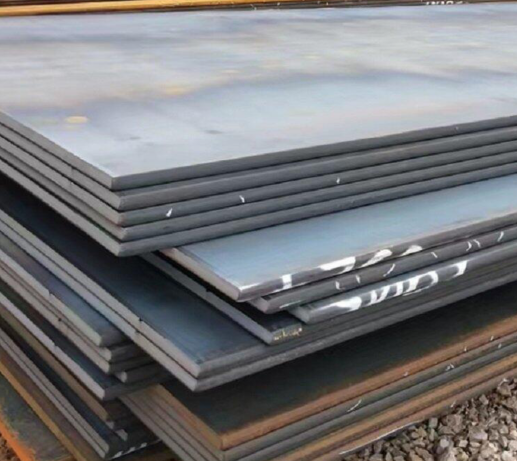


Properties of Mild Steel Material:

Property Description
Strength Tensile strength of approximately 370-500 MPa, with low hardness
Plasticity & Toughness Good, easy to stamp, bend, and weld, suitable for cold working. [Learn about MS ERW welded pipe manufacturing]
Fatigue Limit Relatively low, not suitable for long-term high-frequency alternating stress applications
Corrosion Resistance Poor, oxidizes quickly in humid or corrosive environments, requires galvanizing, painting, or anti-rust oil protection
Cost Low, cheaper than stainless steel and alloy steel, suitable for large-scale use


Advantages and Disadvantages of MS:


● Advantages: Low cost, easy processing (welding/cutting/bending), good toughness.

● Disadvantages: Poor corrosion resistance (needs galvanizing, painting and other anti-corrosion treatments).


MS vs Other Steels: A Comparison


● Compared with stainless steel pipes (such as 304), MS pipes are not rust-resistant, but are cheaper.
● Compared with galvanized pipes (GI), MS pipes are more prone to rust when not galvanized.

Applications: building structures, pipelines, automobile bodies, daily metal products, etc.


Applications of Mild Steel (MS) in Different Industries


(1) Construction and structural engineering
Building structures: beams, columns, support frames, scaffolding, guardrails, temporary structures.

(2) Pipes and containers
Fluid transportation: water, gas, oil.

Oil tanks, gas tanks, gas storage tanks: usually use galvanized mild steel pipes (GI Pipe), which require anti-corrosion coating.

▶ 【Learn more about MS pipe types and selection


(3) Automobile and machinery manufacturing
Machinery manufacturing: parts, gears (low load), bolts, etc.
Automobile/agricultural machinery: body frame, chassis, exhaust pipe (high temperature resistant coating required), agricultural machinery.

(4) Daily necessities
Hardware: nails, wire, hinges, door frames, etc.
Furniture: metal table legs, shelves, tool boxes, etc.

Household appliance shells: such as washing machine inner drum, refrigerator bracket (usually requires coating).


[Click here to learn more about the applications and limitations of MS pipes.]


Low Carbon Steel vs Other Common Steels

Type Carbon Content Strength Hardness Weldability Corrosion Resistance Typical Applications
Low Carbon Steel (MS) ≤0.25% Medium Low Excellent Poor Building structures, piping, general hardware
Medium Carbon Steel 0.3%~0.6% High Medium General Poor Bearings, transmission shafts, mechanical parts
High Carbon Steel 0.6%~1.5% High High Poor Poor Springs, saw blades, drill bits, cutting tools
Stainless Steel (304) ≤0.08% Medium Medium Excellent (special welding materials required) Excellent Food equipment, chemical industry, medical devices


MS Pipe Standards and Specifications


Different countries/industries may have different specifications for MS pipes. Common standards include:
International: ASTM A53 (American standard), ISO 65 (international standard).

China: GB/T 3091 (welded steel pipe for low-pressure fluid delivery).


Other Meanings of MS in Steel


In a few cases, "MS pipe" may also refer to:


Martensitic Stainless Steel Pipe:
Features: High carbon content (0.1~1.2%), high hardness and high strength obtained by quenching.
Corrosion resistance is lower than austenitic stainless steel (such as 304), but better than low carbon steel.
Use: Used in high hardness and wear-resistant scenarios (such as knives, surgical instruments, mechanical parts), but must be clearly marked (such as 410, 420, 440 stainless steel).

Other possible meanings:

MS Plate: May refer to "Medium Steel Plate" in India and other regions.


How to Identify and Confirm MS Material?


Check the identification: the code or label on the pipe body (such as "ASTM A53").
If it appears in construction or general engineering, it usually refers to low carbon steel.
If it involves knives and wear-resistant parts, it may refer to martensitic stainless steel.

Detection Methods for MS Material:


Magnetic test (low carbon steel is magnetic, austenitic stainless steel is non-magnetic).
Composition analysis (carbon and chromium content is measured by spectrometer).

Read more:

● MS ERW Pipe – Complete Guide

● MS Seamless Pipe Selection

● MS and GI Pipe Difference 

● Carbon Steel vs Black Steel

● SCH 40 Black Steel Pipe

Recruiting Agents - Check Policies Here

Copyright @2017 Hunan Standard Steel Co.,Ltd and Husteel Industry Group All Rights Reserved

linkin  youtube

We use cookies to offer a better browsing experience, analyze site traffic, and personalize content. By using this site, you agree to our use of cookies.

Accept
Decline