sales@hu-steel.com
 English
 Español
Carbon steel is a steel alloy of iron and carbon (carbon content typically between 0.02% and 2.11%). Black steel is not a separate grade—it is a surface condition of hot-rolled carbon steel products that have a black iron oxide scale and no anti-corrosion coating. This guide compares their properties, uses, and cost to help you choose the right material for your project.
| Feature | Carbon Steel | Black Steel |
|---|---|---|
| Definition | Steel alloy of iron and carbon (0.02%-2.11% C) | Carbon steel product with a black iron oxide scale from hot rolling |
| Surface Finish | Varies: hot-rolled, cold-rolled, galvanized, painted, etc. | Natural black oxide scale; no coating |
| Strength | Wide range (low to high carbon) | Moderate; seamless black pipe can handle high pressure |
| Durability | Depends on protective coating; long life with galvanized/painted protection | Limited; rusts quickly in wet environments |
| Corrosion Resistance | Depends on treatment; bare steel rusts easily | Very low (oxide scale is thin and easily damaged) |
| Cost | Varies widely. Lowest-cost steel type, price ranges from raw hot-rolled material to higher-cost finished/cold-drawn products. | Lowest (no surface treatment), highly cost-effective for simple jobs. |
| Common Uses | Structural, industrial machinery, automotive manufacturing, oil and gas pipelines, and boilers. | Residential and commercial gas lines, fire sprinkler systems; Raw material for secondary processing (cutting, threading, welding, or coating). |
Carbon steel is mainly composed of iron and carbon. By adjusting the carbon content and processing, different strengths, hardness, and toughness can be obtained. It is classified according to carbon content into low-carbon steel, medium-carbon steel, and high-carbon steel—strength and hardness increase with carbon content, while plasticity decreases.
Due to its good comprehensive mechanical properties, low cost, and ease of processing and manufacturing, it is widely used in construction, machinery manufacturing, and energy transportation (such as oil and gas). It should be noted that ordinary carbon steel has poor corrosion resistance, and anti-corrosion measures must be considered during use.
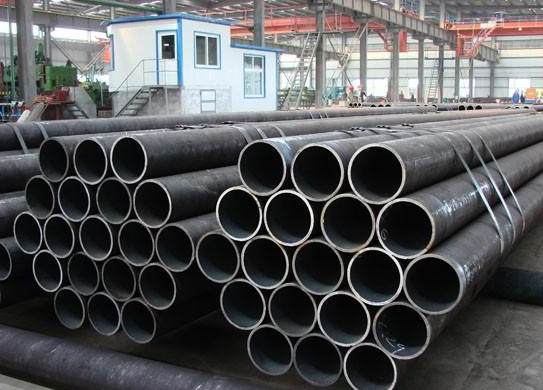
Black steel is not an independent steel grade, but rather a description of its surface condition. It specifically refers to carbon steel products (such as black steel plates and black steel pipes) that have been hot-rolled and have a black iron oxide scale on the surface, without final anti-corrosion treatment such as galvanizing or painting.
This condition is a natural result of the production process, not for aesthetic purposes, but to provide raw materials or blanks at the lowest cost. The "black steel plate" and "black steel pipe" we commonly refer to are carbon steel products in this state.
Common "black iron pipes" belong to this category of products, often used in fire protection systems or as low-pressure fluid pipelines requiring on-site corrosion protection. Their biggest drawback is their extreme susceptibility to corrosion; therefore, they should never be used in their raw state in applications with a risk of corrosion or requiring long-term maintenance-free operation.
Carbon Steel: A type of steel with iron and carbon as its main elements (carbon content typically between 0.02% and 2.1%). Based on carbon content, it can be classified into low-carbon steel, medium-carbon steel, and high-carbon steel. Its strength and hardness increase with increasing carbon content, while its plasticity decreases.
Black Steel: Not a separate steel grade, but rather a description of its surface condition. It specifically refers to carbon steel products that, after hot rolling and other processes, have a layer of black iron oxide scale (mainly composed of iron(III) oxide, Fe₃O₄), and have not undergone any plating or coating treatment. Therefore, its chemical composition is exactly the same as its corresponding carbon steel base material, and there is no independent composition standard.
Building Structures: As raw materials for steel structural beams and columns requiring overall coating (such as H-beams).
Pipeline Systems: As low-pressure fluid transport pipes requiring on-site anti-corrosion treatment (such as some fire water pipes).
General Manufacturing: As raw materials for parts requiring further machining or heat treatment.
Note: For applications requiring corrosion resistance, high aesthetics, or immediate use (such as outdoor railings, appliance housings, and precision parts), galvanized, color-coated, and stainless steel materials are often chosen instead of black steel.
Q1. Is black steel steel with a higher carbon content?
A: No. "Black" refers only to its surface color and is unrelated to its carbon content. Black steel can be low-carbon or medium-carbon steel.Q2. Why isn't black steel made rust-proof, but instead allows it to rust?
A: This is for cost and process balance. Natural cooling after hot rolling will form an oxide scale. Galvanizing or painting requires additional production lines, chemical treatments, and energy consumption, significantly increasing costs and selling prices. Many applications (such as internal structures of large structures or parts requiring rework) actively choose black steel as the raw material.Q3. Are "black steel" and "hot-rolled steel" the same thing?
A: Almost identical, but with slight differences.Q4. Is "black steel" a competitor to "white steel"?
A: In business terms, yes.Q5. Should I choose black steel or other carbon steel products?
A: This depends on your end use, budget, and processing capabilities:
Choose black steel: If you need low-cost raw material and plan on extensive secondary processing (such as overall painting after cutting and welding, or embedding in concrete as a building structural component), or for short-term, temporary projects.
Choose galvanized/painted carbon steel products: If you need ready-to-use material and do not have the means or desire for surface anti-corrosion treatment, and require a longer maintenance-free lifespan (such as outdoor railings, roofs).
Read more:
Related information
Copyright @2017 Hunan Standard Steel Co.,Ltd and Husteel Industry Group All Rights Reserved