sales@hu-steel.com
 English
 Español
Schedule 40 (SCH40) is a standard designation for steel pipe wall thickness grades, defined by ASME/ANSI B36.10. It is typically used for carbon steel seamless or welded pipe in industrial piping systems, including oil and gas applications.
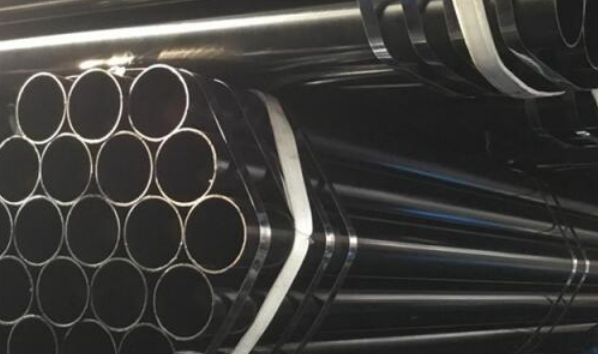
● Surface Finish: Dark gray/black, retaining the natural oxide layer after rolling.
● Applications: Primarily used for conveying fluids such as oil, gas, and water, requiring compliance with certain pressure-bearing and corrosion-resistant requirements.
3. Reliable Strength: Meets most low-pressure fluid and structural requirements.
Temporary drainage pipes, suitable for conveying non-corrosive media.
Underground installation: 3PE anti-corrosion coating
| Feature | SCH 40 | SCH 80 |
|---|---|---|
| Wall Thickness | Standard | 30–100% thicker |
| Pressure Rating | Medium | Higher |
| Weight | Lighter | Heavier |
| Cost | Lower | Higher |
| Typical Use | Low-pressure systems | Medium/high-pressure systems |
Choose SCH 40 for low-pressure systems (e.g., ordinary tap water, air conditioning water, low-pressure air). It is the most cost-effective choice.
Choose SCH 80 for medium- and high-pressure systems (e.g., process piping, high-pressure air), abrasive environments, or applications requiring higher mechanical strength.
▶ For a full comparison, see our [SCH 40 vs. SCH 80 Steel Pipe] guide.
Q1. What pressure can SCH 40 black steel pipes withstand?
A: The pressure rating depends on pipe diameter, wall thickness, material grade, and temperature. As a general reference, smaller diameter pipes have higher pressure ratings. For example, a 1/2" SCH 40 carbon steel pipe at room temperature can withstand approximately 6,358 psi (43.8 MPa), while a 6" pipe is rated at approximately 2,071 psi (14.3 MPa).
▶ For the complete pressure rating chart covering all sizes, see our [Schedule 40 Pipe Pressure Rating Chart & Guide].
Q2. Can black steel pipes be directly buried underground or used outdoors?
A: No, they cannot be used directly. The oxide scale on the surface of black steel pipes does not provide long-term corrosion protection and will rust quickly in humid environments.
a. Buried underground: 3PE anti-corrosion coating, epoxy coal tar coating, etc., are required.
b. Outdoor use: Anti-rust paint (e.g., epoxy zinc-rich primer + topcoat) is required.
c. Dry indoor environment: Short-term use is possible, but basic anti-corrosion treatment is recommended.
Q3. What is the difference between black steel pipes and galvanized steel pipes?
A: Black steel pipes are less expensive but prone to rust without additional protection. Galvanized steel pipes have a zinc coating and are more expensive, but suitable for humid environments. ▶ For a detailed comparison, see our [Black Steel Pipe vs. Galvanized Steel Pipe] article.
Q4. Can black steel pipes transport drinking water?
A: Black pipes (without lining) cannot be used directly for drinking water. Because the inner wall can rust, leading to water pollution, galvanized steel pipes or black steel pipes lined with food-grade epoxy resin must be used for drinking water systems, meeting hygiene standards.
Q5. What important information needs to be provided when purchasing black steel pipes?
A: To avoid errors, please clarify the following with the black steel pipe supplier:
Standard and Material: e.g., “ASTM A53 Grade B”.
Dimensions: Nominal diameter, e.g., “DN50” or “NPS 2”.
Wall Thickness: “SCH 40”.
Manufacturing Process: Seamless or ERW (Electric Resistance Welded) pipe.
Length: Fixed length (e.g., 6 meters) or custom length.
Ends: Plain end (for welding) or threaded end.
Corrosion Protection Requirements: Whether pre-painted at the factory is required.
Schedule 40 Black Steel Pipe is a cost-effective general-purpose pipe suitable for short-term or dry environment projects, but requires strict anti-corrosion measures. Key selection criteria include pressure rating, media characteristics, and environmental corrosion assessment.
Note: In engineering and procurement, "SCH 40 black steel pipe" usually refers to general-purpose pipe conforming to ASTM A53 standards. ASTM A106, however, is a material standard specifically designed for high-temperature, high-pressure (>350°C) conditions. Using A106 steel pipe in normal-temperature or low-temperature systems is overkill and wasteful of resources.
Read more:
Related information
Copyright @2017 Hunan Standard Steel Co.,Ltd and Husteel Industry Group All Rights Reserved