sales@hu-steel.com
 English
 Español

EN 10305 is a series of specifications for the technical delivery conditions of precision steel tubes developed by the European Committee for Standardization (CEN). It is mainly applicable to high-precision, high-quality cold-drawn or cold-rolled seamless steel tubes and welded steel tubes, which are widely used in hydraulic systems, automobile manufacturing, mechanical engineering and other fields.
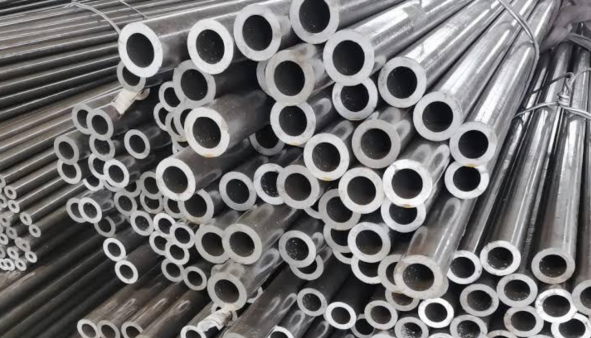
The EN 10305 standard is divided into several parts. While all cover precision tubes, they serve different applications. The most common parts are:
| Standard | Type | Typical Application |
|---|---|---|
| EN 10305-1 | Seamless cold-drawn steel tubes | General precision engineering |
| EN 10305-2 | Welded cold-drawn steel tubes | Precision welded tubes |
| EN 10305-3 | Welded cold-finished steel tubes | Structural precision |
| EN 10305-4 | Seamless cold-drawn steel tubes | Hydraulic and pneumatic systems (most commonly used) |
| EN 10305-5 | Welded square/rectangular tubes | Structural applications |
| EN 10305-6 | Welded cold-drawn steel tubes | Hydraulic/pneumatic lines |

The main features of this standard are:
● High precision: Strict control of outer diameter and wall thickness. Wall thickness tolerance: ±10% or ±0.1mm (whichever is greater), in accordance with EN 10305-1.
● High finish: The inner wall is smooth, reducing fluid resistance, suitable for hydraulic systems. (No oxide layer on the inner and outer surfaces, Ra ≤ 0.8μm).
● Excellent mechanical properties: No deformation during cold bending, no cracks during expansion and flattening, suitable for high-pressure environments.
Under EN 10305, the material grades have been modernized. The old DIN designations (St series) are now replaced by the European E-series. Common equivalents include:
| EN Grade | Old DIN | Chinese Equivalent | Key Characteristics |
|---|---|---|---|
| E235 | ST35 / ST37.4 | 20# (or 10# for higher purity) | Low carbon steel, good weldability and cold workability. ST37.4 refers to the higher-purity variant specifically for precision hydraulic tubes. |
| E255 | ST45 | 45# | Medium carbon steel, moderate strength, used for mechanical structures. |
| E355 | ST52 | Q345B / 16Mn | Low alloy high strength steel, excellent pressure resistance. |
Note: ST37.4 is the traditional DIN designation for the higher-purity E235 grade used in hydraulic systems. It is not a separate material but a specific quality variant of E235, often supplied in the NBK (+N) condition for excellent bendability.
| Material (EN) | Old DIN | Tensile Strength (MPa) | Yield Strength (MPa) | Elongation (%) | Hardness (HB) |
|---|---|---|---|---|---|
| E235 | ST35 / ST37.4 | 340–480 | ≥235 | ≥25 | ≤140 |
| E255 | ST45 | 440–570 | ≥255 | ≥21 | ≤170 |
| E355 | ST52 | 490–630 | ≥355 | ≥18 | ≤200 |
Key performance features:
● High pressure resistance: Suitable for hydraulic systems. Maximum working pressure depends on the specific size and wall thickness (can reach up to 70 MPa for small-diameter, thick-wall tubes).
● Cold processing performance: Can withstand cold bending, flaring, flattening without cracking.
Note: The maximum working pressure depends on the outer diameter and wall thickness. For example, an E235 tube (EN 10305-4) with an OD of 20mm and a wall thickness of 2.0mm typically has a static design pressure of 282 bar (28.2 MPa) and a burst pressure of 900 bar (90 MPa) according to Parker's official data.
Outer Diameter (OD): 4 mm to 80 mm (cold-drawn precision range).
Wall Thickness (WT): 0.5 mm to 12 mm.
Standard Length: Usually 6 m (custom lengths available).
OD Tolerances:
| Outer Diameter (OD) | Tolerance (mm) |
|---|---|
| 4 ≤ OD < 30 mm | ± 0.08 mm |
| 30 ≤ OD < 50 mm | ± 0.15 mm |
| 50 ≤ OD < 80 mm | ± 0.20 mm |
WT Tolerances:
| Wall Thickness (WT) | Tolerance |
|---|---|
| All dimensions | ± 10% (min. ± 0.1 mm) |
Note: EN 10305-4 (hydraulic/pneumatic) tubes generally follow the same dimensional tolerance framework as EN 10305-1. However, -4 adds stricter requirements for surface cleanliness, non-destructive testing (eddy current), and suitability for hydraulic fittings. Tighter tolerances can be produced upon request. Please contact our technical team for specific dimensional tolerance tables or custom specifications.
Common delivery statuses include:
● +C (BK): Cold drawn hard, high strength, no subsequent heat treatment.
● +N (NBK): Normalized, good comprehensive mechanical properties.
● +SR (BKS): Stress relieved, reduced internal stress.
● +A (GBK): Annealed, for softness and formability.
● +LC (BKW): Cold drawn / soft, for specific forming needs.
Choose the appropriate delivery status according to specific application needs.
● Cold drawing/cold rolling process: Improve dimensional accuracy and surface finish.
● Non-oxidation bright heat treatment (NBK state): Eliminate stress, ensure that the steel pipe has no oxide layer during the manufacturing process, and improve the cleanliness and service life of the steel pipe.
● Surface treatment: Phosphating, galvanizing (white zinc, colored zinc) to enhance corrosion resistance.
● Non-destructive testing: The steel pipe will undergo NDT to ensure that the quality meets the standards.
EN 10305 steel pipes are widely used in hydraulic systems, automobile manufacturing, machinery manufacturing, petrochemicals, aerospace and other industries that have high requirements for steel pipe precision, finish, cleanliness and mechanical properties.
Typical examples include:
● Hydraulic and pneumatic systems: High-pressure cylinders, construction machinery, injection molding machines, ship hydraulic pipes. (Note: For precision hydraulic lines, ST37.4 / E235 in the +N condition is the standard material choice.)
● Automobile manufacturing: Brake oil pipes, fuel delivery pipes.
Q1: What is the difference between EN 10305-1 and EN 10305-4?
A: EN 10305-1 specifies general cold-drawn seamless precision tubes for mechanical engineering. EN 10305-4 is specifically for hydraulic and pneumatic systems, requiring stricter tolerances, better inner surface cleanliness, and non-destructive testing.
Q2: Is EN 10305 the same as DIN 2391?
A: Yes, EN 10305 has replaced the older DIN 2391 standard. For example, the old DIN 2391 St 35 / St 37.4 materials are now designated as E235 in the EN 10305 standard.
Q3: Which delivery condition should I choose (+C, +N, or +SR)?
A: Choose +C (BK) for high strength and direct installation without further machining; choose +N (NBK) for good ductility when cold bending or flaring is required; choose +SR (BKS) to minimize internal stress after machining.
Q4: Can EN 10305 tubes be used for high-pressure hydraulic systems?
A: Yes, they are widely used in high-pressure hydraulics. The maximum working pressure depends on the outer diameter and wall thickness.
EN 10305 is the core standard for high-precision steel tubes in Europe, especially suitable for hydraulics, automobiles, machinery and other fields. Its strict dimensional tolerances, excellent surface treatment and mechanical properties make it an ideal choice for high-end industrial applications.
Read more:
● DIN 17175 Heat-resistant Seamless Steel Pipe
● Precision Hydraulic Seamless Tube
● DIN 2391 Seamless Precision Tube: ST35, ST45, ST52
● Cold Drawn Seamless Tube Size Chart for Mechanical and Hydraulic
Related information
Copyright @2017 Hunan Standard Steel Co.,Ltd and Husteel Industry Group All Rights Reserved