sales@hu-steel.com
 English
 Español

A precision hydraulic seamless tube refers to a seamless steel pipe made of precision cold drawn seamless tubing treated by a black or gray phosphating process, and the phosphated steel pipe is sealed and rust-proofed.
A dense phosphating layer is formed on the inner and outer surfaces of the steel pipe, and the steel pipe is effectively prevented from oxidation after rust-proof treatment. Therefore, the steel pipe has excellent anti-rust performance. At the same time, due to the microporous phosphating film (layer) formed on the surface of the steel pipe after phosphating, the paint can be strongly adsorbed on the surface of the steel pipe, effectively preventing the paint from falling off. It is an ideal product for field operations and demanding environments.
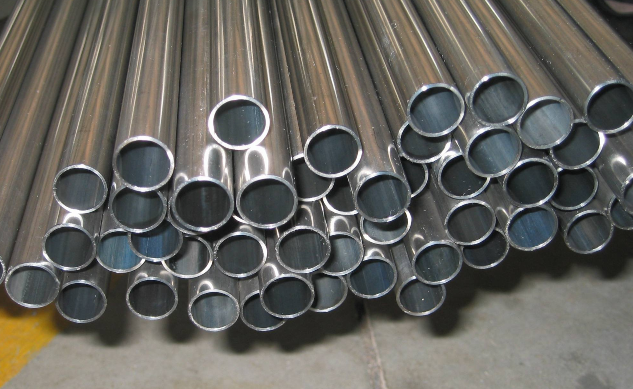
When using this steel pipe, it is recommended that the user clean the steel pipe after installation. System pre-cleaning before the normal operation of the hydraulic system is also a necessary step.
The main materials of the steel pipes used in the hydraulic system are stainless steel seamless pipes and ordinary carbon steel seamless pipes.
While stainless steel seamless pipes offer excellent mechanical properties, their high price keeps them out of most standard hydraulic systems. Even for demanding applications like high precision positioning stainless steel seamless pipes, the cost of achieving the required tolerances is often prohibitive.
At the same time, ordinary carbon steel seamless pipes are widely used, but they suffer from lower precision and mechanical strength. To prepare them for use, they must go through a brutal, time-consuming process: welding, trial assembly, pickling, alkaline washing, water washing, long-term oiling, and leak testing. Worse, it is nearly impossible to completely remove residue from inside the pipe. Industry statistics show that this hidden contamination causes 70% of all hydraulic system failures.
Compared with the above two types of steel pipes, DIN 2391 series high-precision bright seamless steel tubes are special pipes for hydraulic systems. They are the ideal non-welded hydraulic piping solutions.
1. No oxide layer: There is no oxide layer on the inner and outer walls of the steel pipe, which can be directly installed in the hydraulic system.
2. Leak-Proof performance: Withstand high pressure without leakage.
3. High precision: Tight dimensional tolerances for critical hydraulic applications.
4. High finish: Smooth surface for excellent sealing.
5. Cold bending: Cold bending without deformation.
6. Flaring & flattening: No cracks when expanding or flattening.
Conclusion: The whole process is complicated and the working time is long.
DIN 2391 tubes are available in a wide range of sizes with tight tolerances to meet the demands of high-precision hydraulic systems.
| Parameter | Typical Range (DIN 2391) |
|---|---|
| Outer Diameter (OD) | 4 mm – 60 mm (Precision range) |
| Wall Thickness (WT) | 0.5 mm – 10 mm |
| OD Tolerance | ±0.08 mm (for OD ≤ 30 mm); wider tolerances apply for larger sizes |
| WT Tolerance | ±10% (min. ±0.1 mm) |
| Length | Standard 6 m, up to 12 m (Custom lengths available) |
DIN 2391 tubes can be supplied in different delivery conditions depending on the application:
● BK (Cold Drawn Hard): High hardness and strength, ideal for standard hydraulic lines where machining is not required.
● NBK (Normalized): Annealed for better plasticity and impact resistance, suitable for cold bending and flaring.
● BKS (Stress Relieved): Reduces internal stress after machining, improving dimensional stability.
The connecting pipe fittings that match the DIN series of high-precision bright seamless steel pipes are ferrule-type pipe joints. This type of pipe joint has a simple structure, good performance, small size, light weight, easy piping operation, convenient disassembly, can withstand large vibration and impact, and play a role in preventing loosening. The working pressure is 16–40 MPa (approx. 2320–5800 PSI), which is a more ideal pipe connection in the hydraulic seamless pipe system.
The working reliability and service life of engineering machinery are closely related to the pollution status of the hydraulic precision steel pipe system. According to domestic and foreign statistics, about 70% of the failures of the hydraulic precision steel pipe system of engineering machinery are caused by the pollution of the hydraulic system, of which the hydraulic system failures caused by solid particle pollutants account for 60%–70% of the total pollution failures.
The pollution of the hydraulic system directly affects the working quality of the entire hydraulic precision steel pipe system. The current problem that the hydraulic system faces and needs to overcome is how to effectively reduce and control the pollution of the system to ensure the reliability and service life of various hydraulic precision steel pipe components and the entire system. Therefore, reasonable analysis and effective control of the pollution of the hydraulic system are the key to ensuring the normal operation of the hydraulic precision steel pipe system of engineering machinery and extending its service life.
Q1: Why is DIN 2391 better than ASTM A519 for hydraulic systems?
A: DIN 2391 specifically focuses on cold-drawn precision tubes with strict tolerances and surface quality requirements for hydraulic systems, while ASTM A519 is a more general standard for mechanical tubing.
Q2: What is the difference between BK and NBK?
A: BK (Cold Drawn Hard) offers higher strength but lower plasticity. NBK (Normalized) is heat-treated for better ductility, making it ideal for bending and flaring.
Q3: Can DIN 2391 tubes be bent?
A: Yes, in the NBK delivery condition, DIN 2391 tubes can be cold bent without deformation.
Hunan Standard Steel Co., Ltd(HSCO) supplies precision hydraulic seamless tubes with strict dimensional tolerances and phosphating treatment. We also provide value-added services such as precision cutting, chamfering, and pre-assembly with ferrules. Contact our technical team with your specifications (OD, ID, wall thickness, working pressure) for a fast quote within 24 hours.
Email: sales@hu-steel.com
Related topics
● DIN 2391 Seamless Precision Tube: ST35, ST45, ST52
● What is ST52 Material? - Properties, Equivalent Grades & Applications
● ASTM A519 Seamless Mechanical Tube
● Hydraulic Tube vs. Mechanical Tube: Differences & How to Choose
● Cold Drawn Seamless Tube Size Chart for Mechanical and Hydraulic
Related information
Copyright @2017 Hunan Standard Steel Co.,Ltd and Husteel Industry Group All Rights Reserved