Carbon steel is a large family, while Mild Steel, also known as low-carbon steel, is the most common and basic member of this family. You can understand their relationship as:
Carbon Steel > Mild Steel. All Mild Steel is carbon steel, but not all carbon steel is Mild Steel.
Definition:
Carbon Steel (CS): An alloy primarily composed of iron and carbon, without the intentional addition of large amounts of other alloying elements (such as chromium, nickel, and molybdenum). Besides iron and carbon, carbon steel typically contains small amounts of silicon and manganese, and strictly controls impurities such as sulfur and phosphorus. The carbon content is usually between 0.05% and 2.0%.
The properties of carbon steel vary greatly depending on the carbon content. As the carbon content increases, the strength and hardness of carbon steel increase, but its plasticity and toughness decrease. Furthermore, carbon steel has good machinability and heat treatment adaptability, and can achieve different mechanical properties through processes such as quenching, tempering, and heat treatment.
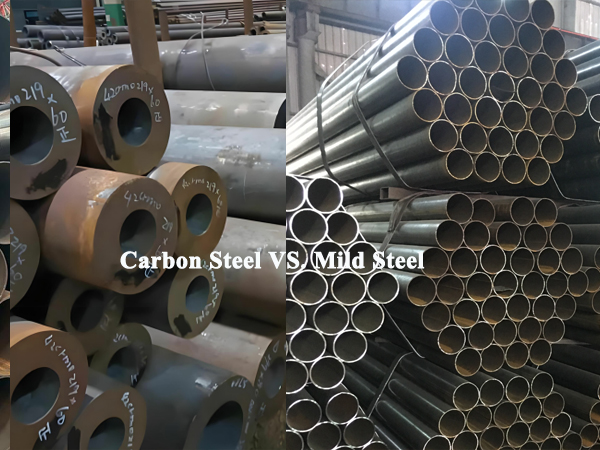
Mild Steel (MS): Low carbon steel is carbon steel with a carbon content of less than 0.25%. Due to its low strength and hardness, it is soft and therefore also called
Mild Steel. It specifically refers to carbon steel with a relatively low carbon content (usually between 0.05% and 0.25%), and it is the most widely used type of steel. It includes most ordinary carbon structural steel and some high-quality carbon structural steel. Most are used for engineering structural components without heat treatment, while some undergo carburizing and other heat treatments for wear-resistant mechanical parts.
Classification and Performance Differences:
Carbon steel is usually classified into three categories according to carbon content: low-carbon steel, medium-carbon steel, and high-carbon steel. Low-carbon steel (mild steel) is one of them.
1. Low-carbon steel (mild steel): Carbon content is approximately 0.05% - 0.25%
Performance characteristics: It has high ductility and toughness, and is easy to process, such as bending, stretching, and forming; it has excellent weldability, but lower hardness and strength.
Typical applications: Automobile bodies, building structures (reinforcing bars, structural steel), pipes, casings, wire, nails.
2. Medium carbon steel: Carbon content is approximately 0.25% - 0.60%
Performance characteristics: Good ductility and toughness; moderate weldability, requires preheating and post-heat treatment; moderate hardness and strength.
Typical applications: Mechanical parts (shafts, gears, connecting rods), rails, high-strength fasteners.
3. High carbon steel (tool steel): Carbon content is approximately 0.60% - 2.0%
Performance characteristics: High brittleness, poor ductility and toughness; poor weldability, prone to cracking. High hardness and strength, difficult to machine, suitable for wear-resistant applications.
Typical applications: Knives, springs, axes, drill bits, high-strength wire.
How to Choose Carbon Steel Materials?
1. If you need a material that is easy to form (stamping, bending), easy to weld, and requires a certain strength and toughness for building frames, automotive panels, or general structures—Choose low-carbon steel.
2. If you need to manufacture a mechanical component that withstands high stress, such as a drive shaft or gear, requiring good overall mechanical properties and the ability to be strengthened through heat treatment—Choose medium-carbon steel.
3. If you need to manufacture a knife, a spring, or a drill bit, with extremely high hardness and wear resistance as the primary requirements—Choose high-carbon steel.
Carbon Steel and Mild Steel: Why are they Easily Confused?
a. Contextual Habits: In many everyday and industrial contexts (especially in the UK), the term "mild steel" is widely used and has almost become synonymous with
carbon steel for general structural applications. When people say "give me a sheet of mild steel," they are referring to low-carbon steel.
b. Large Market Share: Because mild steel has the widest range of applications and the largest production volume, the term "carbon steel" in non-professional conversations often implicitly refers to "low-carbon steel."
Applications of Carbon Steel:
Carbon steel is the most produced and widely used steel in modern industry, widely used in machinery manufacturing, building structures, transportation, energy and petrochemicals, and tool manufacturing.
1. Engineering Structures: Reinforcing steel for buildings, bridges, pipelines, subway and high-rise building structures.
2. Machinery Manufacturing: Gears, connecting rods, machine tool spindles,
pressure vessels, agricultural implements, and heavy machinery.
3. Transportation: Automotive parts, railway wheels, couplers, and ship structural components.
4. Tool Manufacturing: Hammers, chisels, cutting tools, and measuring tools.
5. Energy and Petrochemicals: Oil and gas pipelines, storage tanks, and pressure equipment.
6. Emerging Fields: Circular economy (scrap steel recycling and reuse), digital manufacturing, and predictive maintenance systems.
Applications of Mild Steel:
Carbon steel includes Mild steel, which is the most widely used type in the carbon steel family.
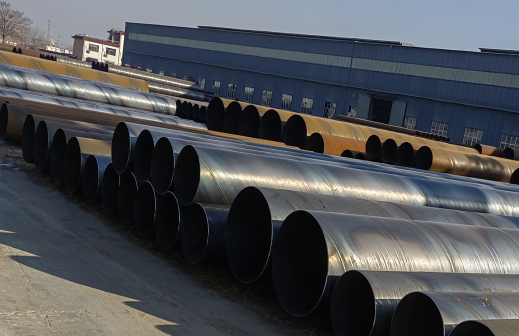
Mild steel is generally rolled into angle steel, channel steel, I-beams, steel pipes, steel strips, or steel plates for manufacturing various building components, containers, boxes, furnace bodies, and agricultural machinery. High-quality low-carbon steel is rolled into thin plates for deep-drawing products such as automobile cabs and engine hoods; it is also rolled into bars for manufacturing mechanical parts with low strength requirements. Low-carbon steel is generally not heat-treated before use; steel with a carbon content of 0.15% or higher undergoes carburizing or cyaniding treatment and is used for parts requiring high surface temperatures and good wear resistance, such as shafts, bushings, and sprockets.
The use of mild steel is limited due to its low strength. Appropriately increasing the manganese content in carbon steel and adding trace amounts of alloying elements such as vanadium, titanium, and niobium can significantly improve the steel's strength. Reducing the carbon content and adding small amounts of aluminum, boron, and carbide-forming elements can yield ultra-low-carbon bainitic steel with high strength while maintaining good plasticity and toughness.
Mild steel is a tough material. The stress-strain curve of carbon steel under tension mainly consists of four stages: elastic stage, yield stage, hardening stage, and local deformation stage. In the local deformation stage, there are obvious yielding and necking phenomena. Initially, it is in the elastic stage, completely obeying Hooke's Law and rising linearly. After the proportional limit, deformation accelerates, but there is no obvious yield stage.
The Properties of Carbon Steel Can be Adjusted through Heat Treatment:
Quenching: Heating the steel to above the critical temperature and then rapidly cooling it results in a martensitic structure, increasing hardness but also brittleness.
Tempering: Heating at low, medium, or high temperatures followed by cooling eliminates stress and improves toughness.
Quenching and tempering: High-temperature tempering after quenching yields good comprehensive mechanical properties.
Frequently Asked Questions
1. What is the relationship between carbon steel and mild steel?
A: They are related. Carbon steel is a general term, while mild steel is a type of carbon steel. The most fundamental difference lies in the carbon content.
2. Why do we hear "mild steel" most often in daily life?
A: Because it is the most widely used, the cheapest, and the easiest to process.
60% of steel reinforcement in construction is low-carbon steel;
over 70% of car body parts are made of low-carbon steel;
almost all household shelves and filing cabinets are made of low-carbon steel.
3. Why do welders always ask if it's low-carbon steel?
A: Steels with different carbon contents have vastly different weldability.
Low-carbon steel: Excellent weldability, requires no special treatment, and is less prone to cracking after welding.
Medium-carbon steel: Requires preheating and post-weld heat treatment, otherwise it is prone to cracking.
High-carbon steel: Difficult to weld, generally not recommended for welding, only brazing or special processes are possible.
4. How much is the price difference?
A: The higher the carbon content, the more expensive it is.
5. Can they be substituted for each other during repairs?
A: In most cases, no!
Using low-carbon steel instead of high-carbon steel: Knives made with it won't stay sharp, and springs will lack elasticity.
Using high-carbon steel instead of low-carbon steel: Cannot be bent into shape, and will crack directly during welding.
Golden rule: Use the original design material. When unsure, choosing a softer, easier-to-work material is usually safer.
6. Will it rust? How to prevent rust?
A: All carbon steel rusts, but the rate of rusting is essentially the same, and all require rust prevention treatment.
Rust prevention methods are exactly the same: painting,
galvanizing, chrome plating, etc.
Conclusion:
The core difference between carbon steel and Mild Steel lies in the carbon content and the resulting performance differences. Mild Steel is a type of carbon steel with low strength, high toughness, high plasticity, and excellent weldability; carbon steel is a general term encompassing a range of steels from soft to hard, from tough to brittle. When selecting materials, for load-bearing structures, pressure vessels, and other safety-critical components, materials that meet design requirements and have material certification must be used; never rely on guesswork based on experience.
Read more: MS and GI Pipe Difference or Carbon Steel vs Black Steel
 sales@hu-steel.com
 English
 Español