Square or Round Tubes? A Must-Read for Engineers: Selection Logic and Common Misconceptions
Struggling to choose the right steel pipes for your project, but undecided between
square tubes (SHS) and
round tubes (CHS)? Making the wrong choice can not only increase costs and delays but also create safety hazards. This article will provide a clear decision-making path if you face any of the following dilemmas:
● Steel structure frames: Are square or round tubes more economical and robust?
● Piping: Why are square tubes almost never seen?
● Equipment racks: How to choose a material that balances load-bearing capacity and ease of installation?
● Creative design: Which tube material better achieves a balance between visual appeal and structural stability?
Continue reading, and you'll gain a clear "selection map" in 3 minutes, avoiding common pitfalls and making the best professional, economical, and safe decision.
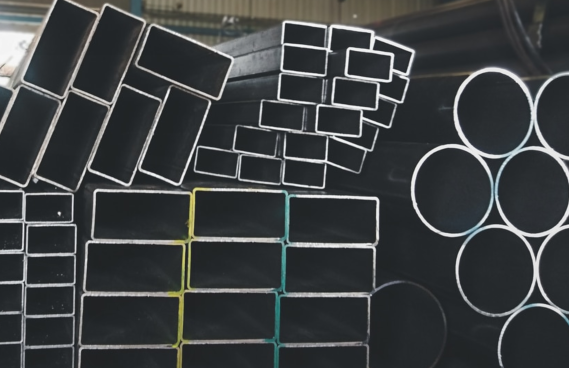
In many fields such as construction and machinery manufacturing, square and round tubes are common materials, but they differ in many aspects of performance.
●Differences in Mechanical Properties:
1. Compressive Strength
Circular tubes have a unique advantage in compressive strength. Due to their circular cross-sectional shape, when subjected to uniform external pressure, the pressure is evenly distributed across the entire circumference. This uniform pressure distribution allows circular tubes to more effectively disperse pressure when subjected to axial pressure, thus reducing the likelihood of localized deformation. For example, in some support structures, using circular tubes as supporting components can better withstand vertical pressure from above, maintaining structural stability.
In contrast, square tubes have lower compressive strength than circular tubes in some situations. The four corners of square tubes are stress concentration areas, and these corners are prone to deformation first under pressure. However, in certain specific structures, if the pressure is applied uniformly along the plane of the square tube, it can also exhibit good compressive strength.
2. Bending Strength
Bending strength is related to the cross-sectional shape and moment of inertia of the tube. Circular tubes have a more uniform distribution of moment of inertia, resulting in relatively consistent bending strength in all directions. When subjected to bending forces, circular tubes can resist bending deformation uniformly along the circumference. This makes round tubes perform well in applications requiring multi-directional bending forces, such as shaft components in rotating machinery.
Square tubes, on the other hand, exhibit directional bending resistance. Along their longer sides, square tubes have a larger moment of inertia and relatively stronger bending resistance; conversely, along their shorter sides, the moment of inertia is smaller, resulting in relatively weaker bending resistance. Therefore, when designing and using square tubes, it is necessary to rationally arrange them according to the actual force direction to fully utilize their bending resistance.
●Differences in Fluid Dynamics Performance:
1. Fluid Transport Efficiency
Round tubes have a significant advantage in fluid transport. The smooth inner wall of a round tube, without sharp edges, results in less resistance to fluid flow. According to fluid dynamics principles, this lower resistance allows for smoother fluid flow and reduces energy loss. For example, in water and gas supply piping systems, round tubes can transport fluids more efficiently, reducing transport costs.
Square tubes have four corners, which can interfere with fluid flow and increase flow resistance. When fluid flows through the corners of a square tube, eddies are formed, leading to increased energy loss. Therefore, in applications requiring high fluid transport efficiency, round tubes are usually preferred.
2. Self-Cleaning Ability
Round tubes also have superior self-cleaning ability compared to square tubes. Due to the smooth inner wall of a round tube, the fluid can more effectively carry away impurities and dirt during flow, reducing dirt buildup. In contrast, dirt easily accumulates at the corners of square tubes, which can affect normal fluid flow and even cause blockages over time.
●Differences in Connection Performance:
1. Diversity of Connection Methods
The connection methods for round tubes are relatively simple and flexible. Common methods include welding, threaded connections, and flange connections. Because of the regular cross-sectional shape of round tubes, the quality of the weld is easier to control during welding; threaded and flange connections also facilitate the connection and disassembly of round tubes.
The connection methods for square tubes are relatively more complex. Besides welding, the presence of corners requires special handling when using other connection methods. For example, when making threaded connections, the corners of the square tube need to be properly machined to ensure the sealing and stability of the connection.
2. Connection Strength
In terms of connection strength, both round and square tubes can meet engineering requirements under reasonable connection methods. However, because the cross-sectional shape of round tubes is more conducive to the uniform distribution of stress, under the same connection conditions, the connection points of round tubes may have better fatigue resistance. The connection points of square tubes, due to the presence of corners, exhibit more significant stress concentration, and may be more prone to fatigue damage during long-term use.
●Differences in Appearance and Space Utilization:
1. Aesthetic Effect
Round tubes give a smooth and rounded feel, with a better visual effect. In some architectural decorations and art designs, round tubes are often used to create a simple and modern style. For example, round tubes are used to create unique shapes in the exterior structures of some large exhibition halls and stadiums.
Square tubes, on the other hand, have a regular and robust appearance. They can create a stable and dignified atmosphere, suitable for some traditional architectural styles and designs. The right-angled shape of square tubing also makes it easier to assemble and splice, allowing for the formation of various regular patterns and structures.
2. Space Utilization Efficiency
Square tubing has a certain advantage in terms of space utilization. Its regular shape allows for closer integration during arrangement and combination, reducing wasted space. For example, in the design of some shelving and frame structures, using square tubing can more effectively utilize space, improving storage and load-bearing capacity. Round tubing, due to its circular cross-section, leaves gaps when arranged, resulting in relatively lower space utilization efficiency.
Conclusion:
Square and round tubing each have their advantages and disadvantages in performance. In practical applications, it is necessary to comprehensively consider factors such as mechanical properties, hydrodynamic properties, connection performance, appearance, and space utilization performance based on the specific usage scenario and requirements to select the appropriate tubing material.
When you need extreme bending resistance and space efficiency, square tubing (square or rectangular) is the undisputed optimal solution; while when the project involves fluid transportation, high pressure, or complex torsion, round tubing is the only correct choice. Their essential difference stems from the absolute control that geometry exerts over mechanical properties.
Read more: EN 10219 vs EN 10210: Comprehensive Comparison or MS and GI Pipe Difference
 sales@hu-steel.com
 English
 Español