What are the machines and equipment used to produce reducing pipes?
In industrial piping systems,
reducing pipes play a crucial role. They are fittings used to connect pipes of different diameters, enabling a smooth transition between pipe diameters, thus ensuring stable fluid transport and reducing turbulence and pressure loss. These fittings are widely used in petroleum, chemical, power, water supply, and construction industries, and their quality and performance directly affect the safety and efficiency of the entire piping system.
The equipment used to produce reducing pipes is diverse. Based on materials (such as carbon steel, stainless steel, alloy steel, etc.), processes (hot forming, cold forming), and production scale, they can be mainly divided into the following categories:
Core Forming Equipment for Reducing Pipes:
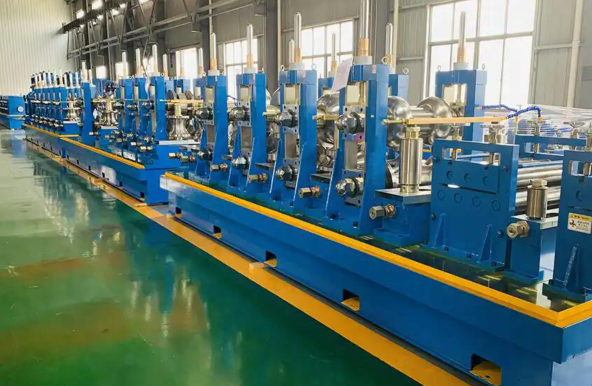
1. Push Forming Machine (Hot Push Forming Machine)
Principle: The pipe blank is heated to a plastic state, and a special mold is used to expand, stretch, and deform the metal under hydraulic pressure to form a reducing pipe.
Features: High production efficiency, smooth inner wall, uniform wall thickness; it is the mainstream equipment for producing large-diameter, thick-walled reducing pipes from carbon steel and alloy steel. Commonly used for manufacturing concentric reducers.
2. Extrusion Press (Cold/Hot Extrusion Press)
Principle: Extrudes the tube blank or billet directly into shape within a die cavity under immense pressure.
Features: High dimensional accuracy, dense material structure; suitable for producing medium- and high-pressure, high-precision reducers for stainless steel, non-ferrous metals, etc.
3. Spinning Mill
Principle: Applys pressure to a high-speed rotating tube blank or slab using a spinning roller, gradually bringing it into contact with the die, resulting in plastic deformation.
Features: Suitable for producing thin-walled, large-diameter reducers, especially
eccentric reducers. Can be divided into ordinary spinning and high-pressure spinning.
4. Forging/Pressing Equipment
Includes: Forging hammer, press (hydraulic/mechanical).
Principle: Forms the tube blank through forging or pressing. Commonly used for manufacturing high-pressure, extra-thick-walled reducers made of special materials, or as a method for manufacturing reducer blanks.
Auxiliary and Pre-processing Equipment:
1. Cutting Equipment
Pipe Cutting Machine: Such as band saws, circular saws, flame/plasma cutters, laser cutters, used to cut raw pipes into pipe blanks of the required length.
Plate Cutting Machine: If plate rolling is used, a CNC plasma/flame cutter is required for cutting.
2. Beveling Machine
Used to process welding bevels at both ends of the pipe blank or at the ends of the formed reducer to meet subsequent welding requirements.
3. Heating Equipment
Medium Frequency Induction Heating Furnace: Key equipment for hot pushing and hot extrusion processes, capable of quickly and uniformly heating the pipe blank to the set temperature.
Gas Furnace/Resistance Furnace: Used for overall heating or heat treatment.
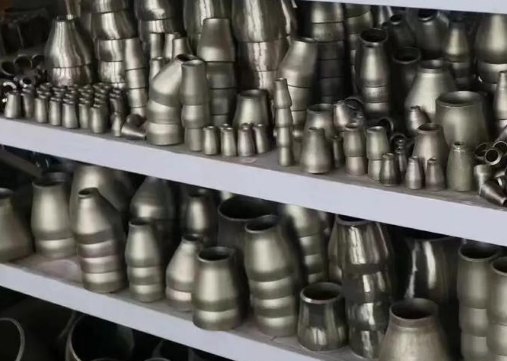
Rolling and Welding Equipment (Suitable for Plate Reducers):
For large or special-specification reducers, plate rolling and welding processes are often used. The main equipment includes:
1) Plate Rolling Machine: Rolls cut fan-shaped or trapezoidal plates into conical cylinders.
2) Press/Die: Used for pressing the ends of sheet metal or for pre-bending.
3) Automatic Welding Equipment: Such as
submerged arc welding machines and gas shielded welding machines, used for welding longitudinal and circumferential welds.
Post-processing and Finishing Equipment:
a. Heat Treatment Furnaces: Used for normalizing, annealing, solution treatment, etc., to eliminate forming stress and improve metallographic structure and mechanical properties.
b. Finishing/Correcting Equipment: Used to correct the dimensions and roundness of the formed sheet.
c. Surface Treatment Equipment: Such as sandblasting machines and pickling/passivation production lines, used to remove oxide scale and improve surface quality.
d. Machining Equipment: Such as lathes and boring machines, used to process end beveling, ensure end face perpendicularity, or achieve extremely high dimensional accuracy.
e. Non-destructive Testing Equipment: Such as ultrasonic flaw detectors, X-ray real-time imaging systems, and magnetic particle flaw detectors, used for product quality inspection.
Molds and Tooling:
Push-forming core dies/outer dies, extrusion dies, spinning dies, forging dies, etc., are core consumable tooling components in various forming processes.
Conclusion:
The choice of machinery depends on the material, dimensions (diameter, wall thickness), batch size, technical standards (such as pressure rating), and investment budget of the reducer. Modern professional reducer manufacturers typically equip themselves with a variety of equipment to meet different order requirements.
Read more: Pipe Reducer Size Selection
 sales@hu-steel.com
 English
 Español