In fields such as construction, machinery manufacturing, and bridge engineering, structural stability is a crucial indicator of design rationality.
Square tubes and
rectangular tubes, with their unique geometric shapes and mechanical properties, are gradually becoming key materials for enhancing structural stability. Compared to traditional
round steel pipes or solid steel, square and rectangular tubes, through optimized cross-sectional design, exhibit significant advantages in bending resistance, torsion resistance, and load-bearing capacity, especially demonstrating their stability value in complex stress environments.
1. Geometric Optimization: Significantly Improved Bending and Torsional Resistance
The rectangular cross-section design of rectangular tubes allows for more efficient stress distribution under load. For example, under vertical loads, the longer side of the rectangle provides a larger section modulus for bending, while the shorter side enhances resistance to lateral deformation. This anisotropic cross-sectional characteristic reduces the risk of localized deformation in frame structures.
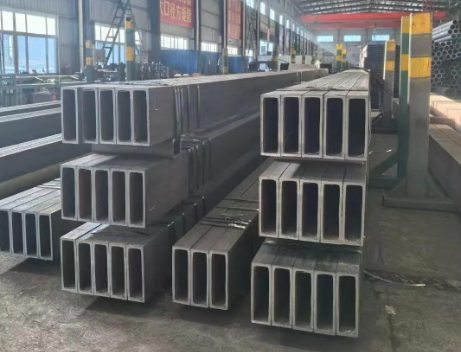
Taking building frames as an example, when using rectangular tubes as columns or beams, their moment of inertia is higher than that of circular steel tubes. This means that with the same amount of material, rectangular tubes can withstand greater bending moments, thus improving the overall structure's resistance to overturning.
In multi-story steel structure frames,
300x150mm rectangular tubes are commonly used as main beams, with their 300mm height (strong axis) vertically arranged to resist the enormous bending moments generated by floor loads. Meanwhile, 150x150mm square tubes are used as columns, utilizing their isotropic properties to evenly bear pressure from all directions. This optimized combination of "rectangular tubes as beams and square tubes as columns" achieves the best balance between structural stability and economic efficiency while controlling steel consumption.
Furthermore, the four right angles of rectangular tubes have a natural advantage at connection nodes. When fixed with bolts or welding, the right angles create a tighter contact surface, reducing stress concentration.
For example, in the joints of robotic arms, the right-angle connections of rectangular tubes ensure the continuity of force transmission, preventing structural instability caused by loose connections. This geometric characteristic also allows for more precise control of installation errors in multi-layer steel structures, further enhancing overall stability.
2. Balancing Material Utilization and Lightweight Design
The hollow structure design of rectangular tubes achieves lightweighting while maintaining strength. Compared to solid steel, rectangular tubes reduce the structural weight by minimizing internal material usage, thus reducing the load-bearing capacity requirements of the foundation.
For example, in bridge engineering, using rectangular tubes as the main material for truss structures meets span requirements while reducing pressure on piers and extending the structural lifespan through lightweight design. This "weight reduction without strength reduction" characteristic makes rectangular tubes a preferred choice in high-rise buildings, large stadiums, and other applications where weight is a critical factor.
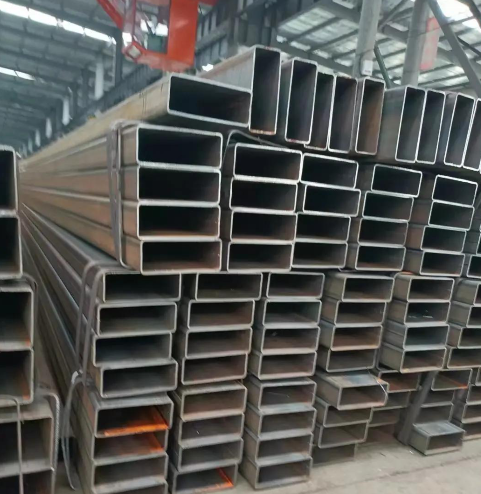
In modern truss bridges, rectangular tubes, due to their regular shape and excellent compressive and bending resistance, are often used as chords and web members. Its smooth surface facilitates welding connections, forming a rigid frame with overall stability far superior to earlier structures that relied on angle steel connected by bolted gusset plates.
Furthermore, the standardized production process of rectangular tubes further improves material utilization. Through
cold bending process, rectangular tubes can be customized with different wall thicknesses and side lengths to meet diverse engineering needs.
For example, in seismic design, adjusting the wall thickness ratio of rectangular tubes can optimize their ductility, allowing the structure to dissipate energy through plastic deformation under seismic loads, avoiding brittle failure. This flexibility makes rectangular tubes adaptable to various scenarios, from temporary supports to permanent buildings, making them a versatile contributor to structural stability.
Conclusion:
The design advantages of rectangular tubes are not only reflected in theoretical calculations but also validated through extensive engineering practice. Whether in frame structures in the building industry, load-bearing components in mechanical manufacturing, or bridge trusses in transportation engineering, rectangular tubes, with their unique geometric characteristics and material efficiency, provide reliable guarantees for structural stability. In the future, with the advancement of materials science and the upgrading of processing technology, the design potential of square and rectangular tubes will be further unleashed, providing stable solutions for more complex engineering scenarios.
Read more: Square Tube Size Chart in mm or Square tube vs Round tube: Which is better?
 sales@hu-steel.com
 English
 Español