sales@hu-steel.com
 English
 Español
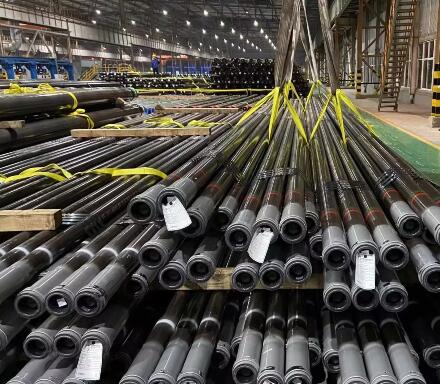
OCTG (Oil Country Tubular Goods) is one of the three fundamental components of drilling and production equipment in the oil and gas industry. It broadly refers to various steel pipe products used in drilling, well completion, and production operations. Its main functions cover wellbore construction, formation isolation, power transmission, and fluid transport, making it an indispensable equipment foundation throughout the entire lifecycle of an oil and gas well.
| Category |
Function |
Service Load |
|
Drill Pipe |
Transmits torque and axial force during drilling, delivers drilling fluid |
Tensile, compressive, torsional, and bending combined alternating stress |
|
Casing Pipe |
Permanently supports the wellbore after cementing, isolates the formation pressure system |
External extrusion, internal pressure, axial tension |
|
Tubing |
Provides a channel for oil and gas lift during production |
Internal pressure, corrosion, axial load |
These three product types follow different design principles, but form a complete cascade system in the downhole structure. Actual application statistics from three wells show that casing usage typically accounts for over 70% of total OCTG consumption.
Production Casing: Provides a permanent channel for oil and gas production.
|
Steel Grade |
Minimum Yield Strength (psi) |
Key Properties |
Applications |
|
J55 / K55 |
55,000 |
High economic efficiency, good machinability |
Shallow well surface casing |
|
N80 |
80,000 |
Moderate strength, mature technology |
Medium-deep well technology/production casing |
|
L80 |
80,000 |
Resistant to sulfide stress cracking (SSCC) |
H₂S-containing acidic environment |
|
P110 |
110,000 |
High strength, suitable for high-pressure conditions |
Deep wells, high-pressure gas wells |
|
Q125 |
125,000 |
Ultra-high strength, high economic cost |
Ultra-deep wells, extreme high-pressure environments |
When selecting materials, well depth, pressure gradient, fluid corrosivity, and operating temperature must be comprehensively considered. In practice, N80 and P110 together account for more than 60% of global OCTG usage, making them the main general-purpose steel grades.
OCTG products are classified into three quality grades: PSL-1, PSL-2, and PSL-3. PSL-3 has the most stringent requirements for material toughness and non-destructive testing, and is suitable for extreme working conditions such as deep water and high-altitude cold environments.
As one of the three major structural components of oil and gas wellbores, OCTG drill pipe, casing, and tubing have clearly differentiated designs in terms of product performance, manufacturing processes, and application scenarios. Understanding its classification system, steel grade characteristics, and specification requirements is a fundamental prerequisite for rational material selection and wellbore integrity design. With the continuous development of deep wells, ultra-deep wells, and acidic gas fields, OCTG is continuously evolving towards higher steel grades, corrosion resistance, and special threading, placing higher demands on the reliability of the product throughout its entire life cycle.
You may be interested in the following technical documents regarding OCTG product dimensions and specifications:
Related information
Copyright @2017 Hunan Standard Steel Co.,Ltd and Husteel Industry Group All Rights Reserved