sales@hu-steel.com
 English
 Español
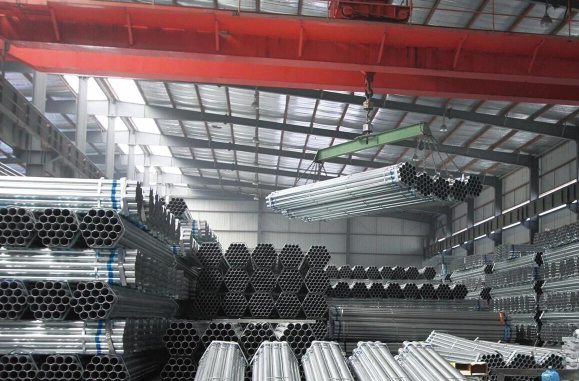
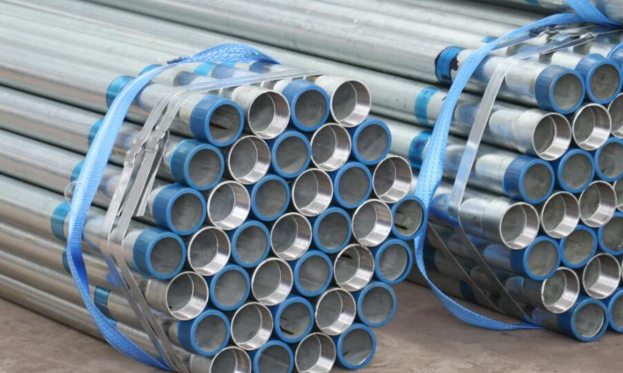
Galvanized steel pipes, also known as GI pipes, are steel pipes with a hot-dip galvanized or electro-galvanized coating. Galvanizing increases the corrosion resistance of the steel pipe and extends its service life. Hot-dip galvanizing technology is currently the most widely used process due to its high-quality coating, strong adhesion, and long service life.
1. Excellent Corrosion Resistance
The zinc coating forms a dense protective film on the steel pipe surface, effectively isolating the steel from corrosive media. Even if there is localized damage, the zinc layer can act as a sacrificial anode to provide cathodic protection, significantly extending its service life.
2. High Strength and Durability
It retains the original mechanical properties of steel, possessing high tensile and compressive strength, and a long service life (20-30 years under normal conditions). It is suitable for building structures, pipeline transportation, and other applications requiring high pressure or heavy loads.
3. Relatively Good High-Temperature Resistance
Galvanized steel pipes are more resistant to high temperatures than most plastic pipes, making them suitable for hot water systems (recommended long-term operating temperature <150℃). Furthermore, it boasts excellent fire resistance, is non-combustible and does not support combustion, making it a designated material for fire sprinkler systems.
4. Mature Technology and Standards
The production, installation, and acceptance of galvanized steel pipes are governed by a complete national and international standard system (such as EN 10255, ASTM A53, ASTM A106), ensuring reliable quality and widespread technology.
5. Economic Efficiency and Cost-Effectiveness
While the initial cost of galvanized steel pipes is slightly higher than that of ordinary steel pipes, the elimination of frequent painting or replacement significantly reduces overall life-cycle maintenance costs. It is particularly suitable for applications requiring high continuity, such as oil and gas pipelines and fire protection systems.
6. Convenient Construction
Galvanized pipes undergo anti-corrosion treatment before leaving the factory, eliminating on-site painting time and accelerating project progress. They can be directly cut, welded, and bent.
7. Safety and Environmental Protection
The hot-dip galvanized layer has stable chemical properties and has long been a standard pipe material for drinking water transportation. It can also be used in contact applications such as agricultural greenhouse supports. Both steel and zinc are 100% recyclable, meeting green building requirements.
When selecting galvanized steel pipes, it's important to note that in long-term stagnant or hot water pipelines, the inner wall of old galvanized steel pipes may corrode due to zinc layer depletion, affecting water quality. For direct drinking water systems with extremely high water quality requirements or long-term hot water supply, stainless steel pipes, copper pipes, or galvanized plastic-lined composite pipes, which are more corrosion-resistant, should be prioritized.
1. Heavy weight
Much heavier than plastic or copper pipes, requiring more labor and support during transportation and installation.
2. Degraded performance in high-temperature environments
When the zinc layer is exposed to temperatures above 200°C for extended periods, it becomes brittle and may even peel off (e.g., in fire-fighting pipelines near fire sources); in extreme low-temperature environments, the toughness of galvanized pipes decreases. Therefore, galvanized pipes cannot be used for steam pipelines.
6. Life cycle limitations
Zinc coating wear is irreversible. Mechanical scratches and high-frequency friction areas (such as handling and hoisting points) can easily expose the substrate. If galvanized steel pipes are partially damaged, professional rust removal and zinc repair are required; on-site repairs often do not match the original factory process.
Cost-sensitive and dry environments: Black pipes + on-site coating can be used (requires regular maintenance)
If used for low-pressure fluid transportation (such as building water supply and drainage, fire water, air conditioning water), electrical conduit, structural support, where cost is sensitive and pressure is not high, galvanized welded pipe is the standard and economical choice.
—Choose Galvanized Welded Pipe.
If used for high-temperature and high-pressure systems (such as hydraulic oil pipes, boiler feedwater pipes, precision instruments), hazardous media, or occasions with extremely high safety and reliability requirements, galvanized seamless pipe must be selected.
—Choose Galvanized Seamless Pipe.
In the general construction sector, over 95% of the galvanized steel pipes we see and use are galvanized welded steel pipes. This is because they fully meet the technical requirements for building water supply and drainage, fire protection, and wiring, and have a significant cost advantage.
In industrial equipment, energy, and chemical industries, galvanized seamless steel pipes are more widely used, primarily due to their reliability and high pressure resistance.
This is a normal phenomenon, commonly known as "yellow water" or "cloudy water." The reasons are:
a. Cloudy water: Usually small air bubbles; it will clear up upon standing.Yes, they can be welded, but post-weld treatment is essential. The high temperature of welding will completely destroy the zinc layer in the weld area. Weld slag must be cleaned immediately with a wire brush after welding, then a high-zinc-content zinc-rich paint should be applied, followed by a topcoat for corrosion protection.
Absolutely!
a. Buried in walls: Generally, no additional external protection is required, provided the galvanized layer is intact and the wall environment is dry. However, in humid or alkaline wall conditions, an additional protective coating is recommended.b. Buried underground: External corrosion protection is mandatory. Common practices include applying asphalt paint or wrapping with polyethylene anti-corrosion tape. For critical projects, composite pipes with a galvanized coating and external plastic coating should be used, or PE pipes should be used directly.
Galvanized steel pipes are a preferred solution that combines reliability, economy, and efficiency. Their core advantages lie in their durability and external corrosion protection. Their main drawback is the potential impact on the internal transported medium (especially water). When selecting galvanized steel pipes, it is essential to weigh their advantages and disadvantages, clearly define the usage environment (such as load-bearing requirements, medium type, and budget period), and match the appropriate zinc coating thickness and steel grade specifications.
In modern engineering, for drinking water systems, galvanized steel pipes are gradually being replaced by stainless steel pipes, copper pipes, and high-quality plastic pipes. However, in fire protection, structural engineering, and wiring applications, galvanized steel pipes remain an indispensable mainstay.
Read more:
Related information
Copyright @2017 Hunan Standard Steel Co.,Ltd and Husteel Industry Group All Rights Reserved