sales@hu-steel.com
 English
 Español
Black steel pipe is a type of carbon steel pipe that has not been galvanized. Its dark color comes from the iron-oxide scale that naturally forms on its surface during the hot-rolling manufacturing process. It is widely used in gas distribution, fire protection, and structural applications due to its strength, weldability, and cost-effectiveness.
This guide covers the definition, types, materials, common uses, sizes, and key benefits of black steel pipe to help you understand this essential industrial product.
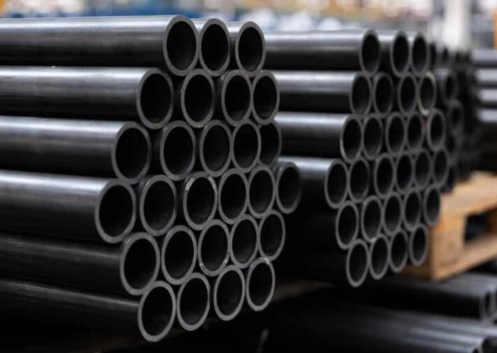
Black steel pipe is made from carbon steel without any galvanizing or coating. The "black" refers to the dark-colored iron-oxide scale (Fe₃O₄) that forms on the pipe's surface during hot rolling or heat treatment. This oxide layer provides limited, short-term corrosion protection during storage and transport, but it is not a permanent anti-corrosion coating.
The primary purpose of black steel pipe is to carry propane or natural gas into residential and commercial buildings. It is also widely used in fire sprinkler systems because it is more fire-resistant than galvanized pipe, and in structural applications such as scaffolding and building frames.
Black steel pipe is available in a wide range of sizes to meet different project requirements:
| Parameter | Range |
|---|---|
| Outer Diameter | 10.3mm – 610mm (1/8" – 24") |
| Wall Thickness | 1.0mm – 20.0mm |
| Length | 6m – 18m (Standard Length 6m/12m) |
△ Common schedules include SCH 40 (standard wall) and SCH 80 (thicker wall for higher pressure).
● Medium-carbon steel: For higher strength and wear resistance.
● High-carbon steel: Not typically used for black steel pipe due to reduced weldability and toughness.
Note: The "black" surface is a result of the manufacturing process, not a different material. The chemical composition of black steel pipe is the same as its carbon steel base.
Black steel pipes are classified by their manufacturing method:
1. Seamless Black Steel Pipe
Seamless black steel pipes are produced by perforating solid steel billets into hollow cylindrical shapes. Since there are no welds, they are stronger and suitable for high-pressure applications (e.g., oil and gas pipelines, high-pressure steam).
2. Welded Black Steel Pipe (ERW)
Welded (ERW) black steel pipes are cylindrical shapes formed by bending and welding steel plates or steel strips. They are a cost-effective alternative to seamless pipes and are commonly used in a variety of industrial and structural applications.
Black steel pipe is also classified by the standard it meets:
● ASTM A53: General-purpose pipe for mechanical and pressure applications
● ASTM A106: Seamless pipe for high-temperature service
● API 5L: Line pipe for oil and gas transmission
● ASTM A500: Structural tubing for construction
| Feature | Seamless Black Steel Pipe | ERW Black Steel Pipe |
|---|---|---|
| Manufacturing | Pierced from solid billet | Welded from steel strip |
| Weld Seam | None | Longitudinal weld seam |
| Pressure Rating | High pressure | Medium pressure |
| Cost | Higher | Lower |
| Typical Use | Oil & gas, high-pressure steam | Water lines, structural, general industrial |
Black steel pipe is used across many industries due to its strength and affordability:
Note: Black steel pipe is not suitable for drinking water systems because it rusts easily and can contaminate the water.
5. Wide Availability: Available in a broad range of specifications and readily available from multiple suppliers.
| Feature | Black Steel Pipe | Galvanized Steel Pipe |
|---|---|---|
| Coating | No coating; natural iron-oxide scale | Zinc coating for corrosion protection |
| Corrosion Resistance | Low; rusts easily if unprotected | High; suitable for outdoor and water applications |
| Fire Resistance | More fire-resistant; no toxic fumes | Zinc coating can emit toxic fumes at high temperatures |
| Common Uses | Gas lines, fire sprinklers, structural applications | Water supply, outdoor piping, handrails |
| Cost | Lower | Higher (due to galvanizing process) |
Choose black steel pipe if you need a cost-effective solution for gas, fire protection, or structural applications where corrosion is not a primary concern.
△ For a more detailed comparison of black steel pipe and galvanized steel pipe, including application selection guides, see our full article: [Black Steel Pipe vs. Galvanized Steel Pipe].
A: es, using common methods such as MIG, TIG, and stick welding. Note that black steel pipe fittings are made of malleable cast iron, which is harder to weld. Remove black oxide, paint, or other contaminants before welding.
Q3: Can I paint or coat black steel pipe to prevent rust?
A: Yes. Painting is the most common and effective way to protect black steel pipe. Clean the surface thoroughly, apply a rust-inhibiting primer, then apply a topcoat. Regular inspections and touch-ups will extend its service life. For underground or outdoor use, additional coatings like coal tar enamel or epoxy may be applied.
Q4: Can black steel pipe be welded to galvanized pipe?
A: Yes, but special precautions are required. The zinc coating on galvanized pipe must be removed from the weld area first, as it produces toxic fumes when heated. Use proper ventilation and respiratory protection. For best results, remove the galvanized coating 1-2 inches from the joint before welding.
Q5. What is the difference between black steel pipe and black iron pipe?
A: They are the same product. "Black iron pipe" is a common trade name for black steel pipe, referring to the same uncoated carbon steel pipe with a dark iron-oxide surface.
Q6. Can black steel pipe be used underground?
A: Not without additional protection. Black steel pipe is not recommended for direct burial because the uncoated surface will corrode rapidly in soil. For underground use, apply a protective coating such as coal tar enamel, epoxy, or wrap the pipe with a corrosion-resistant tape.
Hunan Standard Steel Co., Ltd. (HSCO) is a professional manufacturer and supplier of black steel pipe with years of industry experience. We offer a wide range of sizes, schedules, and materials to meet your project requirements.
▶ Email: sales@hu-steel.com
Get a quick quote today — simply provide your required size, schedule, quantity, and application, and our team will respond within 24 hours.
Read more:
● Carbon Steel vs Black Steel: Key Differences
● Carbon steel tube vs. Stainless steel tube: How to Choose?
● MS vs GI Pipe Differences
● Schedule 40 Black Carbon Steel Pipe
Related information
Copyright @2017 Hunan Standard Steel Co.,Ltd and Husteel Industry Group All Rights Reserved