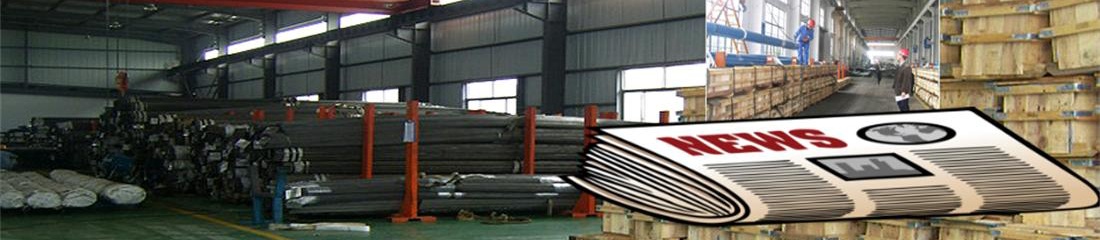
Seamless steel pipe plants are an indispensable part of the modern industrial system. Their core business is processing steel billets into carbon steel (CS) seamless pipes through hot rolling or cold drawing processes. These pipes, due to their seamlessness and high pressure resistance, are widely used in petroleum, natural gas, chemical, boiler, and machinery manufacturing industries. From the rigorous selection of raw materials to the precise testing of finished products, every step embodies the wisdom and hard work of technical personnel, ensuring that every steel pipe meets the performance requirements under extreme working conditions.
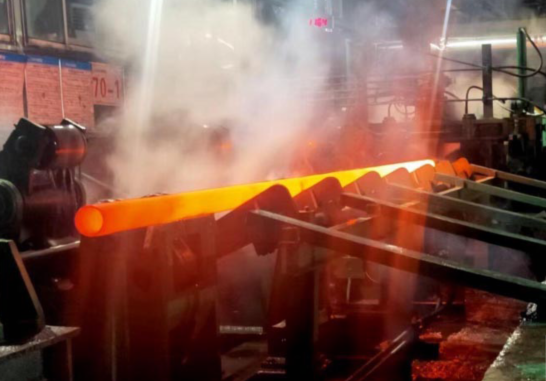
Seamless Steel Pipe Production Process:
The production process of modern seamless steel pipe plants involves transforming high-quality continuous round billets or forgings into high-performance seamless steel pipes through precise thermomechanical processing. This process mainly follows two technical paths:
Hot-rolled seamless pipe production lines are the main force in producing large-diameter, general-purpose pipes. Qualified billets first enter an annular heating furnace and are uniformly heated to a rolling temperature of approximately 1250°C. The red-hot tube blank is then fed into a piercing mill, where, under the combined action of skewed rolls and a mandrel, the center is pierced, forming a hollow tube with uneven wall thickness. Next, the tube enters a continuous rolling mill, where, supported by a long mandrel, it undergoes multiple passes of hot rolling, simultaneously and precisely thinning and extending its outer diameter and wall thickness. The rolled tube is then sizing or tension reducing mill to obtain a precise final outer diameter, and then cooled.
For small-diameter or thin-walled tubes requiring higher dimensional accuracy and surface finish, they enter the
cold drawing/cold rolling line. Here, the hot-rolled tube first undergoes heat treatment (annealing) to soften it, then pickling to remove oxide scale, and subsequently, in multiple passes of cold drawing or cold rolling dies, it is gradually drawn or rolled to the target size at room temperature. This process significantly improves dimensional accuracy and surface quality.
Seamless Tube Quality Control:
At a seamless tube plant, quality is not something that is simply "inspected," but rather a systematic engineering process that permeates the entire process of design, manufacturing, and verification.
1. Precise Process Control
Raw Material Composition Control: Utilizing ladle refining and vacuum degassing technologies ensures high purity of molten steel.
Heat Treatment: The heat treatment furnace is the core of performance determination. Through precise "quenching + tempering" or "normalizing + tempering" processes, the steel pipes acquire the required strength, toughness, and structural stability. Computer-controlled temperature management throughout the process ensures uniform performance.
Online Monitoring: Systems such as laser diameter measurement and ultrasonic wall thickness monitoring provide real-time data feedback, automatically adjusting the rolling mill to guarantee geometric dimensional tolerances.
2. Factory Quality Verification
Internal Quality Inspection: Each steel pipe must undergo online ultrasonic automatic flaw detection to accurately identify internal cracks, inclusions, and other defects; eddy current testing focuses on near-surface quality control.
Mechanical Property Testing: Samples are taken from each batch of steel pipes for tensile, impact, and hardness tests in the laboratory, as well as metallographic analysis, ensuring the data fully complies with standards.
Hydraulic Pressure Testing: Hydraulic pressure tests simulate and exceed working pressures to verify the steel pipes' pressure-bearing capacity and sealing performance under extreme conditions. Full-size scanning: High-precision instruments perform 100% inspection of the steel pipe's outer diameter, wall thickness, ovality, length, and curvature.
These measures collectively build a quality barrier, allowing customers to use the pipes with confidence and avoiding safety accidents or economic losses caused by pipeline failures.
With technological advancements, seamless pipe manufacturers are undergoing intelligent transformation. Automated production lines reduce manual intervention and improve production efficiency; IoT technology enables real-time monitoring of equipment status, and preventative maintenance reduces downtime risks; big data analysis optimizes process parameters and improves product qualification rates. Some leading companies have also introduced AI visual inspection systems capable of identifying surface defects with micron-level precision, pushing quality control to new heights.
3. Environmental Pressure
Environmental pressure is another major challenge facing seamless pipe manufacturers. Iron oxide scale, cooling water, and waste gas generated during traditional production processes can pollute the environment if not properly treated. Therefore, many factories have invested in dust removal systems, wastewater treatment plants, and waste heat recovery devices to convert waste into usable resources. For example, iron oxide scale can be recycled for steelmaking, and cooling water can be treated and reused, reducing both costs and emissions, achieving a win-win situation for both economic and environmental benefits.
Changes in market demand drive product innovation at the seamless steel pipe plant. In addition to standard-sized steel pipes, customers increasingly require customized solutions, such as corrosion-resistant alloy pipes, ultra-low temperature pipes, and high-precision smooth pipes. To this end, the plant collaborates with research institutions to develop new materials and processes to meet the needs of emerging fields such as deep-sea oil extraction and deep-sea shale gas development. This market-oriented R&D model allows the seamless steel pipe plant to maintain a leading position in the competition.
Looking to the future, the seamless steel pipe plant will continue to play a cornerstone role in industry. With the transformation of the global energy structure and the upgrading of manufacturing, the demand for high-performance steel pipes will continue to grow. At the same time, intelligent and green development will become the main themes of industry development, propelling the seamless steel pipe plant towards higher efficiency, lower energy consumption, and higher quality. On this road full of challenges and opportunities, the seamless steel pipe plant will surely sail towards a brighter tomorrow with innovation as its sail and quality as its rudder.
Read more: Types of Seamless Carbon Steel Pipes or Seamless vs Welded Pipe
 sales@hu-steel.com
 English
 Español