Galvanized Seamless Pipe combines the high strength and pressure resistance of seamless steel pipe with the superior corrosion protection of a zinc coating. This article covers its key properties, manufacturing process, application fields, and selection considerations to help you choose the right pipe for your project.
What is Galvanized Seamless Pipe?
Galvanized Seamless Pipe (GI Seamless Pipe) is a seamless steel pipe that has been galvanized, which has the performance advantages of seamless steel pipe and the anti-corrosion properties of the galvanized layer. The production process of galvanized seamless steel pipe mainly includes two core links: seamless steel pipe manufacturing and galvanizing.
Basic composition:
Seamless steel pipe: Made by hot rolling or cold drawing, it has no welds, no joints, strong integrity, and avoids the risk of leakage or rupture caused by welding defects. Seamless pipes have high strength and high pressure resistance, and are suitable for more complex stress environments (such as oil pipelines and hydraulic systems).
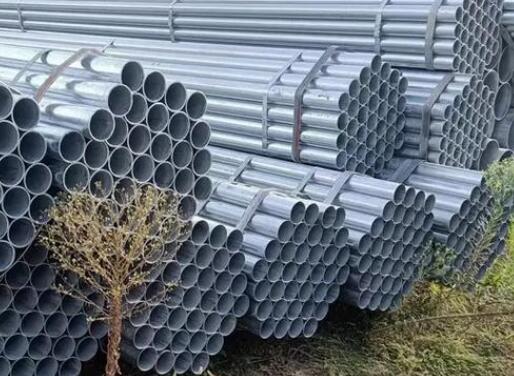
Galvanized protective layer:
A layer of zinc is plated on the surface of the steel pipe (usually by hot-dip galvanizing or electro-galvanizing process) to form a protective barrier to prevent rust.
a. Hot-dip galvanizing: The zinc layer is thicker (50-150μm), has strong adhesion, and has a long corrosion resistance life (up to 20-30 years outdoors).
b. Electro-galvanizing: The surface is smoother, but the zinc layer is thinner (5-30μm), suitable for indoor or mildly corrosive environments.
Characteristics and Advantages of Galvanized Seamless Pipes:
Galvanized seamless pipes combine the high performance of seamless steel pipes with the anti-corrosion advantages of the galvanized layer.
● Superior Corrosion Resistance: Hot-dip zinc coating (50-150μm) protects against rust and extends service life, even in harsh environments like marine and chemical applications.
● High Strength & Toughness: Seamless structure ensures reliability under high pressure and impact. After hot-dip galvanizing, its strength and toughness have not only not decreased, but have been improved to a certain extent. This is because some physical and chemical changes in the hot-dip galvanizing process make the organizational structure of the steel pipe more uniform and dense.
● Excellent Workability: Can be bent, welded, and cut to meet project requirements. In pipeline installation projects, multiple sections of hot-dip galvanized seamless steel pipes can be quickly and efficiently connected into a complete pipeline system through welding to ensure the sealing and stability of the pipeline and prevent medium leakage.
● Long Service Life & Low Maintenance: Sacrificial anode protection (even if the surface is scratched, zinc can still prioritize corrosion protection of the steel pipe) reduces the need for frequent anti-rust paint, reducing maintenance costs.
● Wide Compatibility: Available in various sizes (OD 6mm-1200mm) and can be customized. It can be directly connected with standard parts such as flanges and valves, and is easy to install.
Product Specifications:
Parameter
|
Range / Details
|
Outer Diameter (OD)
|
6mm – 1200mm; Commonly available up to 8" (219.1mm); larger sizes available upon request.
|
Wall Thickness
|
Customizable based on schedule (SCH 40, 80, etc.)
|
Standard
|
ASTM A53, ASTM A106, API 5L
|
Zinc Coating
|
Hot-dip (50-150μm)
|
Length
|
Custom lengths available
|
Seamless Pipe Galvanizing Treatment Process:
1. Hot dip galvanizing (mainstream process, thick zinc layer)
Process:
a. Degreasing: alkaline solution removes oil stains on the surface of steel pipes.
b.
Pickling: hydrochloric acid or sulfuric acid removes rust and oxide layer.
c. Plating assistance: immerse in zinc ammonium chloride solution to prevent regeneration oxidation.
d. Hot dip galvanizing: immerse in 450℃ molten zinc liquid (time is adjusted according to thickness requirements). The temperature and immersion time are critical for coating quality; for a detailed explanation of the principles behind this process,
see our [Hot Dip Galvanizing Process Guide].
e. Cooling: water cooling or air cooling to form a zinc-iron alloy layer.
f. Passivation: chromate treatment enhances corrosion resistance (optional).
Parameter control:
Zinc liquid temperature: 445-465℃ (too high will easily make the zinc layer embrittled).
Zinc layer thickness: usually 50-150μm, which can be adjusted by air knife blowing.
For a detailed step-by-step production guide, including pre-treatment and post-treatment stages, please refer to our full process breakdown.
2. Electro-galvanizing (suitable for thin layer requirements)
Process:
a. Electrolytic degreasing: electrochemical method to thoroughly clean the surface.
b. Activation: weak acid treatment to improve the adhesion of the coating.
c. Electroplating: electrolytic deposition of zinc layer (5-30μm) in zinc salt electrolyte.
d. Sealing treatment: coating anti-discoloration agent or passivation film.
Features: The surface is uniform and smooth, but the anti-corrosion life is short.
Special process variants:
Alloy galvanizing: After galvanizing, it is heated to 500-550℃ to form a zinc-iron alloy layer, which has both weldability and corrosion resistance.
Double-sided galvanizing: simultaneous galvanizing of the inner and outer walls (used for internal corrosion protection of water pipelines).
Galvanized ERW Pipes vs. Galvanized Seamless Pipes: How to Choose?
Choose galvanized ERW pipes when:
● Large-volume standardized procurement is required (such as municipal pipe network)
● Small and medium-caliber (DN≤300mm) low-pressure fluid transportation
Choose galvanized seamless steel pipes (SMLS) when:
● Occasions with extremely high safety requirements (such as gas mains)
● Special corrosive environments (with thick galvanized layer or composite anti-corrosion)
By comprehensively considering cost, working conditions and service life, the best choice can be made. In general civilian fields, galvanized welded steel pipes are sufficient to meet the needs; in key industrial parts, seamless pipes are still an irreplaceable choice.
Application Fields of Galvanized Seamless Pipes:
Galvanized seamless steel pipes are widely used in fields with strict requirements on material performance due to their high strength, high pressure resistance, and corrosion resistance. The following are its main application scenarios and industry demand analysis:
1. Oil and gas industry
Oil and gas pipelines:
The seamless structure ensures sealing under high pressure, and the galvanized layer resists soil and medium corrosion.
Typical scenarios: oil field gathering and transportation pipelines, submarine gas pipelines (need to strengthen the zinc layer or composite coating).
Drilling equipment:
Used as
drill pipes and casings, the galvanized layer prevents corrosion from acidic media underground.
2. Energy and power industry
Thermal power plants and nuclear power plants:
Boiler pipes, superheater pipes: resistant to high temperature and high pressure (need to be matched with alloy steel substrate).
Condenser pipes: The galvanized layer delays cooling water corrosion.
New energy facilities:
Solar support structure: long-term weather resistance outdoors, and the zinc layer protects maintenance-free.
3. Chemical and pharmaceutical industries
Corrosive media transportation:
Process pipelines for transporting acid, alkali and salt solutions (the thickness of the zinc layer needs to be selected according to the concentration of the medium).
Reaction equipment components:
Matching pipelines for high-pressure reactors, seamless structures to avoid the risk of weld leakage.
4. Construction engineering
Fire protection system:
Fire sprinkler pipes: galvanized seamless pipes are pressure-resistant and rust-proof.
Steel structure support:
Load-bearing columns of high-rise buildings, bridge cable casings, with both strength and corrosion resistance.
Underground pipeline network:
Municipal water supply and drainage, gas pipelines, galvanized layer resists electrochemical corrosion of soil.
5. Machinery manufacturing and transportation
Hydraulic system:
Engineering machinery hydraulic cylinders, high-pressure oil pipes, cold-drawn seamless pipes to ensure precision.
Automobiles and ships:
Automobile drive shafts, ship exhaust pipes, galvanized layers adapt to humid/salt spray environments.
Rail transit:
Subway tunnel drainage pipes, signal system brackets.
6. Agriculture and water conservancy projects
Irrigation systems:
Deep well pump pipes, sprinkler main pipes, rust-resistant and strong pressure-bearing capacity.
Water treatment equipment:
Aeration pipes and filter device frames of sewage treatment plants.
7. Special application scenarios
Food industry:
Electrogalvanized seamless pipes (food-grade passivation treatment required) are used for beverage delivery.
Medical gas:
Hospital oxygen and vacuum pipelines require no leakage and clean surfaces.
Military industry and aerospace:
Rocket fuel delivery pipes, armored vehicle hydraulic systems, customized high-strength alloy galvanized pipes.
Important Notes:
1. Avoid high-temperature environment: the zinc layer may fall off above 300℃, and other anti-corrosion methods (such as spraying) need to be used instead.
2. Galvanized layer thickness: hot-dip galvanized layer is thicker (usually 50-100μm), electro-galvanized layer is thinner (5-30μm), and needs to be selected according to the environment.
3. Subsequent processing: If the galvanized steel pipe needs to be cut or welded, the cut needs to be re-treated with anti-corrosion (zinc supplementation or epoxy resin coating).
4. Cost trade-off: The price of galvanized seamless steel pipe is higher than that of welded pipe, but the comprehensive cost of long-term use is lower.
5. Environmental protection: The galvanizing process may involve pickling and zinc bath, which must meet environmental protection standards.
Market Trends and Innovation Directions:
Green galvanizing technology: chromium-free passivation and low-temperature galvanizing process reduce environmental pollution.
Composite coating pipe: galvanizing + epoxy resin coating (such as
3PE anti-corrosion) to extend the life of submarine pipelines.
Intelligent application: galvanized seamless pipe with integrated sensors to monitor the health of pipelines in real time.
Frequently Asked Questions:
Q1: What is the difference between hot-dip galvanized and electro-galvanized seamless pipes?
A: Hot-dip galvanizing provides a thicker, more durable zinc layer (50-150μm) with superior corrosion resistance, ideal for outdoor and harsh environments. Electro-galvanizing offers a thinner, smoother coating (5-30μm) suitable for indoor or mild conditions.
Q2: Can galvanized seamless pipe be used for high-temperature applications?
A: The zinc coating may start to degrade above 300°C. For high-temperature applications, alternative anti-corrosion methods or alloy steel substrates should be considered.
Q3: How does the cost of galvanized seamless pipe compare to galvanized welded pipe?
A: Galvanized seamless pipe has a higher initial cost due to its complex manufacturing process. However, its superior strength and longer service life often result in lower long-term costs, especially in critical or high-corrosion environments.
Need Galvanized Seamless Pipe for Your Project?
Contact HSCO today for expert advice and competitive quotes. We offer a full range of galvanized seamless pipes in various sizes, materials, and specifications.
▶
Email: sales@hu-steel.com
Get a Quick Quote: Please provide your required size, grade, quantity, and application, and our team will respond within 24 hours.
Related Resources:
● MS vs GI Pipe: Differences, Full Form & Which to Choose?
● Black Steel Pipe vs. Galvanized Steel Pipe
● Guide for selecting the thickness of galvanized steel pipe
 sales@hu-steel.com
 English
 Español