sales@hu-steel.com
 English
 Español
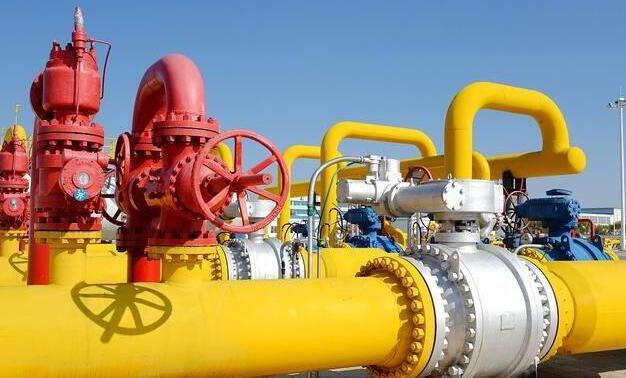
Pipelines often transport high-pressure, flammable, explosive, or toxic media (such as natural gas, crude oil, and chemical products). Welded joints are the weakest points in pipeline continuity. The choice of welding method depends primarily on pipe diameter, wall thickness, steel grade, construction environment (onshore/offshore), and project specifications.
1. Manual Arc Welding
Method: Using welding rods and manual operation. This is the most traditional and flexible method.
Applicable Scenarios:
Early pipelines, small-diameter pipelines.
Special locations where automatic welding cannot be used, such as repair welds, joints, and crossing sections.
Mountainous areas with harsh conditions and complex terrain.
Characteristics: Simple equipment, highly adaptable, but highly dependent on welder skills, relatively low efficiency, and relatively large quality fluctuations.
2. Semi-Automatic Welding
Method: Using solid or flux-cored welding wire, along with a shielding gas (such as CO₂ or a mixed gas), and manually operating the welding torch.
Common Process: Gas metal arc welding (GMAW).
Applicable Scenarios: Widely used for filling and capping welding of small and medium diameter pipelines, or as a supplement to automatic welding.
Features: Higher efficiency and quality than manual welding, good flexibility, and one of the main processes in onshore pipeline construction.
3. Fully Automatic Welding
Method: Uses a dedicated fully automatic pipeline welding system that travels on a track and is controlled by a computer to complete all weld passes.
Mainstream Technologies:
Gas-shielded automatic welding: Such as CRC Evans' P-series and NOREAST's automatic welding systems.
Submerged arc welding: Mainly used for twin pipes or onshore prefabrication, performing high-efficiency welding at a fixed station.
Applicable Scenarios:
The mainstream and preferred method for large-diameter, thick-walled, high-grade steel (such as X70, X80 steel) long-distance trunk lines.
Suitable for construction sites with relatively flat terrain, suitable for mechanized assembly line operations.
c. Fully Automated Welding
Solid welding wire + mixed shielding gas
Key control points: bevel accuracy, assembly gap, welding parameter programming, track stability.
Core quality: Relies on qualified welding procedure qualifications, certified welders, and strict field quality control (NDT).
Industry trend: For large-diameter, high-grade steel pipelines, fully automated welding has become the global mainstream and standard due to its significant advantages in ensuring consistent weld quality and increasing construction speed. Manual welding and semi-automatic welding are indispensable in specific situations due to their flexibility.
Read more: Advantages and Disadvantages of Pipeline Transportation or Seam Pipe vs. Seamless Pipe
Related information
Copyright @2017 Hunan Standard Steel Co.,Ltd and Husteel Industry Group All Rights Reserved