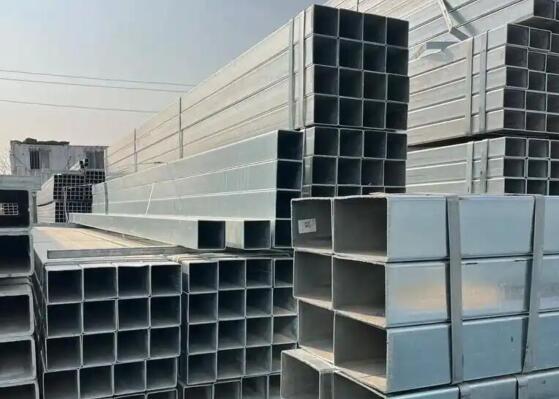
Hot-dip galvanized square and rectangular tubes are indispensable materials in steel structures, building curtain walls, photovoltaic brackets, and machinery manufacturing. Their price fluctuations directly affect project procurement costs. However, the price of hot-dip galvanized square and rectangular tubes is not fixed but determined by a variety of factors. This article will systematically outline the core influencing factors and provide a realistic price reference range.
1. Raw Material Costs
The main raw materials for hot-dip galvanized square and rectangular tubes are steel (such as strip steel and hot-rolled coils) and zinc ingots. Steel costs typically account for 70%-80% of the total production cost, and its price fluctuations are directly transmitted to the finished tubes.
● Iron ore and coke: As upstream raw materials for steel, tight supply or rising prices will push up steel mill ex-factory prices.
● Zinc ingot prices: Zinc consumption is significant in the hot-dip galvanizing process. For every 10% increase in zinc prices, the processing cost of square and rectangular tubes increases by approximately 5%-8%.
Data shows that for every 10% increase in steel prices, the price of hot-dip galvanized square and rectangular tubes typically increases by 8%-10%.
2. Market Supply and Demand
Demand Side:
●Construction and Infrastructure: Strong demand in the construction industry, such as large-scale infrastructure construction and real estate development projects, significantly increases the demand for hot-dip galvanized square and rectangular tubes. Because of their excellent corrosion resistance, hot-dip galvanized square and rectangular tubes are commonly used in building structures, railings, and other components.
●Industrial Manufacturing: Demand for hot-dip galvanized square and rectangular tubes in industrial sectors such as machinery manufacturing, automobile frames, agricultural greenhouses, and warehouse racking also affects prices. When these industries are expanding, they require more hot-dip galvanized square and rectangular tubes to manufacture equipment and parts, often leading to price increases driven by demand.
Supply Side:
●Capacity and Operating Rate: The number of hot-dip galvanized square and rectangular tube manufacturers nationwide or regionally, monthly output, and equipment maintenance status all affect market supply.
●Inventory Levels: High social inventory levels put downward pressure on prices; low inventory levels and increased demand tend to lead to price increases.
3. Galvanizing Process and Quality
Galvanizing Process:
Different galvanizing processes have different costs. Hot-dip galvanizing is relatively complex, requiring the square and rectangular tubes to be immersed in molten zinc. This process provides good galvanizing results, but the cost is higher, resulting in a relatively higher price for hot-dip galvanized square and rectangular tubes. Some simpler galvanizing processes, while cheaper, may have poorer galvanizing quality. However, in markets where galvanizing quality requirements are not high, they may be sold at a lower price. The processes are as follows:
●
Hot-dip galvanizing: The formed square and rectangular tubes are immersed in molten zinc. The zinc layer is thick (average 60-100µm), with strong adhesion, and a corrosion resistance life of over 30 years. The cost is higher.
● Electro-galvanizing (cold galvanizing): The zinc layer is thin (10-30µm), and the corrosion resistance is far inferior to hot-dip galvanizing. The price is also significantly lower, and it is mostly used for indoor or dry environments.
Galvanizing Quality:
Zinc layer thickness: The thicker the zinc layer, the longer the corrosion resistance time, and the higher the price.
Uniformity and Adhesion: High-quality products with no uncoated areas, no zinc nodules, and no peeling are typically priced 5%-15% higher.
4. Specifications and Dimensions
The price of hot-dip galvanized square and rectangular tubes is directly related to their side length, wall thickness, and length. General guidelines:
Small specifications (side length 20-50mm, wall thickness 1.5-2.5mm): Price per piece approximately 20-100 RMB (based on a 6-meter standard length).
Medium specifications (side length 50-100mm, wall thickness 2.5-4.0mm): Price per piece approximately 100-400 RMB.
Large specifications (side length 100-200mm and above, wall thickness 4.0-8.0mm): Price per piece can reach 400-1500 RMB or even higher.
Note: The above are reference prices for the domestic market in 2026. Actual prices are subject to change based on the market conditions on the day of purchase.
5. Regional and Transportation Costs
Prices for hot-dip galvanized square and rectangular tubes vary across different regions, primarily influenced by the following factors:
a. Production Cluster Effect: Production areas such as Daqiuzhuang in Tianjin, Tangshan, and Foshan experience intense competition, resulting in prices typically lower than those in more remote areas.
b. Transportation Distance and Method: Steel products are heavy, leading to high freight costs. Projects located more than 500 kilometers from the production site may incur additional transportation costs of 80-150 RMB/ton.
c. Local Market Saturation: Prices may be slightly higher in industrially developed regions with strong demand; however, competition among multiple distributors in a given area can drive prices down.
Current price range for hot-dip galvanized square and rectangular tubes (May 2026):
Specifications
|
Side Length Range (mm)
|
Wall Thickness Range (mm)
|
Price per 6-meter piece (RMB)
|
Price per ton (RMB/ton)
|
Small Size
|
20-50
|
1.5-2.5
|
20-100
|
4500-5500
|
Medium Size
|
50-100
|
2.5-4.0
|
100-400
|
4000-5000
|
Large Size
|
100-200+
|
4.0-8.0
|
400-1500+
|
4200-5200
|
Processing fee per ton from "black square tube" to "hot-dip galvanized square tube": Approximately RMB 1200-1600/ton.
Conclusion:
The price of hot-dip galvanized square and rectangular tubes is determined by five major factors: raw material cost, market supply and demand, galvanizing process, specifications and dimensions, region, and transportation. As a purchaser, we recommend that you:
● Monitor the futures and spot price trends of iron ore, steel billets, and zinc ingots;
● When comparing prices, be sure to confirm that the galvanizing process is "hot-dip galvanizing" and request a galvanized layer thickness test report;
● Before making large-volume purchases, you can inquire with multiple manufacturers and calculate the price including tax.
Read more: MS and GI Pipe Difference or Square Tube Size
 sales@hu-steel.com
 English
 Español