sales@hu-steel.com
 English
 Español
Do carbon steel pipes require pickling and passivation treatment?
Whether carbon steel pipes (CS pipe) need pickling and passivation depends on their specific application. Generally, carbon steel pipes transporting fluids (especially media requiring high cleanliness) need this treatment, while pipes used for structural support usually do not.
When is it mandatory? When is it not required?
● Scenarios requiring pickling and passivation:
Fluid transport pipelines: Hydraulic systems, lubricating oil pipelines, chemical materials, steam, oxygen, and other media requiring strict cleanliness of the pipeline interior;
Newly installed hydraulic system pipelines: Technical specifications usually explicitly require pickling and passivation treatment;
Boiler equipment, pharmaceutical or food-grade pipelines: System cleanliness and rust prevention must be ensured.
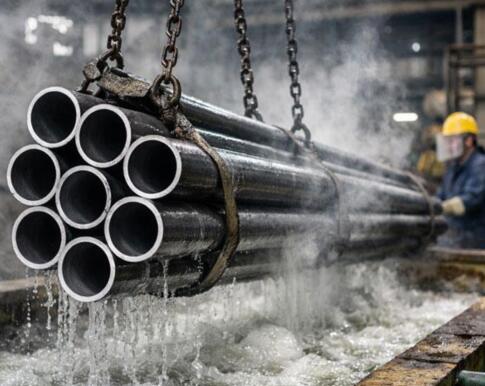
Many people confuse the "pickling and passivation" of carbon steel pipes with that of stainless steel. Here's a clarification:
Pickling and passivation of stainless steel forms a dense layer of chromium oxide "armor" on the surface, providing long-term corrosion protection. This is the core anti-corrosion method for stainless steel.
However, the so-called "pickling and passivation" of carbon steel has a different core purpose. For carbon steel pipes, the primary task of this process is rust removal and cleaning. Passivation is merely a short-term protective film formed incidentally, mainly for short-term protection before delivery and installation, and is not a permanent anti-corrosion solution.
Why do carbon steel pipes need pickling and passivation?
During manufacturing, transportation, and storage, carbon steel pipes are prone to accumulating contaminants such as rust, scale, and oil. Using them directly without treatment can affect their flow capacity, corrosion life, and the adhesion of subsequent coatings. Therefore, pickling and passivation are crucial pretreatment steps for carbon steel pipes.
Pickling effectively removes rust, scale, welding slag, and oil from both inside and outside the pipes. This step is particularly important for systems with high internal cleanliness requirements, such as hydraulic oil pipelines and industrial transport pipelines. Residual impurities may detach during operation, clogging valves or damaging pumps.
In conclusion, selecting the appropriate pickling and passivation process based on the pipeline material, operating environment, and subsequent process requirements is one of the effective means to extend the service life of carbon steel pipelines.
Read more: Carbon Steel vs Black Steel or Schedule 40 Carbon Steel Pipe
Related information
Copyright @2017 Hunan Standard Steel Co.,Ltd and Husteel Industry Group All Rights Reserved