sales@hu-steel.com
 English
 Español
1) Advantages of Seamless Stainless Steel Pipes:
1. High Temperature and High Pressure Resistance
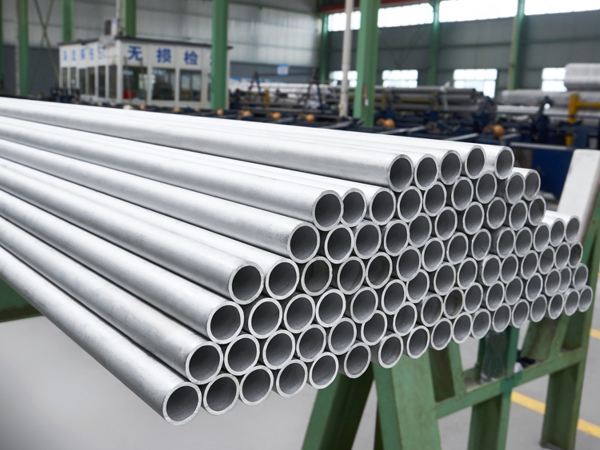
Seamless stainless steel pipes have no weld seams, resulting in uniform overall structural strength. They can withstand high temperature and high pressure environments, making them particularly suitable for high-end industrial fields such as petrochemicals, power generation, and boilers.
2. Excellent Corrosion Resistance
Made of high-quality stainless steel, they possess excellent corrosion resistance, enabling long-term stable operation in harsh environments such as humid, acidic, and alkaline conditions without easily rusting or corroding. Especially when using grades such as 304 and 316, they can cope with most corrosive environments.
3. High Safety and Reliability
The absence of weld seams eliminates the risk of leakage due to welding defects. When transporting high-pressure, flammable, explosive, or toxic media, their safety is significantly superior to welded pipes.
4. Long Service Life
Seamless stainless steel pipes are high-strength, wear-resistant, and impact-resistant, and are not easily deformed or damaged. Under normal use and maintenance conditions, their service life can reach decades.
5. Easy Cleaning and Maintenance
The smooth and dense surface of the pipe reduces friction, making it difficult for dirt and bacteria to adhere. Daily cleaning only requires wiping with a soft cloth and neutral detergent, followed by drying with a dry cloth to restore its shine, resulting in low maintenance costs.
2) Disadvantages of Seamless Stainless Steel Pipes:
4. Surface Quality Defects
Seamless pipes may have minor defects such as pitting, oxide scale, and microcracks on their inner and outer surfaces, resulting in a less smooth surface compared to high-quality welded pipes that have undergone bright annealing.
5. Longer Delivery Time
The production process for seamless pipes is lengthy, and customized products typically require a longer production cycle, leading to longer delivery times than welded pipes. The range of specifications available in stock is also relatively limited.
6. High Welding Difficulty
Welding stainless steel seamless pipes requires specific welding materials, shielding gases, and specialized welding techniques, demanding high levels of welder skill. Without post-weld pickling and passivation treatment, localized corrosion resistance may decrease.
FAQ:
Q1: Are seamless stainless steel pipes easy to maintain? How does their maintenance differ from that of ordinary stainless steel (such as steel plates and welded pipes)?
A: Yes, they are easy to maintain.
They don't require regular waxing like solid wood, nor do they need rust-prevention painting like wrought iron. Daily maintenance only requires following a simple principle: gentle cleaning, timely drying, and avoiding contact with strong acids and alkalis. Regular wiping with a soft cloth and dish soap is sufficient.
Special Features (Specific to Pipe Material):
● Internal cleaning is crucial: As a pipeline for transporting fluids, the cleanliness and dryness of the inner wall are equally important. Long-term water accumulation or residual corrosive liquids will cause rust to begin from the inside.
● Joints are weak points: Although the pipe body has no welds, threads and crimp joints are prone to accumulating dirt and are more susceptible to crevice corrosion, requiring thorough inspection.
● Higher pressure resistance: Maintenance includes not only cleaning but also regular pressure testing to confirm structural safety. For example, holding the pipe at 1.5 times the working pressure for 30 minutes should result in a pressure drop of no more than 5%.
Q2: When is it necessary to choose seamless stainless steel pipe instead of welded pipe?
A: When your project involves high-risk, high-requirement scenarios, seamless pipe is a more reliable choice.
Prefer Seamless Pipe:
● High-Pressure Environments: Working pressures exceeding 0.8MPa, or high-pressure pipelines in hydraulic systems, boilers, petrochemicals, etc. Welds become weak points under such pressure.
● High-Temperature Environments: Used in power plants, nuclear power plants, heat exchangers, and other high-temperature conditions. The overall structure of seamless pipe provides more stable performance at high temperatures.
● Strong Corrosive Media: Transporting highly corrosive chemicals such as acids, alkalis, and salts. The seamless structure avoids preferential corrosion at weld seams due to component segregation or residual stress.
● Precision Mechanical Components: Used in manufacturing precision instruments, automotive fuel lines, hydraulic cylinders, and other parts with extremely high strength and sealing requirements.
Prefer Welded Pipe:
In most everyday civilian and general industrial scenarios, stainless steel welded pipe (ERW) is a sufficient and more economical choice.
● Low-pressure fluid transportation: Such as urban water supply, gas supply, air conditioning pipelines, fire protection systems, etc., typically with pressures below 0.8MPa.
● Decoration and structure: Such as stair handrails, guardrails, door and window frames, furniture, display racks, etc., primarily requiring aesthetics, precise dimensions, and controllable costs.
● High requirements for dimensions and appearance: Welded pipes have more uniform wall thickness (deviation less than 0.05mm-8mm), smoother inner and outer surfaces, and better visual effects.
● Cost sensitive: The production cost of welded pipes is usually 20%-30% lower than seamless pipes of the same specifications, or even more.
Q3: Are stainless steel seamless pipes truly rust-free?
A: No. They may still rust in environments containing chloride ions (such as seawater, bleach), requiring regular cleaning and maintenance.
Q4: Will uneven wall thickness of seamless pipes affect their use?
A: For products conforming to national standards (such as GB/T 14976, ASTM A312), wall thickness deviations are within the allowable range and have no substantial impact on most applications.
Q5: Are the welds on stainless steel welded pipes prone to rust and cracking?
A: This is a classic concern, but you can now rest assured.
● Regarding strength: Modern high-quality welded pipes undergo high-temperature bright annealing and other heat treatments after welding. This process eliminates internal stress at the weld, ensuring a high degree of consistency in microstructure and chemical composition between the weld and the base material. During destructive tests such as flattening, flaring, and reverse bending, the base material usually deforms first, while the weld remains intact. Simply put, a high-quality weld has strength comparable to the base material itself.
● Regarding corrosion resistance: Yes, if not properly treated, the weld can indeed be a "breakthrough point" for corrosion. However, reputable manufacturers will use processes such as pickling and passivation to remove the oxide scale (heat-affected zone) at the weld, reforming a dense protective film and restoring its corrosion resistance to the same level as the base material. Of course, in extremely harsh corrosive environments, seamless pipes remain the preferred choice.
Conclusion:
Stainless steel seamless pipes hold an irreplaceable position in high-end applications such as petrochemicals, power generation, boilers, hydraulic systems, food, and pharmaceuticals due to their high temperature and pressure resistance, excellent corrosion resistance, high safety, long service life, ease of cleaning and maintenance, and good fatigue resistance. Their seamless, integral structure makes them particularly reliable under extreme working conditions and dynamic loads.
Go here to learn more: Carbon steel tube vs. Stainless steel tube
Related information
Copyright @2017 Hunan Standard Steel Co.,Ltd and Husteel Industry Group All Rights Reserved