What is the difference between ERW and Seamless stainless steel pipes?
Simply put: stainless steel pipes are a general term, and steel pipes are made of stainless steel materials.
Seamless pipes and
ERW pipes refer to the categories or production processes of stainless steel materials into pipes.
The difference between seamless pipes and ERW pipes:
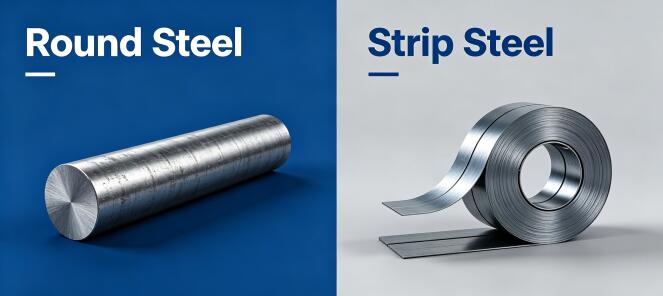
Simply put, one has a weld and the other does not; in addition, the raw materials processed are different. Seamless pipes are made of stainless steel round bars by heating and perforating, and ERW pipes are made of stainless steel strips by rolling and then welding.
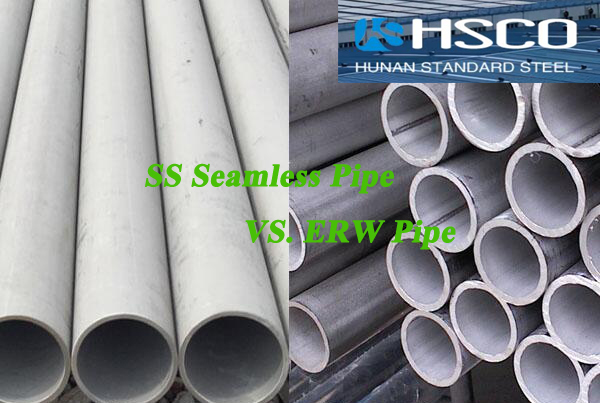
Welded pipes are divided into straight seam welded pipes and spiral welded pipes according to the shape of the welds. The ERW discussed in this article refers to straight seam high-frequency electric resistance welded pipes.
ERW vs Seamless Stainless Steel Pipe: Full Comparison
The table below provides a comprehensive comparison of ERW stainless steel tubing and seamless stainless steel tubing from raw materials, processes, performance to cost, allowing you to quickly assess the differences between the two. Please note: Carbon steel ERW tubing size can be up to 24 inches in length, but stainless steel ERW tubing, due to work hardening limitations, typically has a maximum length of only about 8 inches. Do not confuse them.
Comparison Dimensions
|
ERW Stainless Steel Pipe
|
Seamless Stainless Steel Pipe
|
Raw Materials
|
Stainless steel strip/coil
|
Solid stainless steel round bar (bulk)
|
Manufacturing Process
|
Cold bending + resistance welding (with weld seam)
|
Heated piercing + extrusion/stretching (without weld seam)
|
Appearance Characteristics
|
Longitudinal weld seam on pipe wall
|
Seamless throughout
|
Standard Outer Diameter Range
|
1/2" ~ 8" (maximum approximately 10")
|
1/8" ~ 24" (large diameter uneconomical)
|
Wall Thickness Uniformity
|
Uniform, no eccentricity
|
Possible wall thickness deviation
|
Weld Seam
|
Yes, equivalent to the base material after solution treatment
|
No
|
Pressure Resistance
|
Medium and low pressure (≤10MPa)
|
High pressure (up to 70MPa and above)
|
Corrosion Resistance (Standard Production)
|
Same as the base material (after solution treatment)
|
Consistent with the body, no risk of heat-affected zone
|
Production Cost
|
Low, high efficiency
|
High, complex process
|
Price
|
20-40% cheaper
|
More expensive
|
Optimal Applications
|
Building decoration, food machinery, medium and low pressure pipelines, heat exchangers
|
Petrochemical high-pressure pipelines, boilers, nuclear power, aerospace
|
△ In general: ERW welded pipes are economical and efficient, suitable for medium and low pressure conventional applications; seamless pipes offer superior performance and are a reliable choice for high pressure, high temperature, or harsh conditions.
Specification Range:
The standard outer diameter range for ERW stainless steel pipes is 1/2″ to 8″ (approximately 13 to 203 mm). Due to the work hardening limitations of stainless steel during cold bending, the maximum diameter is typically only about 8″.
The standard outer diameter range for seamless stainless steel pipes is 1/8″ to 24″ (approximately 6 to 610 mm), but the cost of large-diameter seamless pipes increases dramatically, and LSAW welded pipes are usually used as a substitute.
The above are the standard outer diameter ranges for ERW and seamless stainless steel pipes. For more comprehensive size data—including wall thickness grades and weight—please refer to our [Stainless Steel Pipe Size Specification Chart].
Hunan Standard Steel Co., Ltd (HSCO) is a leading Chinese manufacturer and exporter of ERW welded pipes and seamless stainless steel pipes. For inquiries, please contact us at: sales@hu-steel.com.
ERW Stainless Steel Pipe vs Seamless Stainless Steel Pipe: 6 Key Differences
Understanding the 6 key differences below will help you make a more informed selection. Each difference has a direct impact on performance, cost, and long-term reliability.
1. Raw Materials: Billet vs. Strip/Coil
The foundation of the difference starts with the raw material.
Seamless pipe begins as a solid round steel billet. This means the material is completely homogeneous, with no directional variations, providing the ideal starting point for high-integrity, high-pressure applications.
ERW pipe starts as a stainless steel coil or strip. The key advantage here is precision: modern steel coils offer exceptional thickness accuracy (up to ±0.05 mm). This directly translates to the excellent wall thickness uniformity that ERW pipes are known for, which is a primary source of their cost-effectiveness.
▶ Why it matters: The choice of raw material dictates the entire production route and influences final properties. A billet offers uniformity, while a coil offers precision and efficiency.
2. Manufacturing Process: Seamless vs. Welded
The production process is the primary differentiator and determines the pipe’s final characteristics.
Seamless pipe is produced by heating the billet and then piercing and extruding it into a hollow tube. This complex, multi-step process allows for the production of a wide size range (from 1/8″ up to 24″ and beyond) but involves higher energy consumption and material waste.
ERW pipe is manufactured by cold-forming the steel coil into a cylindrical shape and then welding the seam using high-frequency electric resistance. This is a highly efficient, continuous process, ideal for high-volume production of specific size ranges (typically 1/2″ to 8″), which is the core driver of its cost advantage.
▶ Why it matters: Seamless production offers flexibility and uniformity; ERW production offers speed, efficiency, and dimensional precision.
3. Appearance: Weld Seam vs. Seamless
The presence of a weld is the most obvious and immediate difference between the two.
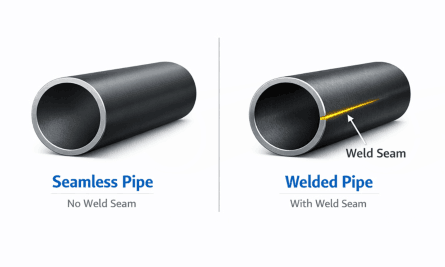
ERW stainless steel pipe has a longitudinal weld seam running the entire length of the pipe. This is its most distinctive feature and the critical point for quality control throughout its life.
Seamless stainless steel pipe, by definition, has no weld seam anywhere on its surface. Its appearance is continuous and uniform.
▶ Why it matters: The weld is not just a visual mark; it is the focal point of the pipe's integrity. For ERW pipes, a properly executed and tested weld is the key to reliable performance. For seamless pipes, the absence of a weld is the source of its uniform strength.
4. Mechanical Properties: Uniform Strength vs. Verified Weld
This is where the most significant engineering difference lies.
Seamless pipe offers completely uniform mechanical properties throughout the pipe wall. There are no structural weak points, meaning it has superior resistance to high pressure, high temperature, and fatigue. The pressure distribution is even, reducing the risk of failure.
ERW pipe relies on the quality of its weld. A high-quality ERW weld, properly heat-treated and tested, can achieve strength equivalent to the base metal. However, it is generally considered an excellent and reliable option for medium and low-pressure applications (≤ 10 MPa) .
▶ Why it matters: For critical, high-pressure, or high-temperature systems, the uniform strength of seamless pipe is a significant safety and reliability advantage. For the majority of standard industrial applications, a certified ERW weld provides all the necessary strength.
5. Cost-Effectiveness
Cost is often a decisive factor, and the choice here is a classic balance between initial expenditure and long-term performance.
ERW stainless steel pipe is significantly more cost-effective upfront. The efficient manufacturing process means it is typically 20-40% cheaper than a seamless pipe of the same specification, especially in larger diameters and thicker walls.
Seamless stainless steel pipe commands a higher initial price due to its more complex, material-intensive production process. However, this higher investment is often justified in applications where performance, reliability, and safety are non-negotiable.
▶ Why it matters: ERW pipe is ideal when budget is a primary constraint and operating conditions are moderate. Seamless pipe is an investment in maximum reliability and safety for demanding environments.
6. Applications
ERW and seamless stainless steel pipes serve different areas of industry. ERW pipes are widely used in building decoration, food machinery, general manufacturing, and moderate-pressure systems, thanks to their efficiency and cost-effectiveness. Seamless pipes, offering the highest reliability, are the standard choice for critical applications such as petrochemical processing, high-pressure steam, power generation, and hydraulic systems. For a detailed, criteria-based selection guide, please refer to the "How to Choose" section below.
ERW vs Seamless Stainless Steel Pipe – How to Choose?
Based on the above comparison, you can quickly determine the more suitable pipe type according to the following specific working conditions:
Seamless stainless steel pipe is recommended if any of the following conditions are met:
● Working pressure > 10MPa
● Working temperature > 400°C or < -100°C
● Highly corrosive or high-purity media
● Project specifies the use of seamless pipe (e.g., certain pressure vessel specifications)
ERW stainless steel pipe is recommended if the following conditions are met:
● Working pressure ≤ 10MPa
● Normal or medium temperature environment
● Limited cost budget
● Large-volume purchase with delivery time requirements
● Structural or decorative applications (no special pressure requirements)
Frequently Asked Questions (FAQ):
Q1: Will the weld seams of ERW stainless steel pipe leak or crack?
A: No.
Qualified ERW welded pipes that have undergone solution annealing and passed ultrasonic/eddy current testing have weld seam strength comparable to the base material, ensuring safe and reliable use under rated pressure.
Q2: Is the corrosion resistance of ERW stainless steel pipe worse than that of seamless pipe?
A: The key is whether it has undergone solution treatment.
Untreated ERW welds have a risk of sensitization (chromium precipitation), resulting in decreased corrosion resistance. After solution annealing and pickling passivation, the corrosion resistance is basically the same as seamless pipe.
Q3: Why can't ERW stainless steel pipes be made to 24 inches?
A: Stainless steel undergoes severe work hardening during cold bending.
Large diameters (>8 inches) are difficult to form, have high springback, and high weld stress. Carbon steel ERW pipe can reach 24 inches, but the conventional maximum for stainless steel ERW pipe is only about 8 inches. For diameters exceeding this, it is recommended to use
seamless pipes (SMLS) or
LSAW welded pipes.
Q4: How much is the price difference?
A: For the same specifications, ERW stainless steel pipes are about 20-40% cheaper than seamless pipes. The larger the diameter and the thicker the wall, the more significant the price difference.
Q5: How to determine if a manufacturer is reliable?
A: Required documents include:
① Material certificate (MTC);
② Solution heat treatment report;
③ Non-destructive testing report (UT or ET);
④ Hydrostatic test report. Suppliers with all four documents are considered qualified.
Related articles:
● 7 Things to Consider When Purchasing Stainless Steel ERW Pipes
● 304 vs. 316 Stainless Steel: What's the Difference?
● Carbon Steel Tube vs Stainless Steel Tube
● Stainless Steel (SS) Pipe Sizes Chart
 sales@hu-steel.com
 English
 Español