In the global long-distance oil and gas pipeline sector, API 5L X70 and X80 steels are the two most widely used high-strength pipeline steel grades. As international energy corridor construction moves towards high pressure, large diameter, and long distances, X80 steel, due to its significant wall-reduction and efficiency-enhancing advantages, is gradually becoming the preferred steel grade for the next generation of trunk pipelines; while X70 steel, with its mature technology and reliable low-temperature toughness, still dominates in numerous pipeline projects worldwide. The two differ significantly in mechanical properties, chemical composition, welding processes, and applicable scenarios.
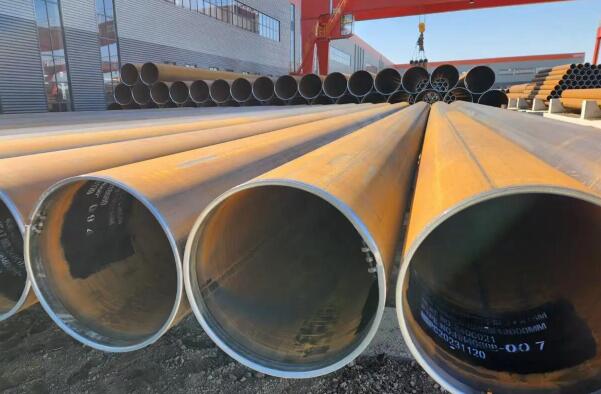
Differences between API 5L X70 and X80 Pipes:
1. Mechanical Property Comparison
The core advantage of X80 lies in its higher strength, but X70 exhibits superior low-temperature toughness.
Performance Indicators
|
X70 Steel (L485MB)
|
X80 Steel (L555MB)
|
Yield Strength (Rt0.5)
|
≥485 MPa
|
≥555 MPa
|
Tensile Strength (Rm)
|
≥570 MPa
|
≥625 MPa
|
Yield-to-Tryn Strength Ratio (Rt0.5/Rm)
|
≤0.93
|
≤0.93
|
Elongation
|
≥18%
|
≥17%
|
Charpy Impact Energy at -40℃
|
≥390J
|
≥360J
|
Ductile-Brittle Transition Temperature
|
Lower (below -30℃)
|
Higher
|
Based on research findings from 2007, the yield strength of X70 steel plate is lower than that of X80, but their tensile strengths are similar. This trend has been maintained in subsequent engineering practices.
2. Chemical Composition and Microstructure
Chemically, both have the same carbon content. X70 steel contains microalloying elements such as Nb, V, Ti, and Mo, resulting in a lower carbon equivalent (CEV). X80 steel contains higher levels of Nb and Mo, leading to a higher CEV.
Microstructure: X70 pipeline steel's microstructure consists of polygonal ferrite, degenerate pearlite, and bainite; X80's microstructure is dominated by acicular ferrite, granular bainite, and a small amount of lower bainite.
Studies indicate that with decreasing effective grain size, increasing bainite content, and improving microstructure uniformity, pipeline steel exhibits a superior strength-toughness balance. X80 pipeline steel achieves its strength improvement through finer grains and higher bainite content, but this sacrifices some low-temperature toughness.
Regarding low-temperature performance, research data shows that the ductile-brittle transition temperature of the X70 steel base material is lower than that of the X80 steel base material. This means that in extremely cold environments below -30℃, X70 is less prone to brittle fracture than X80, which is one of the reasons why X70 is still widely used in cold regions.
For thick-walled steel plates used in railway stations (such as those of the West-East Gas Pipeline II), the typical mechanical properties of both are as follows:
X70: Yield strength 530-600MPa, tensile strength 610-700MPa, impact energy at -40℃ ≥390J
X80: Yield strength 555-630MPa, tensile strength 650-720MPa, impact energy at -40℃ ≥360J
3. Welding Performance and Process Requirements
The welding difficulty of X80 steel is significantly higher than that of X70 steel, which is a key factor that must be considered in engineering applications.
The main welding problem of X80 pipeline steel is its greater tendency to cold cracking. When constructing under harsh climatic conditions, welded joints must have high resistance to brittle fracture at low temperatures; therefore, it is necessary to strictly adhere to the preheating temperature and control the heat transfer level.
From a metallurgical perspective, X80 requires welding consumables with low hydrogen content and high mechanical properties. Traditional cellulose welding electrodes have been largely replaced by gas-shielded welding wires and self-shielded flux-cored welding wires. For X70, due to its lower carbon equivalent, it is less sensitive to welding heat input and has a wider welding window.
Regarding the heat-affected zone (HAZ), both X70 and X80 undergo adverse microstructural changes under welding thermal cycling, but the changes are more significant in X80. The performance of the weld joint, especially the HAZ, is often key to determining the overall reliability of the pipeline.
4. Application Scenarios Comparison
Based on data released by the International Gas Union (IGU), the application of X80 pipeline steel globally has evolved from Canada and Brazil to the West-East Gas Pipeline II in China. The West-East Gas Pipeline II project uses X80 steel throughout, marking X80's large-scale engineering application capability and becoming a significant milestone in the global pipeline industry after X70.
For applications such as railway stations and urban pipeline networks, where there are numerous welded joints and complex stress states, the X70 remains the mainstream choice for many pipeline operators worldwide due to its extensive engineering validation.
In pipelines operating in extremely cold regions (such as the Russian Arctic Pipeline and the Mackenzie Valley Pipeline in Canada), balancing the trade-off between high strength and high toughness remains a key challenge for the international materials science community.
5. Cost and Techno-economic Efficiency
The economic value of X80 is mainly reflected in its reduced wall thickness and increased efficiency:
Under the same pressure rating, the wall thickness of X80 can be reduced by 10-15% compared to X70;
Under the same transmission capacity, X80 can reduce steel consumption by approximately 8-12%;
Reduced trench excavation size leads to a simultaneous decrease in transportation and hoisting costs;
However, adopting X80 also requires a comprehensive consideration of the following aspects:
Higher material unit price;
Stricter requirements for welding processes, necessitating more stringent Welding Procedure Qualification (WPQ) and quality control;
Limited selection of welding materials, potentially affecting construction efficiency;
It is precisely after weighing performance and cost that some sections of the West-East Gas Pipeline IV still simultaneously adopted both X70 and X80 schemes.
High-Grade Pipeline Manufacturing Process: Seamless or Welded?
API 5L X70 and X80 pipeline steel are typically manufactured using
welded pipes, not
seamless tubes. This is a completely different situation from ordinary
structural carbon steel pipes. For high-grade pipeline steels like X70 and X80, welded pipes are the absolute mainstream, with seamless steel pipes used only as a supplement in a very few special applications.
This is because welded pipes can better leverage the advantages of TMCP (Thermomechanical Control Process) technology, achieving a balance between high strength and high toughness. The strength of X70 and X80 steels comes from a precisely controlled hot-rolling process, while welded pipes, made from high-quality steel plates/strips through straight seam submerged arc welding (LSAW), spiral submerged arc welding (SSAW), or high-frequency resistance welding (ERW), fully inherit the performance advantages of the original plate material.
Seamless steel pipes are limited by the piercing process, making it costly and difficult to achieve high steel grades, large wall thicknesses, and high toughness. Welded pipes, on the other hand, have significantly higher production efficiency and material utilization rates than seamless steel pipes. Large-scale oil and gas pipeline projects are extremely cost-sensitive, and this advantage of welded pipes is particularly evident in long-distance pipeline construction.
When are seamless steel tubes used?
In the application of X70 and X80 pipeline steel, the application scenarios for seamless steel tubes are very limited:
a. Small-diameter scenarios: When the pipeline diameter is small (generally less than 152mm),
ERW welded pipes have advantages in both cost and quality, and seamless steel pipes are basically not in competition.
b. Special components or specifications: Seamless steel pipes may be used for some station connections, elbows, or a very few special specifications, but this is a non-mainstream application.
Frequently Asked Questions (FAQ):
Q1: What do the numbers in X70 and X80 represent?
A: The numbers represent the minimum yield strength of that steel grade (in ksi). The minimum yield strength of X70 is 70,000 psi (approximately 485 MPa), and that of X80 is 80,000 psi (approximately 555 MPa). This naming convention is defined by the API 5L standard. ISO 3183 and GB/T 9711 use the corresponding notation, writing X70 as L485MB and X80 as L555MB.
Q2: In what ways is X80 stronger than X70? By how much?
A: The yield strength of X80 is approximately 14% higher than that of X70 (485 MPa vs 555 MPa). However, it should be noted that the actual strength of steel is often higher than the nominal value—API 5L allows X80 to have a yield strength upper limit of 705 MPa, while steel mills often control X80 at the upper limit (600-650 MPa) in actual production, meaning the actual strength difference may be even greater.
Q3: Does higher strength always mean better?
A: Not necessarily. The core driving force behind choosing X80 is wall thickness reduction and efficiency improvement—at the same pressure rating, X80 can reduce wall thickness by 10-15% compared to X70, saving steel tons. However, higher strength also comes at a cost: reduced low-temperature toughness, increased welding difficulty, and limitations in acidic environments.
Q4: Can X80 be used in acidic environments (H₂S)?
A: Basically no. This is a hard stop for X80. The NACE MR0175 standard stipulates that the material hardness must be below 22 HRC (250 HV10) in acidic environments to prevent sulfide stress corrosion cracking (SSC). However, X80 requires the addition of higher levels of alloying elements such as Mn, Mo, and Nb to ensure strength, and the hardness of the weld heat-affected zone will almost inevitably exceed this limit. Although post-weld heat treatment can reduce hardness, it will destroy the strength properties of X80 given by the TMCP process, downgrading it to the X60/X65 level.
Q5: Why is X80 more difficult to weld than X70?
A: Welding X80 is significantly more difficult, mainly in three aspects:
a. Matching Trap: API 5L allows X80 yield strength up to 705 MPa, while commercially available cellulose electrodes (E9010-G/P1) often fail to consistently exceed the actual strength of X80, leading to undermatching in the weld.
b. High Cold Cracking Sensitivity: X80 requires strict preheating control and heat input limitation, while X70 has a wider welding window.
c. Greater Repair Difficulty: X70 repairs can utilize carbon arc gouging, while X80 is extremely sensitive to cooling rates (t8/5). The thermal shock generated by standard carbon arc gouging immediately generates martensitic cracks, thus requiring costly grinding removal processes.
Q6: Is the rework rate for X80 welds high during field operations?
A: Yes, significantly higher. X70 projects typically maintain a standard rework rate of 2-3%. The X80 project, due to its high sensitivity to hydrogen-induced cracking and magnetic field blow (arc blow), often experiences a rework rate soaring to 8-10%.
Conclusion:
X80 pipeline steel, with its higher strength, offers significant advantages in wall reduction and efficiency improvement in large-diameter, high-pressure long-distance pipelines, making it the preferred steel grade for transnational natural gas trunk networks (such as the Central Asia-China natural gas pipeline). However, X80's low-temperature toughness is slightly inferior to X70, and its welding process requirements are more stringent.
While X70 pipeline steel has slightly lower strength, its superior low-temperature toughness, wider welding window, and richer engineering experience mean it still holds an important position in high-altitude and cold regions, marine engineering, station pipeline networks, and the transportation of acidic media.
Read more: Advantages and Disadvantages of Pipeline Transportation or ERW vs. LSAW vs. SSAW: Key Differences
 sales@hu-steel.com
 English
 Español