Is Galvanized Pipe Suitable for Steam Piping?

Keywords: galvanized pipe for steam piping, galvanized steam pipe, galvanized piping for steam boiler system

Characteristics of Galvanized Pipe: 

Galvanized pipe (GI) refers to steel pipe with a zinc coating, possessing characteristics such as corrosion resistance and durability. Due to the zinc coating, galvanized pipe is not easily corroded and is therefore widely used in industries such as construction, machinery, and chemicals. However, its suitability as a steam pipe depends on the requirements of steam piping.


Requirements for Steam Piping: 

Steam piping transports steam to various equipment, including high-temperature and high-pressure steam. It needs to be stable, reliable, pressure-resistant, and high-temperature resistant. Furthermore, steam piping must also be corrosion-resistant. Therefore, these requirements must be considered when selecting steam piping materials.
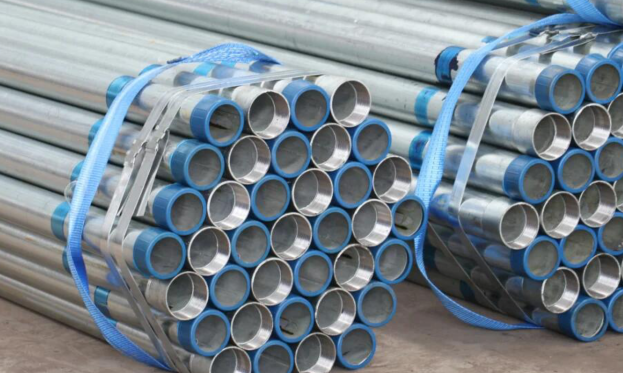

 galvanized pipe for steam piping


Feasibility of Using Galvanized Pipe as Steam Piping: 

Generally, galvanized pipe is not suitable for use as steam piping, especially in environments where temperatures exceed 200℃. Although galvanized pipes offer certain corrosion resistance and durability, they present the following serious problems under steam conditions:


1. High-temperature zinc coating failure: When steam temperatures exceed 200℃, the zinc coating oxidizes, softens, and may even melt (zinc's melting point is approximately 419℃), leading to complete failure of the anti-corrosion layer. At even higher temperatures (above 300℃), zinc can alloy with the iron matrix, forming a brittle alloy layer that severely reduces pipe wall strength.
2. Zinc vapor contamination: At high temperatures, zinc may volatilize, forming zinc vapor that can enter downstream equipment with the steam, causing contamination or damage to valves, heat exchangers, etc.

3. Galvanized pipes are less corrosion-resistant than stainless steel or copper pipes, therefore requiring regular inspection and maintenance to extend their service life.
4. Galvanized pipes operate under high temperature and pressure, which may cause the zinc coating to peel off. These peeling zinc flakes can clog steam traps, damage valve seals, and affect the safe operation of the steam pipeline.

Precautions: 

If galvanized pipes must be used in low-pressure, low-temperature steam applications, the following points should be noted:


1. Ensure the wall thickness and length of the galvanized pipe meet the usage requirements.
2. When installing galvanized pipes, ensure the connections are tight. Threaded connections are recommended, and ensure proper sealing to prevent steam leakage.
3. When handling galvanized pipes, prevent the accumulation of debris and water vapor inside the pipes to ensure internal cleanliness.
4. Regularly inspect and maintain the galvanized pipes, checking for rust, the integrity of the coating, etc. Pay particular attention to elbows and tees for zinc layer peeling to ensure safe operation.
5. If zinc layer peeling, discoloration of the pipe wall, or weld cracks are found in the galvanized steam pipe, operation should be stopped immediately and the pipe replaced with a suitable seamless steel pipe. Continued use is prohibited.

Standard Basis: 

According to ASTM A53/A53M, "Standard Specification for Black and Hot-Dip Galvanized Welded Seamless Steel Pipes," galvanized pipes are primarily suitable for mechanical and pressure applications, as well as general uses for steam, water, gas, and air piping. This standard specifies that galvanized pipes are suitable for forming operations such as welding, coiling, and bending, but not for the continuous transport of high-temperature, high-pressure steam.


For industrial steam piping, ASTM A106, "Standard Specification for Seamless Carbon Steel Pipes for High-Temperature Applications," should be preferred. ASTM A106 is specifically designed for high-temperature conditions and is suitable for steam pipelines, boilers, oil refineries, and other high-temperature, high-pressure applications. ASTM A106 Grade B has a maximum operating temperature of 800°F (427°C), while the applicability of ASTM A53 at high temperatures is strictly limited.

Material Selection Recommendations:
● Low-pressure, low-temperature steam (≤200°C): ASTM A53 Grade B galvanized pipe can be used, but temperature limitations must be considered;
● Medium- and high-pressure steam pipelines: ASTM A106 Grade B seamless carbon steel pipe should be used;
● High-temperature, high-pressure steam (>400°C): ASTM A335 series alloy steel pipe (such as P11, P22, P91, etc.) should be used.

Common Misconceptions Clarified: 

Some people believe that galvanized pipes, with their smooth surface and low resistance, are suitable for transporting steam. This is incorrect. The advantage of galvanized pipes lies in their corrosion resistance at room temperature, not their resistance to high temperatures and pressures. The primary principle for selecting steam pipelines is temperature and pressure resistance, not surface smoothness or initial cost. Using galvanized pipes to transport high-temperature steam for short-term investment savings may lead to serious safety hazards and long-term maintenance costs.


Conclusion: 

Galvanized pipes are only suitable for low-pressure, low-temperature steam (such as heating systems, temperatures below 200°C, and pressures below 1.0 MPa), and are not suitable for long-distance industrial or high-temperature, high-pressure steam transportation.


Read more: Design and Operation Guidelines for Long-Distance Steam Pipelines

Recruiting Agents - Check Policies Here

Copyright @2017 Hunan Standard Steel Co.,Ltd and Husteel Industry Group All Rights Reserved

linkin  youtube

We use cookies to offer a better browsing experience, analyze site traffic, and personalize content. By using this site, you agree to our use of cookies.

Accept
Decline