sales@hu-steel.com
 English
 Español
Pipeline Material Selection:
Long-distance steam transmission pipelines have stringent material requirements. First, considering the high-temperature characteristics of steam, the pipeline material needs excellent high-temperature resistance.
Commonly used high-temperature resistant materials include high-quality carbon steel (such as 20G), heat-resistant alloy steel (such as 15CrMoG, 12Cr1MoVG), and stainless steel (such as 1Cr18Ni9Ti) used under specific corrosive or ultra-high temperature conditions. These materials maintain good mechanical properties and corrosion resistance at high temperatures, ensuring the durability of the steam pipeline. Material selection must comply with relevant standards.
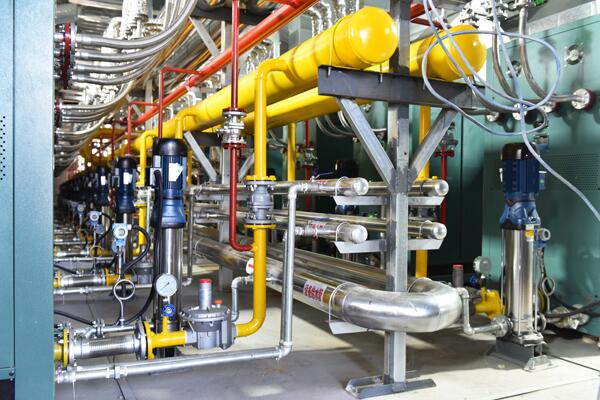
Furthermore, the wall thickness is also an important selection factor. To withstand the pressure and temperature fluctuations of steam, the pipeline must possess sufficient strength and stability. This usually means selecting steel pipes with appropriate wall thicknesses. The wall thickness must be calculated and determined according to the design pressure, temperature, pipe diameter, and allowable stress of the material using standard formulas to ensure that the pipeline will not deform or rupture during long-term use.
Pipeline Design and Layout:
The design of long-distance steam transmission pipelines needs to fully consider the characteristics of steam and energy losses during transmission. To minimize heat and pressure losses, larger pipe diameters should be used whenever possible while meeting process requirements, and the number of elbows, tees, valves, and other local resistance components should be strictly controlled. When pipe elbows are unavoidable, bends with large radii of curvature should be prioritized. Simultaneously, the support and fixing devices for the pipeline should be rationally arranged to reduce the impact of vibration and thermal stress.
Pipeline Construction and Installation:
During construction, relevant safety regulations and construction specifications must be strictly followed. The pipeline connection method, weld quality, and pressure testing are all key aspects that require close monitoring during construction. In addition, condensation is inevitable during steam transportation due to heat dissipation. Therefore, condensate traps need to be installed at the lowest points of the pipeline, before the vertical ascent section, at the bottom of the steam distribution cylinder, and at regular intervals to drain the condensate. Automatic air vents should be installed at the highest points and the end of the pipeline to ensure safe operation and proper steam dryness.
Pipeline Operation and Maintenance:
Long-distance steam transportation pipelines require regular inspection and maintenance during operation. This includes checking the integrity of the pipeline, the working condition of valves and fittings, and the performance of steam traps. Simultaneously, to reduce energy consumption and improve energy efficiency, the pipeline must be steam-purged to remove debris before formal commissioning. During operation, the internal condition of the pipeline should be indirectly assessed through condensate water quality analysis. In cases of abnormally increased pressure drop, chemical cleaning or pigging can be used after evaluation, but a strict safety plan must be established.
Safety and Protective Measures:
Safety is always the primary consideration during long-distance steam transportation. Therefore, effective measures must be taken to prevent dangerous situations such as steam leaks and explosions. Specific measures include: all pipes and fittings with surface temperatures exceeding a certain value must be equipped with insulation or scalding guardrails; safety valves must be installed at critical locations such as after pressure reducing valves to prevent overpressure; strict warm-up operating procedures must be established, and the rapid full opening of the main steam valve in a cold state is strictly prohibited; emergency equipment such as steam-specific protective gloves and masks should be provided near important valves and condensate collection stations. Simultaneously, professional training and guidance are needed for operators and managers to improve their safety awareness and emergency response capabilities.
In general, the requirements for long-distance steam transmission pipelines involve multiple aspects, including material selection, design and layout, construction and installation, and operation and maintenance. To ensure the efficient and stable operation of steam pipelines, various factors need to be comprehensively considered, and reasonable plans and measures need to be developed.
Read more: Boiler Tube Size Chart or What are Seamless Boiler Tubes and How Are they Made?
Related information
Copyright @2017 Hunan Standard Steel Co.,Ltd and Husteel Industry Group All Rights Reserved