sales@hu-steel.com
 English
 Español
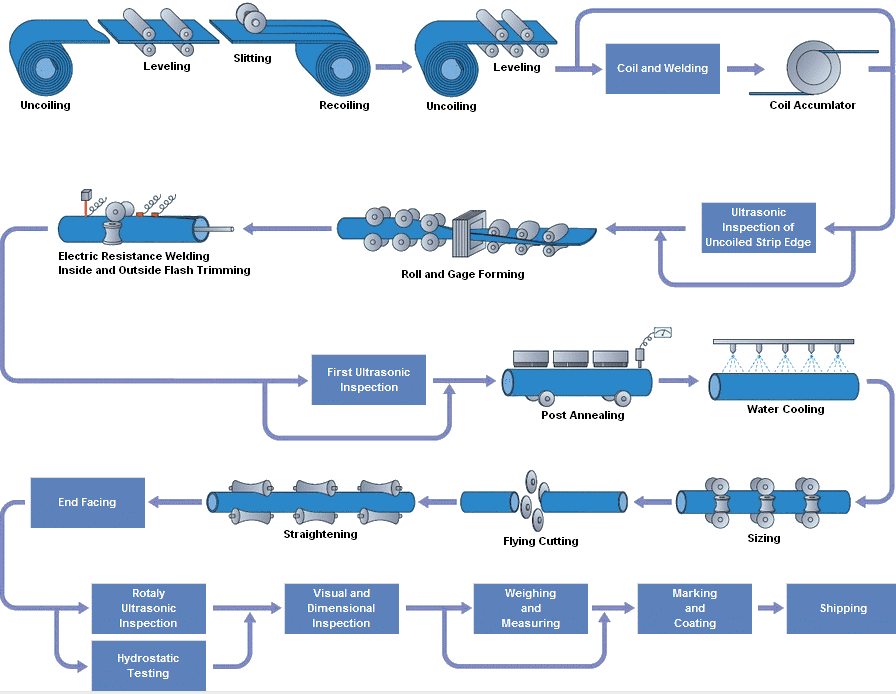
ASTM A53 is a Carbon steel pipe standard established by the American Society for Testing and Materials (ASTM). Grade B indicates a material grade with higher tensile strength (≥415 MPa) and yield strength (≥240 MPa). ERW (Electric Resistance Welded) refers to steel pipe manufactured using the electric resistance welding process, as opposed to seamless pipe.
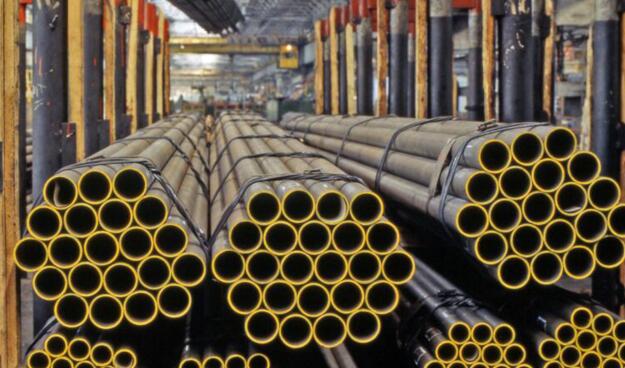
ASTM A53 Grade B ERW pipe sizes conform to ASTM, ASME, and API standards. Pipe diameters range from ½ inch to 24 inches. ASTM A53 ERW Steel Pipe covers the following types and grades: Type E—Electric-resistance-welded, Grades A and B. Among them, Grade B is the most commonly used.
Available Size Range:
| OD (inch) | OD (mm) | Available Wall Thickness (mm) |
|---|---|---|
| 8 5/8 | 219.1 | 4.0–20.0 |
| 10 3/4 | 273.1 | 5.0–20.0 |
| 12 3/4 | 325.0 | 6.0–20.0 |
| 14 | 355.6 | 6.0–20.0 |
| 16 | 406.4 | 6.0–20.0 |
| 18 | 457.7 | 8.0–20.0 |
| 20 | 508.0 | 8.0–20.0 |
| 24 | 610 | 10.0–20.0 |
| 24 4/5 | 630.0 | 12.5–20.0 |
▶ For the complete wall thickness and weight chart, view the [ERW Pipe Wall Thickness Dimensions and Weight Chart].
1. Low-pressure fluid transportation: water, air, steam (non-corrosive media), boilers, hot water transportation, and other pipelines with high groundwater extraction.
2. Building structures: scaffolding, steel frames, towers (requiring anti-corrosion treatment).
3. Machinery manufacturing: machining, bearing assemblies, automobile frames, processing machinery, and other accessories.
4. Oil and gas: Low-pressure gathering and transportation pipelines (interchangeable when meeting API 5L GR.B).
5. Municipal engineering: Drainage and fire protection pipes (ERW galvanized pipe is more durable).
6. Electrical: Gas transmission and hydraulic fluid pipelines.
7. Anti-static pipes for wind power plants.
| Type |
Carbon
max. % |
Manganese max. % |
Phosphorous max. % |
Sulfur max. % |
Copper max. % |
Nickel max. % |
Chromium max. % |
Molybdenum max. % |
||||||||
|
Grade A |
Grade B |
Grade A |
Grade B |
Grade A |
Grade B |
Grade A |
Grade B |
Grade A |
Grade B |
Grade A |
Grade B |
Grade A |
Grade B |
Grade A |
Grade B |
|
|
Type E (electric-resistance welded) |
0.25 | 0.30 | 0.95 | 1.2 |
0.05 |
0.05 | 0.045 | 0.045 |
0.40 |
0.40 |
0.40 |
0.40 |
0.15 |
0.15 |
0.08 |
0.08 |
|
Tensile |
Electric-resistance-welded
|
|
|
Grade A |
Grade B |
|
|
Tensile Strength min. psi |
48,000 (≥330 Mpa) |
60,000 (≥415 Mpa) |
|
Yield Strength min. psi |
30,000 (≥205 Mpa) |
35,000 (≥240 Mpa) |
Key Differences:
The difference between Grade A and Grade B of A53 ERW lies in strength: Grade B has higher C and Mn content, resulting in significantly better tensile and yield strength compared to Grade A. Grade A has lower carbon content, offering slightly better ductility and weldability, making it suitable for structures with lower strength requirements or low-pressure fluid transport applications. In actual engineering procurement, Grade B is the more common choice due to its higher cost-effectiveness and ability to meet most conventional operating conditions.
| Parameter | A53 Grade B ERW | A106 Grade B Seamless |
|---|---|---|
| Manufacturing | Electric resistance welded | Seamless (pierced) |
| Weld Seam | Longitudinal weld seam | No weld seam |
| Typical Use | Low-to-medium pressure, structural | High-temperature, high-pressure |
| Cost | 20–50% lower | Higher |
| Pressure Rating | ≤10 MPa typical | Up to 70 MPa and above |
| Temperature Limit | ≤343℃ typical | Up to 500℃ and above |
△ For high-temperature and high-pressure applications, ASTM A106 Grade B seamless pipes should be selected. For low-to-medium pressure piping, structural components, and cost-sensitive projects, A53 Gr.B ERW pipes are the more economical choice.
Q1: Is the weld seam of A53 ERW pipe reliable?
A: Qualified A53 ERW pipes undergo 100% ultrasonic or eddy current testing, plus hydrostatic testing. The ASTM A53 standard requires Grade B ERW pipes to undergo heat treatment at ≥540°C for welds, making the weld strength comparable to the base material. When purchasing, focus on whether the supplier provides a complete weld inspection report.
Q2: Can ASTM A53 Gr.B ERW pipes be used in high-temperature or high-pressure environments?
A: No. ASTM A53 Gr.B ERW pipes are suitable for low-to-medium pressure applications (such as water, gas, and structural uses). For high-temperature and high-pressure applications, [ASTM A106 Grade B seamless pipes] should be selected.
Q3: How to choose between ASTM A53 ERW and ASTM A106 seamless pipes?
A: It depends on the application. For low-to-medium pressure piping, structural components, and cost-sensitive projects, choose A53 Gr.B ERW pipes (20–50% cheaper). For high-temperature, high-pressure applications and applications where design specifications require seamless pipes, choose A106 Gr.B.
Q4: What are the mandatory factory testing items for ASTM A53 Gr.B ERW pipes?
A: ASTM A53 standard requires each ERW steel pipe to pass the following tests:● Chemical composition verification: Confirm that the content of key elements such as C, Mn, P, and S meets the standard limits.
Q5: What are the common equivalent standards for A53 ERW pipe?
A: Common equivalents include EN 10255 (Europe), JIS G3444 (Japan), and GB/T 3091 (China). While these standards differ in tolerance and testing requirements, they are often accepted as substitutes in general piping applications, subject to project approval.
Read more:
● ERW Pipe vs Seamless Pipe: Cost & Selection Guide
● Seamless vs. Welded Pipe (ERW/LSAW/SSAW)
● API 5L ERW Line Pipe Standard & Grade
Related information
Copyright @2017 Hunan Standard Steel Co.,Ltd and Husteel Industry Group All Rights Reserved