sales@hu-steel.com
 English
 Español
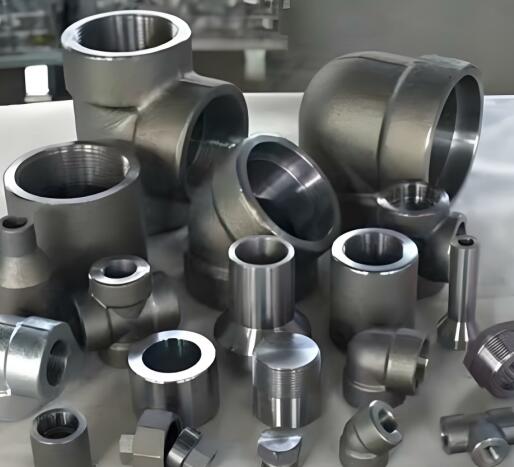
Class 3000 and Class 6000 are two main pressure ratings of forged socket weld fittings defined in ASME B16.11. Their main differences lie in pressure capacity, compatible pipe wall thickness (SCH), physical dimensions, and applicable scenarios.
|
Comparison Dimensions |
Class 3000 |
Class 6000 |
|
Pressure Rating (Normal Temperature, A105 Carbon Steel) |
3,000 psi (approx. 20.7 MPa) |
6,000 psi (approx. 41.4 MPa) |
|
Compatible Pipe Wall Thickness |
Sch 80 / XS |
Sch 160 / XXS (Class 9000) |
|
Size Range |
1/8″–4″ |
1/8″–2″ (Larger sizes are generally not available in Class 6000 due to manufacturing and strength limitations) |
|
Weight (for a 1" elbow) |
~0.22 kg |
~0.40 kg |
|
Wall Thickness (1" elbow) |
~4.5 mm |
~7.5 mm |
|
Socket Depth |
Standard Depth |
Deeper (due to thicker body) |
|
Applications |
For medium to high pressure (e.g., 300–600 psi steam, oil) |
Higher pressure or critical sealing systems (e.g., high-pressure hydraulics, chemical, refining) |
|
Relative Cost |
1.0 times |
1.5-2.0 times |
|
Inventory Status |
Wide inventory |
Low inventory, longer lead time |
Note: Neither is considered "low pressure," but Class 6000 is a high-strength upgrade of Class 3000 and they are not interchangeable; selection must strictly match the design pressure, temperature, and pipe wall thickness.
Class 6000 fittings, due to their need to withstand higher pressures, have significantly thicker body walls than Class 3000 fittings. Both are limited to small diameters of DN50 (2 inches) and below.
| Nominal Size (NPS) | Class 3000 Body Diameter (mm) | Class 6000 Body Diameter (mm) |
|---|---|---|
| 1/2" | 38 | 47 |
| 3/4" | 47 | 53 |
| 1" | 56 | 63 |
| 1-1/4" | 66 | 74 |
| 1-1/2" | 75 | 83 |
| 2" | 90 | 104 |
● Potential fatigue cracking
Requires additional corrosion allowance (thicker pipe walls provide more margin).
Read more:
Related information
Copyright @2017 Hunan Standard Steel Co.,Ltd and Husteel Industry Group All Rights Reserved