Welded pipes can only be used in steam boiler piping under specific conditions, and must strictly adhere to relevant standards, usage scenarios, and safety regulations. Steam boiler pipe standards follow the basic principle that "
seamless pipes must be used for high pressure, high temperature, and critical components; welded pipes can be used for medium and low pressure, and non-critical components."
Limitations on the application of welded pipes in steam boiler piping:
Welded pipes can be used in boilers, but only in specific locations and operating conditions. Commonly used standards and specifications include:
ASME SA-178 /
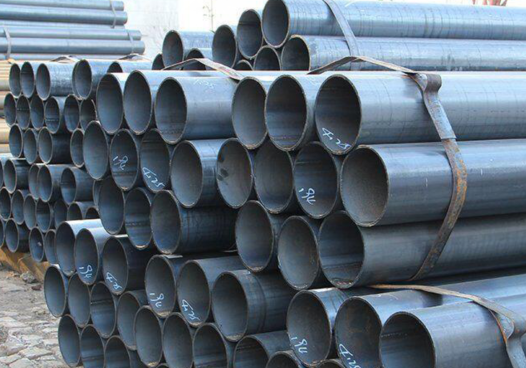
ASTM A178: "Resistance Welded Carbon Steel and Carbon Manganese Steel Boiler Tubes," suitable for medium and low pressure and medium and low temperature environments such as boiler flue tubes, economizers, and heat exchanger tubes.
ASME SA-214 / ASTM A214: "Resistance Welded Carbon Steel Heat Exchanger Tubes," suitable for non-boiler fire-receiving components such as condensers, heat exchangers, and heat exchange devices.
ASME SA-178 Grade A/C/D: Classified by strength grade, suitable for industrial boilers and commercial boilers.
EN 10217: This is a core series of European standards for pressure-bearing welded steel pipes, officially titled "Pressure-bearing Welded Steel Pipes - Technical Delivery Conditions". It complements
EN 10216, one for welded pipes and the other for seamless pipes.
GB/T 28413-2012: "Welded Steel Tubes for Boilers and Heat Exchangers" is a Chinese national standard specifically for welded pipes used in boilers.
Note: For superheaters, reheaters, and main steam pipelines, international standards (such as
ASME SA-213 and
ASME SA-335) explicitly require the use of seamless steel pipes.
Why can't welded pipes be used in high-temperature and high-pressure areas such as main steam pipelines?
1. The weld seam is a weak point.
Welded pipes have longitudinal weld seams. Under high temperature and pressure, the weld seam area presents the following risks:
● Uneven microstructure and properties in the heat-affected zone of the weld, making it prone to creep damage during long-term high-temperature service;
● The residual stress in the weld seam is superimposed on the working stress, increasing the risk of failure.
2. Material limitations
The main steam pipes of power plant boilers are commonly made of alloy steel, such as 15CrMoG, 12Cr1MoVG, P91, and P92. These materials have poor weldability and require extremely high welding standards:
● 15CrMoG and 12Cr1MoVG have poor weldability.
● P92 martensitic steel requires strict control of the welding temperature (200-300℃) and post-weld heat treatment.
● These materials are usually supplied as seamless pipes, and the welded pipe process cannot guarantee their high-temperature creep strength.
3. Mandatory requirements of standards and specifications
Chinese Standards:
GB/T 5310 "Seamless Steel Tubes for High-Pressure Boilers" clearly stipulates that high-temperature and high-pressure components such as superheaters, reheaters, and main steam pipes must use seamless steel tubes.
GB/T 28413 clearly stipulates that this standard applies to heat-receiving surface tubes such as economizers, water-cooled walls, and low-temperature superheaters, as well as piping within the boiler area.
How to Select the Right Type?
For pressure ≤ 6.4 MPa and temperature ≤ 450℃, non-main steam pipelines can use welded steel pipes.
For pressure > 6.4 MPa, or temperature > 450℃, or main steam/superheater pipelines, seamless steel pipes must be selected.
Conclusion:
High-frequency straight seam welded pipes (ERW) or standard-compliant welded pipes can be used in steam boiler pipelines, but only in medium- and low-pressure, medium- and low-temperature sections (such as economizers and low-temperature heat exchanger tubes). For high-temperature and high-pressure core components such as superheaters, reheaters, and main steam pipelines, seamless steel pipes conforming to international standards must be used to ensure safety and reliability.
Read more: Carbon Steel ERW Boiler Tube & Air Heater Tube Specification or Seamless vs. Welded Pipe
 sales@hu-steel.com
 English
 Español