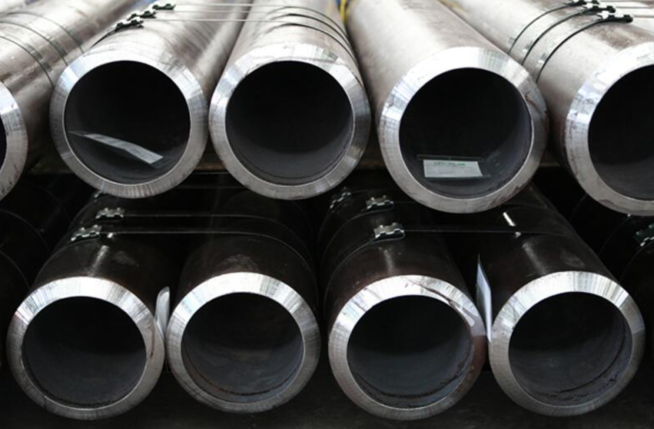
EN 10216 is a core standard in the European Standards System for seamless steel tubes intended for pressure applications. Its full name is "Seamless steel tubes for pressure purposes - Technical delivery conditions." This standard is a harmonized standard of the European Pressure Equipment Directive (2014/68/EU). Steel tubes conforming to this standard are generally eligible for CE marking and are permitted to circulate in the EU market.
The EN 10216 series of standards specifically targets seamless steel tubes for pressure-bearing components, applicable to high-temperature, low-temperature, or corrosive conditions in power plant equipment, petrochemical plants, boilers, heat exchangers, air separation units, etc. The standard is divided into several parts according to material properties and applications, each specifying specific technical delivery conditions, including chemical composition, mechanical properties, heat treatment processes, and inspection requirements.
Standard Structure and Basic Content:
The EN 10216 series of standards consists of the following five parts:
●
EN 10216-1: Applicable to non-alloy steel pipes with specified room temperature properties. Common steel grades such as P195, P235, and P265 are used for general medium- and low-pressure fluid transport and structural support.
●
EN 10216-2: Applicable to non-alloy and alloy steel pipes with specified high-temperature properties. This is one of the most commonly used series in industrial piping systems. Its steel grades (such as P235GH, P265GH, 16Mo3, 13CrMo4-5, and 10CrMo9-10) maintain stable mechanical properties at high temperatures and are suitable for equipment such as boilers, superheaters, and heat exchangers.
●
EN 10216-3: Applicable to seamless alloy fine-grained steel pipes. This part specifies steels with a fine-grained microstructure, achieving high strength and good toughness through microalloying and controlled rolling and cooling processes. It is mainly used for high-pressure bearing components at room temperature and medium to high temperatures, such as petrochemical pressure vessels,
high-pressure pipelines, and equipment housings. Common grades include: P275NH, P355N, P460NH, P620Q, and P690Q.
●
EN 10216-4: Applicable to seamless steel pipes of non-alloy and alloy steels with specified low-temperature properties. This part sets forth clear requirements for the low-temperature impact toughness of the material (typically requiring impact energy at -20°C, -30°C, or even -50°C) to ensure that the steel pipes do not undergo brittle fracture when serving in low-temperature environments (such as open-air pipelines in cold regions and liquefied gas storage and transportation facilities). Common grades include: P215NL, P265NL, P355QH1, and 11MnNi5-3.
●EN 10216-5: Applicable to seamless stainless steel pipes, especially for high-temperature, high-pressure, and corrosive environments in pressure equipment. This section covers commonly used stainless steel materials such as 304/304L, 316/316L, and 2205, which are widely used in the chemical, pharmaceutical, and food industries.
Core Technical Requirements:
1. Test Categories
EN 10216 specifies two test categories: The category is selected by the purchaser based on factors such as design pressure, temperature, and the hazard level of the medium. Higher categories require more stringent testing frequencies and more test items.
2. Mandatory Testing Items
The standard requires the following tests:
Mechanical Performance Tests: Tensile tests (yield strength, tensile strength, elongation), impact tests (Charpy V-notch)
Technical Performance Tests: Flattening test, flaring test, bending test
Non-Destructive Testing: Ultrasonic testing (internal defects), eddy current testing (surface/near-surface defects), magnetic particle testing (surface defects in ferromagnetic materials)
Dimensional Inspection: Outer diameter, wall thickness, ellipticity, straightness
Surface Quality Inspection: Inspection of internal and external surface defects
Chemical Composition Analysis: Spectroscopic analysis to confirm elemental content
3. Regulatory Relevance
EN 10216 is closely related to the EU Pressure Equipment Directive (PED, 2014/68/EU). Steel pipes conforming to this standard are presumed to meet the basic safety requirements of PED and are permitted to undergo CE marking, a legal prerequisite for entering the European market.
Applications:
Seamless steel pipes conforming to EN 10216 are widely used in the following fields:
a. Power Industry: Fossil fuel power plant boilers, steam generators, superheaters, reheaters
b. Petrochemical Industry: High-pressure reactors, heat exchangers, pyrolysis units, process piping
c. Air Separation and Cryogenics: Air separation units, liquefied natural gas (LNG) storage and transportation
d. General Industry: Pressure vessels, high-pressure gas transmission, hydraulic systems
Correspondence with Other Standards:
EN 10216 has gradually replaced the original national standards of various European countries (such as DIN 17175 in Germany, BS 3602 in the UK, etc.). For example, grades P235GH, P265GH, 16Mo3, 13CrMo4-5, and 10CrMo9-10 in EN 10216-2 correspond to St35.8, St45.8, 15Mo3, 13CrMo44, and 10CrMo910-1 in the original DIN 17175, respectively. In international trade, these grades can also be technically compared with ASTM standards (such as A106 Gr.B and A335 P11/P22).
Read more: Seamless Steel Pipe Sizes and Weights
 sales@hu-steel.com
 English
 Español