sales@hu-steel.com
 English
 Español
High-pressure steel pipes are piping materials made from high-quality carbon steel, alloy structural steel, or stainless steel seamless steel pipes. They are mainly used in the manufacture of high-pressure vessels, boilers (such as seamless boiler tubes), and industrial piping systems. Their production processes include hot rolling (outer diameter 22-530mm) and cold drawing (outer diameter 10-108mm). They feature stable high-temperature mechanical properties and high compressive strength, making them suitable for applications such as fertilizer equipment and high-pressure oil pipes for diesel engines. High-pressure pipelines are industrial conveying devices used in pressure environments of 10-100MPa.
This product requires strict installation specifications. Only inspected and qualified fittings and valves should be used, and formal pipe supports should be employed for fixation. Flange connections must ensure even bolt tightening. Galvanizing improves corrosion resistance, and passivation processes or Zn-Ni alloy coatings are commonly used to enhance corrosion resistance. The applicable temperature for zinc plating must be below 250℃. The plating solution selection must be based on the material, shape, and hydrogen embrittlement prevention requirements of the parts. Alkaline plating solutions are suitable for complex structures, while weakly acidic plating solutions are suitable for hydrogen embrittlement-sensitive components.
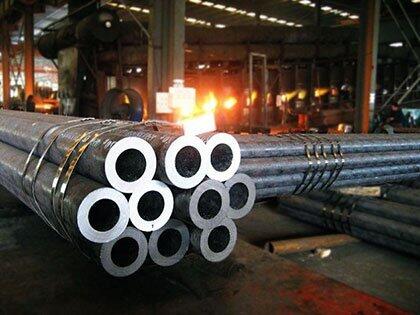
High-pressure steel pipe manufacturing methods are divided into hot-rolled (extrusion, expansion) and cold drawn (rolled) two kinds. Among them, the hot-rolled (extrusion, expansion) OD pipe is 22 ~ 530mm, wall thickness in the range of 2.0 ~ 70mm; cold drawn (rolled) pipe diameter ranges from 10 to 108mm, wall thickness range of 2.0 ~ 13mm.
Application Scope:
High-pressure steel pipe has good mechanical properties at room temperature and high temperature, strict quality control, suitable for a variety of work situations under high pressure conditions. High pressure steel pipes are mainly used in the field, diesel high pressure tubing, fertilizer equipment and pipelines.
Production process of high-pressure steel pipe:
The manufacturing of high-pressure steel pipes (especially seamless high-pressure steel pipes used in boilers, petrochemical plants, and power plants) is a precise and rigorous process. Its core lies in ensuring high material purity, uniform microstructure, geometric accuracy, and reliable final performance. The following uses the mainstream process of hot-rolled seamless steel pipes as an example:
a. The manufacturing of high-pressure seamless steel pipes begins with a high-purity round billet. After heating, the billet is pierced to form a hollow tube, which is then extended and thinned by hot continuous rolling. Subsequently, sizing/reduction is performed to precisely control the outer diameter and wall thickness.
b. Heat treatment (such as quenching + tempering) is the core step in imparting high strength and toughness. For alloy steels (such as P91 and P92), "austenitization (quenching) + high-temperature tempering" must be used to obtain a high-strength tempered martensite microstructure. Afterwards, straightening, cutting to length, and other finishing processes are performed.
c. Before leaving the factory, each steel pipe must undergo non-destructive testing (ultrasonic, eddy current), hydrostatic testing, and mechanical property inspection to ensure that it is free of internal defects and meets performance standards. Finally, labeling and protective packaging are applied. The entire process integrates precision machining, heat treatment, and rigorous quality inspection.
High-Pressure Pipeline Installation:
The requirements for high-pressure pipeline installation are similar to those for medium- and low-pressure pipeline installation, but the requirements are higher and the regulations are stricter. Therefore, in addition to meeting the requirements for medium- and low-pressure pipeline installation, the following requirements should also be followed:
High-pressure pipe sections, fittings, fasteners, and valves used for installation must be inspected and qualified, and accompanied by corresponding technical certification documents. After being transported to the site, they should be properly stored, clearly marked, and neatly placed. Before installation, their inner and outer surfaces should be wiped clean, and their internal passages should be checked for foreign objects and ensure they are unobstructed. Check that the roughness of the pipe sealing surface and gasket meets the requirements. There should be no scratches (especially radial scratches), spots, or other defects on the sealing surface that could affect sealing performance. Except for pipes that require degreasing, apply machine oil, grease, or white petroleum jelly to the pipe sealing surface and gasket for protection. For high-pressure pipes that have passed inspection, the threaded portion at the end, except for pipes that require degreasing, should be protected with molybdenum disulfide grease or a graphite machine oil blending agent.
During pipe installation, use formal pipe supports for fixation. Protective sleeves should be installed on pipe supports in contact with high-pressure pipes and fittings according to design requirements. When installing high-pressure flanges, the chamfer of the pipe end threads should be exposed. When installing gaskets, do not use metal wires for suspending; apply grease to the pipe opening and gasket beforehand. Soft metal high-pressure gaskets should be accurately placed into the sealing seat. Flange bolts should be tightened symmetrically and evenly, without over-tightening. After tightening, the two flanges should remain parallel and concentric, with 2-3 threads protruding from the nut, and at least no less than 2 threads. The exposed length of each bolt should be approximately the same. During installation, manufacturing or installation errors must not be compensated for by forceful pulling, pushing, twisting, or altering the thickness of the gasket. If pipeline installation work cannot be carried out continuously and completed, open pipe openings should be sealed promptly. Instrument sampling parts on the pipeline should be installed simultaneously with the pipeline.
High-Pressure Piping Systems:
High-pressure piping systems refer to the assembly of closed pipeline networks and accessories used to transport fluids (gas or liquids) at design pressures typically exceeding 10 MPa. They are the lifeblood of modern industry, particularly in the energy, chemical, and power sectors.
Characteristics and Challenges of High-Pressure Piping Systems:
1. High Stress and High Energy: The internal medium stores enormous energy; leaks or ruptures can cause catastrophic physical explosions and media ejection.
2. High Media Hazard: High-pressure systems often transport not only pressure but also high temperatures (e.g., main steam in power plants can reach 600°C) or toxic, flammable, and explosive media (e.g., hydrogen, hydrogen sulfide), with extremely severe consequences from failure.
3. Thick Pipe Walls: To withstand high pressure, the pipe walls are much thicker than ordinary pipes, posing significant challenges in manufacturing, welding, and installation.
4. Prominent Thermal Expansion and Contraction: High pressure is often accompanied by high temperatures, causing significant thermal expansion in the pipeline. The system must absorb thermal displacement through precise flexibility analysis and rational support design to prevent excessive secondary stress.
5. Vibration and Fatigue: High-pressure fluids easily induce pipeline vibration, and long-term vibration can lead to fatigue cracks at pipe joints.
Main Components of a High-Pressure Piping System:
A high-pressure piping system is not merely a few steel pipes; it is a complex system engineering project, mainly including:
1. Pipeline Body: High-pressure seamless pipes are the absolute mainstay. Due to the absence of weld seams, seamless pipes can more reliably withstand enormous pressure. Commonly used materials include high-quality carbon steel (e.g., 20G), low-alloy heat-resistant steel (e.g., 15CrMoG, P22), and high-strength alloy steel (e.g., P91).
2. Fittings: Components connecting pipelines, such as pipe elbows, tees, reducers, etc. High-pressure fittings are usually manufactured using forgings to eliminate casting defects and weld seams.
3. Valves: Used to control and regulate the flow of media, such as gate valves, globe valves, and safety valves. High-pressure valves require strict sealing designs and pressure rating markings (e.g., Class 1500, Class 2500).
4. Flanges and Fasteners: Used for detachable connections. High-pressure flanges are typically weld neck flanges, used in conjunction with high-strength bolts and spiral wound gaskets to ensure a tight seal.
5. Pipe supports: Bear the weight of the pipeline, restrain thermal expansion displacement, and prevent pipeline system instability.
6. Insulation and corrosion protection: Protect the pipeline from temperature fluctuations and external corrosion.
Core principles of design and material selection:
The design of high-pressure pipeline systems must adhere to stringent national and international standards, such as ASME B31.1 (power piping), ASME B31.3 (process piping), or GB/T 20801 (pressure piping specification).
High-pressure pipeline systems are specialized piping systems designed to meet extreme pressure challenges. Using seamless steel pipes as their core, they integrate high-strength fittings, valves, and stringent design standards, making them one of the most critical infrastructure components in high-risk, high-energy industrial processes. Safety is the highest priority in every aspect of their design, manufacturing, installation, and operation.
Read more: High Pressure Seamless Pipe Material & Standard or SCH 40 vs. SCH 80 Steel Pipe Pressure Rating
Related information
Copyright @2017 Hunan Standard Steel Co.,Ltd and Husteel Industry Group All Rights Reserved