What is ASTM A53 Sch 80 Seamless Pipe?
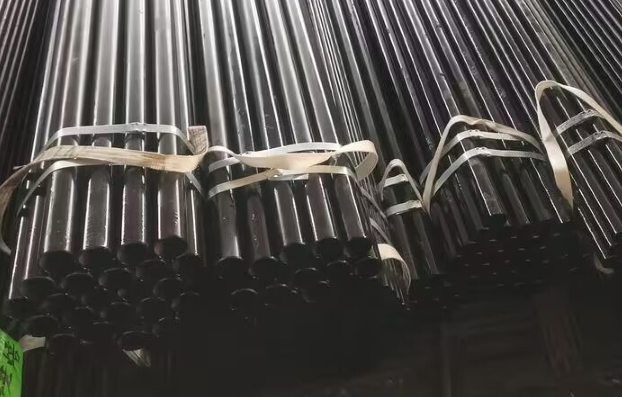
ASTM A53 Sch 80 Seamless Pipe refers to carbon steel pipe manufactured using a seamless process and conforming to the American ASTM A53 material standard. It features a thicker wall thickness (Schedule 80) and is suitable for applications requiring high strength and high pressure (high mechanical load) with limited budgets, but is not suitable for industrial applications in extreme high-temperature environments.
Where,
ASTM A53 is a specific standard developed by the American Society for Testing and Materials (ASTM) for "welded and seamless black-skinned and hot-dip galvanized steel pipes." This standard specifies the chemical composition, mechanical properties (such as tensile strength and yield strength), test methods, and manufacturing processes for the pipes.
Schedule 80 represents the "wall thickness series" of the steel pipe, an abbreviation of "Schedule 80." It belongs to the thick-walled specifications in the American Standard Pipeline Schedule Number, with wall thickness increasing as the pipe diameter increases. Sch 80 represents a thicker wall thickness.
Sch 80 pipes have a wall thickness that is approximately 30%-50% thicker than standard
Sch 40 pipes, resulting in higher pressure resistance and mechanical strength.
Seamless: This refers to the manufacturing process of A53 Sch 80 seamless pipes. It involves heating, piercing, and rolling a solid steel billet, resulting in a uniform pipe structure without weld seams. Compared to welded pipes, its microstructure is more uniform, and its pressure resistance is generally higher, making it suitable for more demanding applications.
Characteristics and Specifications of ASTM A53 Sch 80 Seamless Pipes:
The commonly used material for A53 Sch 80 seamless pipes is carbon steel. Carbon steel seamless pipes offer high strength, high pressure resistance, and no potential weak points from weld seams. A53 material includes two grades: Grade A and Grade B, with ASTM A53 Grade B being the most widely used.
Common Specifications: Common sizes for ASTM A53 Sch 80 seamless pipes range from NPS 1/8″ to NPS 24″. Its outer diameter and wall thickness conform to the ASME B36.10 steel pipe size standard.
Surface Treatment: A53 Sch 80 seamless pipes are typically shipped without any surface treatment, also known as black pipes (black oxide scale formed after hot rolling). Customers can request galvanizing or anti-corrosion treatment upon request.
Typical Applications:
ASTM A53 Sch 80 seamless pipes are commonly used in medium and high pressure systems, such as:
• Industrial process piping
• High-pressure steam lines
• Compressed air trunk lines
• Oil and gas transportation
• Structural support (when high mechanical strength is required)
Types of ASTM A53 Standards:
According to the ASTM A53 standard, pipes are classified into three types based on their manufacturing process. The basic requirements for chemical composition and mechanical properties are the same for all three, but there are differences in manufacturing processes and testing.
Type S: Seamless.
Type E:
Electric-resistance Welded (ERW).
Type F: Furnace-welded.
The specific comparison is as follows:
A53 Seamless Pipe: Manufactured using hot rolling or cold drawing processes, the pipe has no weld seams. Before leaving the factory, the pipes undergo flattening tests, flaring tests, or hardness tests to assess the quality of the manufacturing process.
A53 ERW Pipe: Manufactured using high-frequency resistance welding, it has weld seams. Because welded pipes have weak points in the weld seams, these seams must undergo non-destructive testing (eddy current or ultrasonic testing) before leaving the factory.
Furnace-Welded Pipe: Manufactured using furnace welding processes, the subsequent surface treatment is usually Hot-Dip Galvanized (HDG). It is important to note that Type F can only produce A53 Grade A pipes, which are now uncommon. In the past, most pipes produced using this simpler process were directly hot-dip galvanized and used as galvanized pipes for low-pressure water, gas, etc. Therefore, in commercial and procurement contexts, "A53 Type F" is often directly understood as "A53 galvanized pipe."
Note: Under ASTM A53 standards, all types of pipes must pass a hydrostatic test or non-destructive testing to ensure their pressure-bearing seal.
ASTM A53 Mechanical Properties:
Grade A: Tensile strength ≥ 330 MPa (48,000 psi); Yield strength ≥ 205 MPa (30,000 psi);
Grade B: Tensile strength ≥ 415 MPa (60,000 psi); Yield strength ≥ 240 MPa (35,000 psi);
Comparison with Other Similar Pipes:
ASTM A53 Sch 80 Seamless: Thicker wall thickness, higher pressure resistance, suitable for medium and high pressure systems.
ASTM A53 Sch 40 Seamless: Standard wall thickness, medium pressure resistance, suitable for low-pressure general systems (water supply, air).
ASTM A106 Gr.B Seamless: Standard difference; A106 standard seamless pipe is specifically designed for high-temperature and high-pressure systems (boilers, power plants).
Selection Recommendation:
For high-temperature applications (> 350°C), engineers tend to prefer seamless tubing conforming to the ASTM A106 standard because A106 offers stricter control over chemical composition and is specifically optimized for high-temperature resistance. ASTM A53 is more commonly used in normal or medium-temperature applications.
Read more: Seamless vs. Welded pipe
 sales@hu-steel.com
 English
 Español