Choosing the wall thickness of ERW pipes is far more complex than simply "thicker is stronger." It involves a comprehensive trade-off between cost, performance, manufacturing process, and end application. The most suitable wall thickness is the most economical thickness while meeting all performance and safety requirements. There is no absolute superiority or inferiority between thin and thick walls, only suitability.
In the field of ERW steel pipes, thin and thick walls are relative concepts, usually related to pipe diameter (OD). The industry commonly uses the diameter-to-thickness ratio (D/t, outer diameter/wall thickness) to roughly distinguish them:
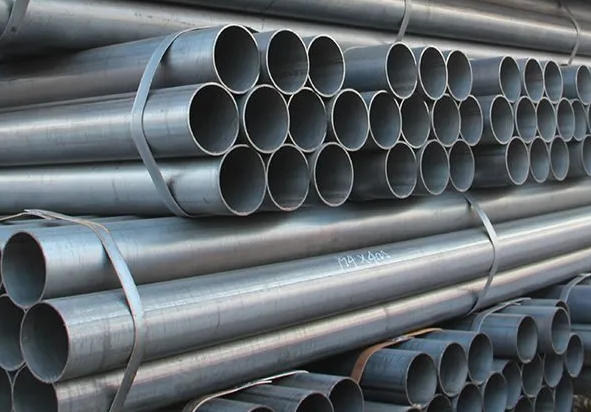
a. Thin-walled pipes: Diameter-to-thickness ratio ≥ 40. Characterized by a very thin wall thickness relative to the outer diameter, for example: Φ48mm*1.5mm (D/t=32), Φ114mm*2.5mm (D/t=45.6).
b.
Thick-walled pipes: Diameter-to-thickness ratio ≤ 20. The characteristic is that the wall thickness is relatively large compared to the outer diameter, for example: Φ60mm*5.0mm (D/t=12), Φ219mm*16mm (D/t=13.7).
If it falls in between, it can be called a medium-thick wall pipe.
Comparison between Thin-walled and Thick-walled ERW Pipes:
Characteristics of thin-walled ERW pipes:
Less material used, lower material cost; lighter weight, lower structural stability, prone to local buckling; lower pressure resistance, and thin-walled steel pipes are prone to deformation and burn-through during forming and welding, requiring extremely high control precision.
Applications: Lightweight structures, decoration, furniture, ventilation ducts, low-pressure fluid transportation.
Connection and processing: Prone to deformation, welding requires caution; suitable for
cold bending.
Characteristics of thick-walled ERW pipes:
Higher material cost due to increased material usage; heavier weight, resulting in higher structural stability, rigidity, bending resistance, and pressure resistance; thick-walled steel pipes require greater power during forming and welding, increasing the difficulty of weld fusion and heat treatment, and making internal burr removal more challenging.
Applications: High-pressure pipelines, heavy structures, mechanical components, shafts, wear-resistant pipelines.
Connections and Processing: Reliable connections (e.g., welding, flanges), but cutting, drilling, and cold bending are more difficult.
ERW Thin-Walled vs. Thick-Walled Pipes: How to Choose?
The choice of ERW pipe wall thickness generally depends on the application scenario.
1. Fluid Transportation Pipelines
The main considerations for ERW pipes used for fluid transportation are pressure and the medium. The minimum wall thickness required is calculated based on the design pressure, taking into account corrosion allowance.
Scenarios for choosing thin-walled pipes:
Low-pressure air, water, cable conduits, etc. Examples include fire sprinkler branch pipes and building water supply pipes (parts of SCH 10 and SCH 40).
Scenarios for choosing thick-walled piping:
High-pressure steam, high-pressure oil, chemical media. Strength calculations must follow ASME B31.1 and other standards, selecting Sch 80, Sch 160, or even higher grades.
2. Structural Applications
The main considerations for ERW pipe in steel structures are load and failure modes. Analyze whether the main load is axial pressure, bending, or torsion to prevent instability or strength failure.
Scenarios for choosing thin-walled pipe:
Structures subjected to light loads and primarily tension, such as light-duty shelves, display racks, and interior decorative frames. Care must be taken to prevent dents caused by impacts.
Scenarios for choosing thick-walled pipe:
Structures subjected to heavy loads, high pressure, and high bending or torsion, such as building columns, heavy equipment frames, automotive drive shafts, and hydraulic cylinders. Their high section moment of inertia provides excellent bending and torsional resistance.
3. Mechanical and Manufactured Components
The main considerations for ERW pipe in mechanical equipment and manufactured components are precision and function. The choice is based on the function of the mechanical component (wear resistance, load-bearing, as a guide rail) and subsequent processing requirements.
Scenarios for choosing thin-walled pipes:
Components that are weight-sensitive and require extensive cold bending, such as bicycle frames and furniture bends.
Scenarios for choosing thick-walled pipes:
Components that need to withstand wear, undergo high-precision machining (such as honing internal bores), or serve as robust shafts. Thick-walled pipes offer more machining allowance and more consistent dimensions.
Selection recommendations and considerations:
1. Standards and Specifications
Relevant international and industry standards must be followed.
For example: For
ERW pipe wall thickness dimensions, first consult and follow the wall thickness series (such as
Sch 40, Sch 80) in standards such as ASME B36.10.
For structures, use standards such as
ASTM A500 and calculate according to structural design specifications.
2. Thicker wall does not necessarily mean better; cost-effectiveness is key:
Excessively choosing thicker walled pipes can lead to material waste, significantly increased costs, increased weight, and higher demands on equipment (such as pumps and support structures).
Choose an economically reasonable wall thickness while meeting safety and performance requirements.
3. Focus on Weld Quality
Thin-walled welded pipe: Weld quality is paramount; poor welding can easily lead to burn-through or lack of fusion.
Thick-walled welded pipe: Thorough penetration and sufficient heat treatment are necessary to eliminate residual welding stress and prevent lamellar tearing. Ultrasonic testing reports are mandatory.
4. Consider Corrosion Resistance and Service Life
For corrosive environments, wall thickness selection must include a "corrosion allowance."
For example, with a design life of 20 years and an expected annual corrosion of 0.1 mm, an additional 2 mm of wall thickness is required.
5. Consult a Professional Manufacturer
Consult an experienced ERW pipe manufacturer with your operating conditions (pressure, medium, load), design standards, and budget. They can recommend the most manufacturable and economical wall thickness option based on their equipment capabilities and process experience.
Read more: ERW Pipe HS Code or Seamless vs. Welded Pipe
 sales@hu-steel.com
 English
 Español