sales@hu-steel.com
 English
 Español
A pipe schedule (SCH) is a standardized system used to represent the nominal wall thickness of steel pipes. It is a series of codes, not a direct measurement in millimeters. Among the various SCH grades defined by standards like ASME B36.10M (carbon/alloy steel) and ASME B36.19M (stainless steel), SCH 40 and SCH 80 steel pipes are the most common and critical choices in engineering applications. For reference, older designations "STD" and "XS" typically correspond to SCH 40 and SCH 80, respectively, in many contexts.
Note on Stainless Steel: Grades with an "S" suffix (e.g., 10S, 40S) are specific to stainless steel standards (B36.19M). Their wall thickness may differ from carbon steel pipes of the same number, especially in larger diameters, to optimize material usage.
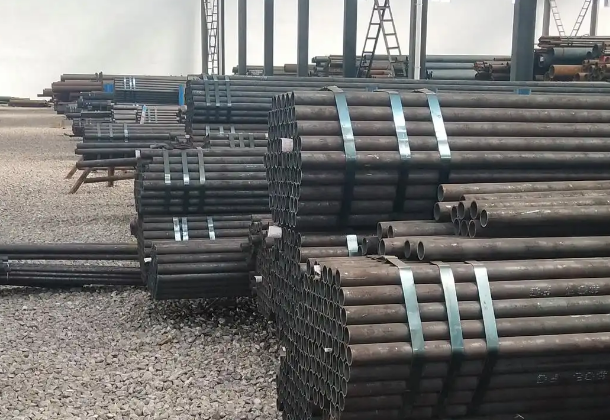
● Typical Applications: Water supply, drainage, low-pressure compressed air (< 1.6 MPa), structural supports, and light framing.
● Typical Applications: Oil/gas pipelines, high-pressure steam, chemical process lines, corrosive/abrasive environments, fire sprinkler mains, and high-stress mechanical systems.
As explained above, the core difference between SCH 40 and SCH 80 lies in their wall thickness, which directly determines their significant differences in pressure capacity, weight, and cost. The table below summarizes the key differences in selecting between the two.
The following table summarizes the core differences that drive selection:
|
Feature |
Schedule 40 (SCH 40) |
Schedule 80 (SCH 80) |
Impact on Selection |
|
Wall Thickness |
Standard (thinner) |
Thicker (about twice as thick as SCH 40 in some sizes) |
SCH 80 offers greater strength and durability; SCH 40 allows larger flow area. |
|
Weight |
Lighter |
Heavier |
SCH 80 has higher material and transport costs; adds more structural load. |
|
Pressure Capacity |
Lower (sufficient for low-pressure systems) |
Higher (required for medium/high pressure) |
Primary technical driver: Must meet system design pressure. |
|
Cost |
More affordable |
More expensive |
Budget is a key consideration. |
|
Threading |
Standard thread strength |
Stronger, deeper threads possible |
SCH 80 is preferred for high-pressure threaded connections to ensure integrity. |
△Need more precise pressure data? Please refer to our detailed guide: [Complete Comparison of SCH 40 vs. SCH 80 Steel Pipe Pressure Ratings], which includes calculation tables for different pipe diameters and materials.
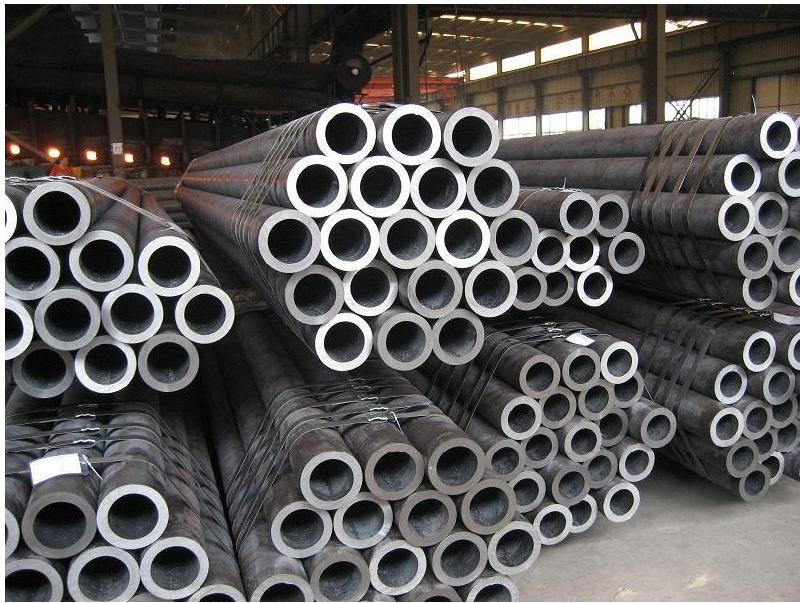
● Low-pressure fluid transport: Water supply, drainage, low-pressure compressed air (typically < 1.6 MPa) within buildings.
● General structural applications: Guardrails, equipment supports, light framing, and scaffolding.● High-pressure threaded connections: The thicker wall ensures stronger threads and a more reliable, leak-proof joint.
These applications make SCH 80 the preferred high pressure steel pipe and a standard choice for carbon steel pipe for oil and gas industries.
In low-pressure, non-corrosive, and cost-sensitive dry or mild indoor environments, SCH 40 offers the best value. For applications involving high pressure, high temperature, corrosion, high wear, or where stringent safety and lifespan are required, SCH 80 is the more reliable and long-lasting choice. Always consult a qualified engineer to perform accurate calculations based on your specific operating conditions and design codes.
This article provides general selection guidance. In actual engineering projects, key parameters such as wall thickness and pressure rating can vary significantly depending on the specific dimensions (NPS) of the steel pipe, material grade (e.g., A106 Gr.B, A53 Gr.B), and manufacturing standards (ASME, API). Before making the final design selection, we strongly recommend that you consult a professional piping engineer for precise calculations based on the project design specifications and operating conditions, or refer to the latest ANSI/ASME B36.10M/B36.19M standards and specifications to ensure the safety and economy of the selection.
A: Typically, the procurement cost of SCH 80 is 35% to 60% higher than that of SCH 40 of the same size. The specific premium varies depending on the pipe diameter and material. Although the initial investment is higher, the safety and longer lifespan it provides in high-pressure or harsh environments make it worthwhile.
Hunan Standard Steel Co., Ltd. (HSCO), as a direct manufacturer, offers not only highly competitive prices but also professional technical support. Please provide your design parameters, such as pressure, temperature, medium, and pipe diameter. Our engineering team will provide you with accurate selection advice and a formal quotation including detailed calculations, based on standards such as ASME and API, ensuring the safety and cost-effectiveness of your project.
You may need the following technical data for SCH 40 and SCH 80:
Related information
Copyright @2017 Hunan Standard Steel Co.,Ltd and Husteel Industry Group All Rights Reserved