sales@hu-steel.com
 English
 Español
Before searching for a structural steel supplier, you must first clarify your specific material requirements. This includes the material, cross-sectional dimensions, wall thickness, length range, and implementation standards of the required square or rectangular tubing. Different applications require different mechanical properties, corrosion resistance, and process precision. Clarifying your needs will help narrow your selection and allow you to more effectively select suppliers.

Ensure that the supplier has legal production and business qualifications and that the relevant products meet national or industry standards. You can assess compliance by checking the company's credit information and production licenses to avoid unnecessary risks associated with supplier qualifications.
Important Considerations for Purchasing Square and Rectangular Tubes:
When purchasing square and rectangular tubes, pay attention to the following quality indicators:
1. Appearance Quality
The surface of the square and rectangular tubes should be smooth, free from defects such as cracks, sand holes, and deformation, and the color should be uniform.
2. Dimensions and Wall Thickness
Common cross-sectional dimensions for square tubes range from 20×20mm to 400×400mm, with wall thicknesses of 0.8-20mm. For building structures, 40×40mm×2mm or larger is recommended.
Dimensional accuracy is crucial. Ensure that the side length and wall thickness of the square and rectangular tubes meet the specified standards. Excessive deviation may affect their use. Wall thickness uniformity is also important; uneven wall thickness will lead to uneven stress and reduce the tube's load-bearing capacity.
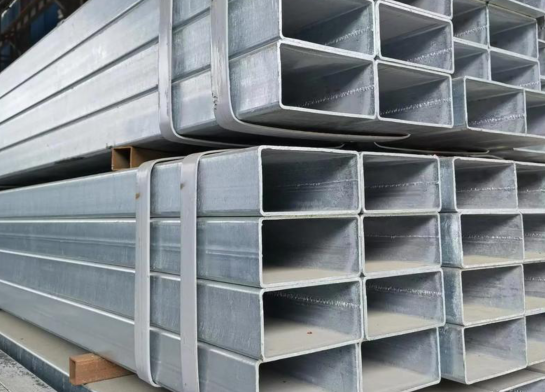
Regarding the material, its chemical composition must be clearly defined to ensure compliance with relevant standards. The material's yield strength, tensile strength, and other mechanical properties must meet standards, as this relates to the safety and stability of the square and rectangular tubes in practical applications.
a. Carbon steel square tubes (e.g., A500 GR.B): Low cost, suitable for heavy-duty applications such as building supports and shelves, but require rust prevention treatment.
b. Stainless steel square tubes (e.g., 304): Highly corrosion-resistant, suitable for food processing equipment and outdoor decoration. Professional references should be made to clarify material performance indicators.
c. Aluminum alloy square tubes: Lightweight (density 2.7g/cm³), often used for doors, windows, and display racks, but with relatively weak load-bearing capacity.
Welding quality is equally important. For square and rectangular tubes produced using welding processes, such as ERW square and rectangular tubes, the weld seams should be full, strong, and free of welding defects such as porosity and slag inclusions to avoid affecting the overall strength of the tube.
5. Galvanizing Quality
The quality of the galvanized layer is crucial for galvanized square and rectangular tubes. The galvanized layer should be uniform, complete, and of standard thickness, possessing good corrosion resistance. Only by comprehensively paying attention to these quality indicators can reliable square and rectangular tubes that meet usage requirements be purchased.
Procurement Channel Comparison and Price Traps:
1. Offline Market
- Advantages: On-site inspection possible (checking surface scratches, weld smoothness), suitable for small-batch purchases.
- Risks: Some vendors misrepresent wall thickness (e.g., nominal 3mm, actual only 2.7mm), calipers must be brought for testing.
2. E-commerce Platforms (Made in China/Alibaba.com)
- Transparent pricing, but logistics costs need to be confirmed.
- Recommended: Choose "Factory Direct Sales" stores and check for ISO 9001 certification.
3. Factory Direct Supply
- Minimum order quantity is usually 1 ton or more, unit price can be 10%-15% lower than retail. A quality assurance certificate (such as an SGS report) is required.
Inspection and After-Sales Precautions:
1. Arrival Inspection
- Measure wall thickness tolerance, randomly check at least 3 pieces.
- Observe whether the cut is smooth; reject if rust area exceeds 5%.
2. Contract Terms
- Clearly define materials, standards (e.g., ASTM A500), and liability for breach of contract.
- Retain samples to avoid disputes regarding discrepancies between the delivered goods and the sample.
3. Long-Term Cooperation Recommendations
- Regularly send samples to a third-party testing agency (e.g., SGS) to ensure batch consistency.
- Monitor steel price fluctuations (refer to daily price quotes on "MySteel" website) and purchase accordingly.
Selecting a supplier for square and rectangular tubes requires a comprehensive assessment. By clarifying your needs and examining multiple factors, including production capacity, quality control, industry reputation, price, after-sales service, and company qualifications, you can be more confident in finding a partner that meets your requirements. Maintaining a cautious approach and prioritizing the potential for long-term cooperation will help ensure a stable supply of materials and support.
Read more: Square & Rectangular Tube Price or ASTM A500 Square Tube
Related information
Copyright @2017 Hunan Standard Steel Co.,Ltd and Husteel Industry Group All Rights Reserved