sales@hu-steel.com
 English
 Español

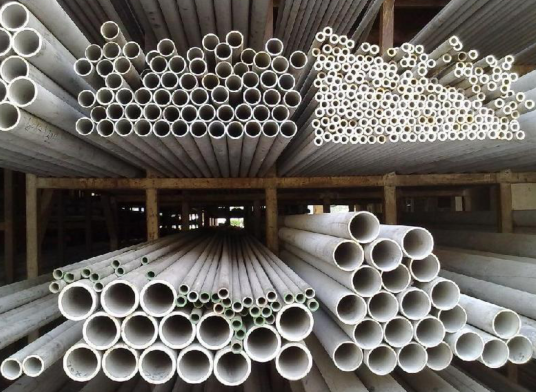
201 stainless steel is an austenitic stainless steel whose chemical composition mainly includes C, Cr, Ni, Mn, Si, P, S and other elements. Its characteristics mainly include good acid and alkali resistance, good welding performance and processability, high density, no bubbles in polishing, no pinholes, etc. This material of stainless steel is mainly used to produce various watch cases, watch strap bottom covers, etc. It is also suitable for decorative tubes, industrial tubes and some shallow stretched products. "Seamless tubing" refers to the manufacturing process of stainless steel pipes.
AISI (American Iron and Steel Institute) uses three digits to represent various standard grades of wrought stainless steel. Among them:
In general, 201 stainless steel seamless pipe is an economical and practical choice in specific application scenarios due to its low cost and certain corrosion resistance. Although it is not as corrosion-resistant as 304 stainless steel, 201 stainless steel seamless pipe is a viable alternative in certain applications where extremely high corrosion resistance is not required.
FAQs:
Q1: Will 201 stainless steel seamless pipe rust?
A: Yes, it will rust, especially in certain environments.
While 201 stainless steel has some corrosion resistance, its rust prevention is relatively weak. 201 is suitable for dry indoor environments. For coastal or outdoor applications, it is recommended to upgrade to 304 or 316L stainless steel.
Q2: Can 201 stainless steel seamless pipe be used in contact with drinking water or food?
A: Generally not recommended.
201 stainless steel has limited corrosion resistance and a high manganese content, which does not meet the standards for food-grade stainless steel. For contact with food or drinking water, 304 or higher grade stainless steel conforming to GB 4806.9 food safety standards should be used.
Q3: What precautions should be taken when welding 201 stainless steel seamless pipe?
A: Welding 201 is more sensitive than welding 304, requiring the use of specialized welding materials.
If pickling and passivation treatment is not performed after welding, the corrosion resistance of the weld area may significantly decrease.
Q4: What is the applicable temperature range for 201 stainless steel seamless tubes?
A: The applicable temperature range for 201 stainless steel seamless tubes is -20℃ to 300℃, but it is recommended to keep the long-term operating temperature below 250℃. Performance is unstable at temperatures exceeding 300℃, making it unsuitable for high-temperature applications such as boilers and heat exchangers.
Q5: Is 201 stainless steel good for jewelry?
A: 201 stainless steel is not suitable for jewelry. Although it is inexpensive and has a good polishing effect, its fatal flaw of poor corrosion resistance makes it unsuitable for long-term close-fitting wear—the salt in sweat will gradually corrode the surface, leading to rust, discoloration, and even skin allergies.
If you are purchasing stainless steel jewelry, please look for 316L stainless steel (titanium steel/medical steel). It remains very affordable (far lower than gold and silver), but its durability, safety, and aesthetics far surpass 201, making it the current gold standard for stainless steel jewelry.
Read more: Carbon steel vs Stainless steel or 304 vs. 316 Stainless Steel
Related information
Copyright @2017 Hunan Standard Steel Co.,Ltd and Husteel Industry Group All Rights Reserved