sales@hu-steel.com
 English
 Español
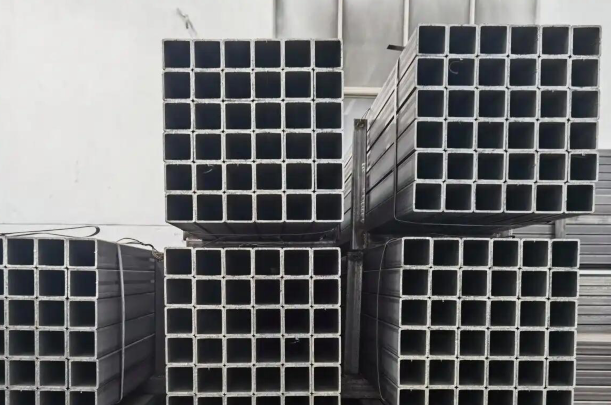
● EN 10219: This is a technical specification developed by the European Union for welded cold-formed hollow profiles (such as square and rectangular tubes) of non-alloy and fine-grained structural steel. It strictly specifies the requirements for pipe manufacturing processes, dimensional tolerances, mechanical properties, chemical composition, and surface quality, ensuring high consistency and reliability, and is particularly suitable for projects with high structural safety requirements.
● S235JRH: This is the steel grade, with the following meanings:
S: Represents Structural Steel.
235: Represents the minimum yield strength of this steel as 235 MPa (applicable to wall thickness ≤ 16 mm). This means it can withstand medium-strength loads and is suitable for general load-bearing structures.
JR: Indicates that the steel has an impact energy ≥ 27 J when subjected to impact testing at room temperature (+20°C). This demonstrates its good toughness and ability to resist impact loads.1. High strength and good toughness
S235JRH possesses excellent comprehensive mechanical properties: yield strength ≥ 235 MPa, tensile strength 360-510 MPa, and elongation ≥ 24%. This material exhibits stable impact toughness (≥ 27 J) at room temperature (+20°C), meeting the safety standards of most building and mechanical structures.
If your project involves low-temperature environments (e.g., -20°C), please consult us to select the S235J2H grade. We can provide you with matching low-temperature impact performance data and material certification.
2. Excellent Welding and Machining Performance
Due to its low carbon content (carbon ≤ 0.17%) and reasonable chemical composition control, S235JRH steel has excellent weldability. Welds are less prone to cracking, making it suitable for various conventional welding processes without the need for complex preheating and post-weld heat treatment. It is also easy to perform secondary processing such as cutting, drilling, stamping, and cold bending, flexibly adapting to various design requirements.This is the most commonly used form, with dimensions determined by side length and wall thickness.
Common side lengths for square tubes:
From smaller sizes like 20×20 mm, 25×25 mm, and 40×40 mm, to medium sizes like 50×50 mm, 60×60 mm, 80×80 mm, and 100×100 mm, and then to large sizes like 150×150 mm, 200×200 mm, and 250×250 mm, even reaching 400×400 mm.
Selection recommendation: S235JRH is sufficient for general construction; S355J2H is recommended for important load-bearing applications, large spans, and low-temperature environments.
Read more: EN 10219 vs EN 10210 or Square Tube Weight Calculation Formula
Related information
Copyright @2017 Hunan Standard Steel Co.,Ltd and Husteel Industry Group All Rights Reserved