sales@hu-steel.com
 English
 Español
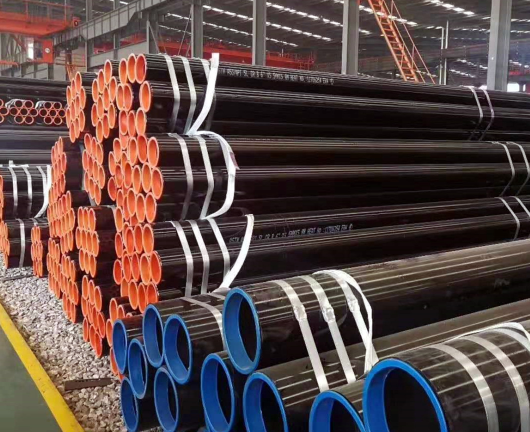
Using Cr-Mo alloy steel and stainless steel as base materials, through a seamless integral structure, rigorous non-destructive testing, and specific heat treatment processes, they can operate stably for extended periods in the high-temperature, high-pressure, hydrogen-exposed, and corrosive environments of core units such as catalytic cracking and hydrocracking, ensuring the safety and reliability of the equipment.
Standards:
Seamless steel pipes for petroleum cracking are mainly used in furnace tubes, heat exchanger tubes, and pipelines in oil refineries, suitable for transporting oil products, oil and gas, and corrosive media under high-temperature and high-pressure conditions. In international trade, they often correspond to the following standards:
Which Units are Suitable for Seamless Steel Pipes for Petroleum Cracking?
Seamless steel pipes for petroleum cracking are mainly used in key units of oil refineries, such as heavy oil catalytic cracking, hydrocracking, delayed coking, and viscosity-reducing cracking.
1. Catalytic Cracking Unit
In catalytic cracking units, seamless steel pipes are used as riser reactors, feed lines to fractionation towers, and high-temperature oil and gas transmission pipelines. They must withstand temperatures above 500℃ and corrosion from sulfur-containing media.
2. Hydrocracking Unit
Hydrocracking units use seamless steel pipes for reactor inlet and outlet pipelines, high-pressure heat exchanger piping, and circulating hydrogen pipelines. These pipes require both high-temperature strength and resistance to hydrogen corrosion, and must withstand high pressures of 10-20 MPa, hydrogen-rich environments, and the risks of hydrogen embrittlement and corrosion.
Common Specifications:
Seamless steel pipes for petroleum cracking cover a wide range of sizes, mainly falling into the following two application categories:
Dimensional tolerances:
Strict dimensional tolerances are specified in the standard according to different manufacturing processes and size ranges.
Hot-rolled tubes: When the outer diameter is ≤159mm, the allowable deviation is ±1.0%; when the outer diameter is >159mm, the allowable deviation is ±1.25%. When the wall thickness is ≤20mm, the allowable deviation is ±12.5%; the length is usually 4~12 meters.Performance Characteristics:
Seamless steel pipes for petroleum cracking are indispensable key materials in high-temperature and high-pressure environments such as petroleum refining and chemical production. Their performance directly affects equipment safety and process stability. This product is suitable for manufacturing seamless steel pipes for equipment such as petroleum refining units, ethylene cracking furnaces, and hydrogenation reactors. It is mainly used in petroleum cracking units, such as cracking furnace tubes, heat exchanger tubes, and reactor tubes. Its operating environment typically involves high-temperature and high-pressure conditions with working temperatures between -20℃ and 600℃, pressure ratings higher than conventional pipelines, and piping systems in contact with corrosive media such as hydrogen sulfide and organic acids. This product is not suitable for low-temperature environments (below -20℃) or special fields such as nuclear power.
1. Common Materials
Seamless steel pipes for petroleum cracking typically use Cr-Mo alloy steel (such as 15CrMo, 1Cr5Mo, 12CrMo) or stainless steel (such as 1Cr19Ni9Nb), meeting the material selection requirements of NACE MR0175/ISO 15156 (resistance to sulfide stress cracking) and Nelson curve (resistance to hydrogen corrosion).
2. Quality Assurance:
The manufacturing process strictly adheres to international standards, requiring:
100% non-destructive testing: such as ultrasonic testing.3. Design Considerations
This type of pipeline requires stress analysis according to ASME B31.3, with sufficient corrosion allowance (usually ≥3mm).
In conclusion, seamless steel pipes for petroleum cracking can operate stably for a long time in high temperature, high pressure, hydrogen-containing and sulfur-containing environments. They are an indispensable pressure pipeline material in the core processes of petroleum refining, ensuring the safe and efficient operation of the equipment.
Read more: Different Types of Boiler Tubes and their Role in Energy
Related information
Copyright @2017 Hunan Standard Steel Co.,Ltd and Husteel Industry Group All Rights Reserved