sales@hu-steel.com
 English
 Español
A seamless steel tube billet is the solid round steel used as the raw material for manufacturing seamless steel pipes. The material quality of the tube billet directly determines the performance and reliability of the finished pipe—making it a critical factor in the round billets market and the broader steel supply chain. This guide covers the types, classification, selection criteria, and key material considerations for seamless steel tube billets to help engineers and buyers make informed decisions.
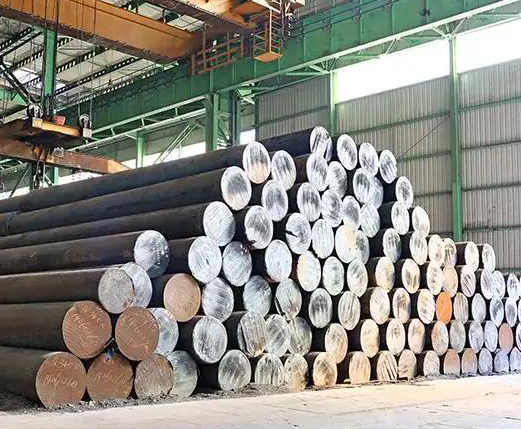
The billet used in the production of steel pipes is called a tube billet. It is typically made from high-quality carbon steel billets or alloy steel billets in the form of solid round steel billet. The round billet production process—from steelmaking to rolling—ensures the billet meets the required chemical composition, structural integrity, and dimensional accuracy for subsequent pipe manufacturing.
According to different production methods, carbon steel seamless tubes can be made from steel ingots, continuous casting billets, forging billets, rolled billets, and centrifugally cast hollow billets.
Since the quality of the steel pipe billet largely determines the quality of the seamless steel tube, the preparation of the tube billet—including selection of material grade and billet size, chemical composition and structure inspection, surface defect inspection and cleaning, cutting, and centering—is particularly important.
The production of a round steel billet follows a complete manufacturing chain:
△ Ironmaking → Steelmaking → Open Hearth Steel (or Electric Furnace Steel and Oxygen Blowing Converter Steel) → Ingot → Billeting → Rolled Round Bar → Tube Billet
This process ensures the round billet production meets the required quality standards for seamless pipe manufacturing.
Seamless steel tube billets can be classified according to various criteria. The table below summarizes the main classification methods and their corresponding types:
| Classification Method | Specific Types | Key Characteristics / Application |
|---|---|---|
| By Steelmaking Process | Electric furnace steel billet, converter steel billet, electroslag steel billet | Affects steel purity, inclusion content, and uniformity |
| By Chemical Composition | Carbon steel billets, alloy steel billets, stainless steel billets, corrosion-resistant alloy billets | Determines final pipe properties: strength, corrosion resistance, temperature tolerance |
| By Forming Method | Steel ingot, continuous casting billet, forged billet, rolled billet, centrifugally cast hollow billet | Impacts production efficiency, material yield, and internal structure |
| By Application / End Use | Petroleum casing billet, boiler tube billet, bearing tube billet, geological drilling tube billet, fertilizer plant tube billet | Designed to meet specific industry requirements |
While both are forms of semi-finished steel, billet and bar serve different purposes:
● Billet: Typically has a round, square, or rectangular cross-section and is used as the raw material for further processing—such as piercing and rolling into seamless pipes. Billet size is a critical parameter in pipe manufacturing.
● Bar: Often refers to a finished or semi-finished product with a round cross-section, used directly in machining, forging, or structural applications without the extensive hot-working required for pipe production.
In the context of seamless pipe manufacturing, a round steel billet is the specific form required for the piercing process.
Selecting the correct steel pipe billet is critical for producing high-quality seamless pipes. The selection involves evaluating several factors:
● Steel Grade: Choose the appropriate carbon alloy steel billets or other grades based on the final pipe's required mechanical properties and service conditions.
● Billet Size: Determine the billet size based on the desired pipe dimensions and the rolling mill's capabilities. Common billet diameters range from 80mm to 350mm, depending on the final pipe size.
● Smelting Method: For general purposes, refined converter steel or electric furnace steel is commonly used for continuous casting of round steel billet. When higher purity is required, electroslag remelting or vacuum degassing is preferred.
● Forming Method: If the required billet size cannot be directly cast, a larger billet can be rolled or forged to the desired size.
Compression Ratio Calculation:
The compression ratio (K) is calculated as:
K = F₁ / F₂
Where:
F₁ = Cross-sectional area of the tube billet (mm²)
F₂ = Cross-sectional area of the finished steel pipe (mm²)
A sufficient compression ratio ensures proper deformation and uniform microstructure in the final pipe.
The quality of the tube billet material directly influences the performance of the seamless steel pipe. Key quality factors include:
1. Chemical Composition: Must meet specified limits for carbon, alloying elements, and harmful impurities (sulfur, phosphorus).
2. Internal Defects: The billet must be free from cracks, porosity, and non-metallic inclusions that could cause pipe failure.
3. Dimensional Accuracy: The round steel billet must have consistent diameter and straightness to ensure smooth feeding into the piercing mill.
4. Surface Quality: Surface defects such as cracks, folds, or scale must be removed before processing.
Q1: What is the difference between a tube billet and a finished seamless pipe?
A: A steel pipe billet is the solid round steel that serves as the raw material for manufacturing seamless pipes. After heating, piercing, rolling, and heat treatment, the billet is transformed into a hollow seamless pipe.
Q2: Why is the quality of the billet so important?
A: The billet's chemical composition, internal defects, and dimensional accuracy directly impact the pipe's mechanical properties, pressure resistance, and overall reliability. A high-quality tube billet material is essential for producing defect-free pipes.
Q3: What are the most common materials for tube billets?
A: The most common materials are carbon steel billets (e.g., A105, 20#) and alloy steel billets (e.g., 12Cr1MoV, 15CrMo), depending on the required temperature and pressure resistance of the final pipe.
Q4: How is the size of a tube billet determined?
A: The billet size is selected based on the final pipe dimensions and the rolling mill's capacity. The compression ratio is a key parameter in ensuring proper deformation during the pipe manufacturing process.
Q5: What is the difference between a billet and a bar in steel terminology?
A: A billet is a semi-finished product used for further processing (such as pipe manufacturing), while a bar is often a finished or near-finished product used directly in machining or construction. In pipe production, the specific form required is a round steel billet.
Read more:
● Heating defect of seamless tube billet
● Seamless Steel Pipe Manufacturing Process
● Carbon Steel Seamless Pipe Size Range
● ASTM A106 vs ASTM A53: Key Differences
Related information
Copyright @2017 Hunan Standard Steel Co.,Ltd and Husteel Industry Group All Rights Reserved