Boiler tubes are the core components of a boiler system, responsible for transferring heat and withstanding pressure. Whether for power plant boilers or industrial boilers, the choice of tubing directly affects the safety and lifespan of the equipment.
Currently, there are two main types of boiler tubes on the market: seamless boiler tubes and welded boiler tubes. They each have their own characteristics and are suitable for different operating conditions. This article will compare them in terms of production processes, performance, cost, and application scenarios to help you make a reasonable choice.
Fundamental Differences in Production Processes:
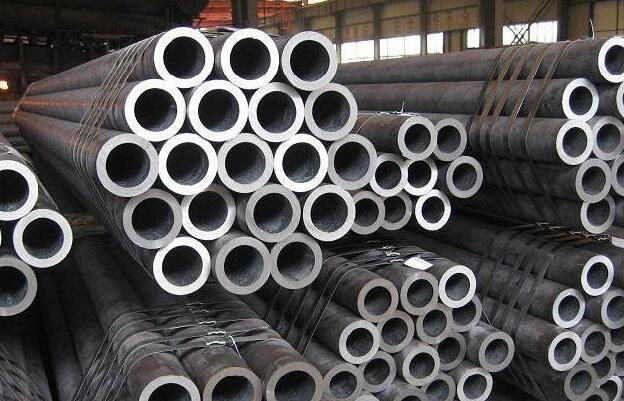
Seamless boiler tubes are produced starting from solid round steel billets. After the billet is heated, it undergoes processes such as piercing, rolling, or extrusion to directly form a hollow tube, without any welding operations involved in the entire process. This means that the material of the tube is completely continuous and uniform from the inside out, without any weld seam.
Welded boiler tubes (ERW Pipe), on the other hand, use steel plates or strips as raw materials. After being cold-bent into a cylindrical shape, the joints are welded together using methods such as resistance welding (ERW) or submerged arc welding (SAW). Modern welding technologies (such as high-frequency induction welding and laser welding) have significantly improved weld quality, but the presence of the weld seam remains its core characteristic distinguishing it from seamless tubes.
Performance Comparison: Strength, Precision, and Reliability
Strength and Pressure Bearing Capacity:
Seamless boiler tubes, due to the absence of weld seams, exhibit uniform strength throughout the tube body, resulting in greater reliability under high pressure and high temperature conditions. Data shows that the burst pressure of seamless tubes can be 30% to 50% higher than that of welded tubes of the same specifications. For ultra-high pressure steam systems or applications with severe thermal cycling, seamless tubes are often the preferred choice.
The weld seam of welded boiler tubes was once considered a weak point. However, it must be noted that qualified welded tubes, after solution heat treatment and rigorous non-destructive testing (such as ultrasonic testing and X-ray inspection), can achieve weld seam strength approaching that of the base material. In most medium- and low-pressure industrial boiler applications, welded tubes fully meet the strength requirements.
Dimensional Accuracy:
Welded boiler tubes have an advantage in dimensional consistency. Due to the use of high-precision continuous forming of steel strips, welded tubes offer more precise control over their outer diameter and wall thickness tolerances, and exhibit less eccentricity (uneven wall thickness) compared to seamless tubes. This is advantageous for heat exchanger tube bundles requiring tight fit or subsequent automated welding installations.
Seamless tubes, during piercing and rolling, exhibit relatively larger wall thickness deviations and ovality. While cold-drawn precision seamless tubes can mitigate these issues, the cost increases accordingly.
Cost Difference:
From an economic perspective, welded boiler tubes are typically 20% to 30% cheaper than
seamless tubes. This is because welded tubes have higher production efficiency, better material utilization, and can use thinner raw materials for precise wall thickness control, reducing waste. For large-volume boiler projects with standard parameters, the cost advantage of welded tubes is significant.
Seamless tubes have longer production processes, higher energy consumption, and greater material loss, resulting in a higher price. However, under extreme operating conditions, the safety redundancy and longer service life offered by seamless tubes may offset their initial cost disadvantage.
Corrosion and Long-Term Reliability:
In terms of corrosion resistance, the main difference between the two lies in the weld area. For austenitic stainless steel or nickel-based alloy welded pipes, if sufficient solution treatment and cold working are not performed after welding, sensitization may occur in the weld and heat-affected zone, leading to a decrease in localized corrosion resistance. Seamless pipes do not have this problem, exhibiting more consistent overall corrosion resistance.
However, for carbon steel and low-alloy steel boiler tubes, with proper post-weld heat treatment and passivation, the corrosion resistance of welded pipes can reach a level comparable to that of seamless pipes.
Seamless vs. Welded Boiler Tubes: How to Choose?
When selecting boiler tubes, the following principles can be considered:
Situations where seamless boiler tubes should be prioritized:
● High-temperature and high-pressure conditions with operating temperatures exceeding 500°C or operating pressures exceeding 15MPa
● Environments with severe temperature fluctuations or vibration stress
● Critical safety components, such as main steam pipes and superheater tube ducts in power plant boilers
● Applications where any leakage risk is unacceptable, such as nuclear power plants and petrochemical cracking furnaces.
Situations where welded boiler tubes can be considered:
● Medium and low-pressure boilers, economizers, water-cooled walls, heat exchangers
● Large-volume routine projects where cost is sensitive
● Tube bundle applications with high requirements for dimensional accuracy and outer diameter tolerances
● Environments with mild media corrosivity and moderate temperature and pressure conditions.
Conclusion:
Seamless and welded boiler tubes each have their advantages; it's not a simple matter of one being superior to the other. Seamless tubes offer the advantage of high reliability and material uniformity due to the absence of weld seams, making them particularly suitable for harsh operating conditions. Welded tubes offer the advantage of cost-effectiveness and dimensional accuracy, sufficient to cover the needs of most routine applications.
Modern welding technology has significantly improved the quality of qualified welded pipes. As long as standards are strictly followed and thorough testing is conducted, welded boiler tubes can be a safe, economical, and reliable choice. The core basis for material selection remains a comprehensive balance between working conditions, safety requirements, and budget.
Related Resources:
● Boiler Tube Size Chart
● Seamless Steel Pipe Sizes and Weights
● Low, Medium and High Pressure Boiler Tube
● Carbon Steel ERW Boiler Tube & Air Heater Tube Specification
 sales@hu-steel.com
 English
 Español