In the field of building structural engineering,
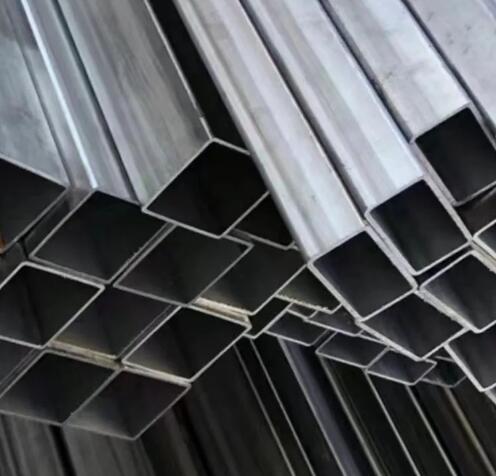
stainless steel square tubes are widely used due to their excellent corrosion resistance, high strength, and modern aesthetic appeal. EN 10219 is a general European standard for welded hollow profiles of cold-formed non-alloy and fine-grained structural steels. For stainless steel square tubes, it is usually necessary to use EN 10219-2 (supplementary requirements for weathering steel and stainless steel) or EN 10088 (stainless steel material standard) to provide a complete technical basis. Understanding its certification key points is crucial for ensuring structural safety, material compliance, and smooth project progress.
The EN 10219 standard consists of the following three parts:
●
EN 10219-1: Technical Delivery Conditions
●
EN 10219-2: Tolerances, Dimensions, and Section Properties
●EN 10219-3: Supplementary Requirements for Weathering Steel and Stainless Steel
For stainless steel square tubes, EN 10219-3 is the most direct technical basis.
Material Performance Requirements:
The core of EN 10219 lies first and foremost in the clear specification of material performance. The standard not only strictly limits the chemical composition of the steel pipes (such as the content of elements like carbon, chromium, and nickel) to ensure their corrosion resistance and basic mechanical properties, but also specifies in detail their mechanical performance indicators, including yield strength, tensile strength, and elongation. For square tubes used in building structures, these data directly relate to their load-bearing capacity and deformation capacity under load, serving as direct input parameters for structural design calculations.
Manufacturing Process and Dimensional Tolerances:
The standard sets forth precise requirements for manufacturing processes and dimensional tolerances. This covers the entire process control from strip steel to forming and welding, ensuring continuous, uniform, and defect-free weld quality. Regarding dimensions, it sets clear tolerance ranges for the external dimensions, wall thickness, right angle deviation of the cross-section, and straightness of the square tubes. Strict dimensional control is a prerequisite for ensuring the accuracy of component processing and the fit of on-site installation, effectively avoiding construction difficulties or stress concentration caused by matching problems.
Inspection and Testing Requirements:
The certification process places great emphasis on inspection and testing. Square tubes manufactured according to EN 10219 must undergo a series of mandatory tests, such as tensile testing, impact testing (if required), and non-destructive testing (such as ultrasonic or eddy current testing) to verify the quality of internal welds. Manufacturers must provide a Factory Production Control (FPC) certificate conforming to the standard requirements, as well as a CE marking certificate of conformity issued by an independent certification body. This signifies that the product meets the safety, health, and environmental requirements under the EU Building Products Regulation (CPR).
Certification Process Overview:
A typical EN 10219 certification process includes the following key steps:
1. Material Inspection: Confirming that the chemical composition and mechanical properties meet the standard requirements.
2. Process Qualification: Assessing the stability of welding and forming processes.
3. Product Testing: Completing mandatory tests such as tensile, impact, and non-destructive testing.
4. FPC System Audit: Assessing the compliance of the factory's production control system.
5. Certification and Marking: Obtaining a CE certificate and affixing the CE mark.
Common Stainless Steel Grades:
The stainless steel grades used in conjunction with EN 10219 and their typical applications are as follows:
304: General purpose, corrosion resistant, commonly used in interior structures and decorative components;
316: Resistant to chloride corrosion, commonly used in coastal facilities and outdoor environments;
2304:
Duplex stainless steel, high strength, commonly used in heavy-duty structures and large-span components.
Typical Application Scenarios:
In practical applications, stainless steel square tubing compliant with EN 10219 standards is widely used in building curtain wall support structures, spatial grid structures, decorative components, and outdoor facilities in coastal or corrosive environments where high durability and aesthetics are required. The completeness of its certification provides architects, structural engineers, and owners with reliable material performance assurance, reducing long-term maintenance costs and safety risks.
Precautions:
When selecting stainless steel square tubing compliant with EN 10219 standards, the following should be noted:
● Scope of Application: The core of EN 10219 targets non-alloy and fine-grained structural steels. Stainless steel square tubing should be confirmed to reference EN 10219-3 or be used in conjunction with the EN 10088 series.
● CE Marking and CPR Regulation: The legal basis for the CE marking is the European Union Building Product Regulation (CPR, Regulation (EU) No 305/2011). Certified products must declare that they meet safety, health, and environmental performance requirements.
● Material certification: Suppliers are required to provide a clear declaration of conformity for stainless steel materials and a complete test report.
Read more: EN 10219 vs EN 10210 or Theoretical Weight Calculation Formula for Steel Square Tubes
 sales@hu-steel.com
 English
 Español