What is Borewell Casing?
Borewell Casing is a tubular structure installed inside the borehole. After a new well is drilled, it is assembled and inserted into the borehole. Its main functions are to support the wellbore, prevent collapse, and isolate groundwater from surface contaminants. It is widely used in water wells, geological exploration, agricultural irrigation, and some oil and gas wells.
In oil and gas wells, after being run into the well, the casing is usually cemented in place to isolate formations with different pressures and prevent contamination. In water wells, the casing is crucial for ensuring a clean and sustainable water source.
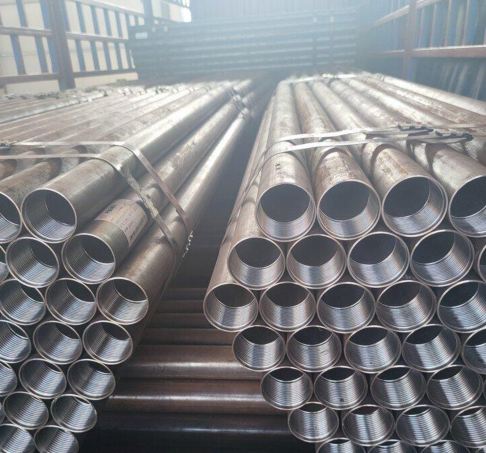
Key features of Borewell Casing:
1. Durability and High Strength: It must be able to withstand the enormous pressure of the surrounding soil and groundwater to prevent the wellbore from collapsing during long-term use. High-quality casing can serve for more than 20 years, especially under proper material selection and installation conditions.
2. Corrosion Resistance: Groundwater environments often contain various minerals and chemicals, therefore, casing materials need excellent corrosion resistance to extend the well's service life. For example, PVC casing is inherently less prone to corrosion, while
metal casing requires an additional protective layer, such as galvanizing.
3. Smooth Inner Wall: A smooth inner surface minimizes frictional losses in water flow, allowing for smoother and more energy-efficient pump operation, thus improving pumping efficiency.
4. Easy Installation and Maintenance: Casing pipes are typically designed with convenient connection methods (such as
threaded connections), allowing for quick and tight connections without complex tools, simplifying the installation process and reducing maintenance difficulty.
Typical Applications:
1. Drinking Water Well Construction: Providing a safe and reliable groundwater source for homes and villages.
2. Agricultural Irrigation: Used for deep well water extraction in arid regions to support large-scale farmland irrigation.
3. Geological and Environmental Monitoring: Used as monitoring well casing for long-term groundwater sampling and pollutant detection.
4. Engineering Foundation and Geotechnical Investigation: Used in large-scale engineering projects such as construction and bridges for stabilizing boreholes and obtaining soil and rock samples.
5. Oil, Gas and Mineral Exploration: Although not mainstream, it is also used as temporary or auxiliary casing in shallow exploration.
Common Borewell Casing Materials:
The choice of casing material usually depends on well depth, geological conditions, water quality, and budget. Below are some common materials and their characteristics:
●PVC Plastic Casing:
Advantages: Low cost, lightweight, easy to install, excellent corrosion resistance.
Disadvantages: Relatively lower structural strength compared to metals, unsuitable for extremely deep wells.
Application Scenarios: Widely used in various civil, agricultural, and industrial water wells with depths not exceeding 200-450 meters, it is one of the most mainstream choices on the market.
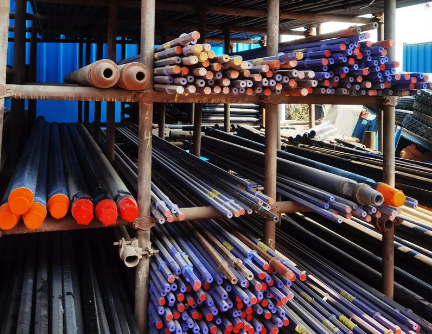
●Galvanized Steel Casing Pipe:
Advantages: High strength, durable, able to withstand greater external pressure, suitable for deep wells.
Disadvantages: Heavy weight, may still corrode in certain soil types (such as saline-alkali land), requiring regular maintenance.
Application Scenarios: Commonly used for community water supply or deep wells reaching depths of approximately 500 meters, suitable for scenarios requiring high strength.
● Stainless Steel Casing (304/316):
Advantages: Highest strength, extremely long service life (over 100 years), extremely strong corrosion resistance, suitable for almost any harsh groundwater environment.
Disadvantages: Highest initial cost.
Application Scenarios: Suitable for deep wells exceeding 500 meters in depth, large-diameter high-yield wells, or projects requiring extremely high water quality and permanent solutions.
● Concrete Casing:
Advantages: High strength, good rigidity, chemically stable, effectively maintains water quality.
Disadvantages: Very heavy, inconvenient for transportation and installation, unsuitable for acidic or saline-alkali soils.
Application Scenarios: Primarily used for large-diameter shallow wells, or as heavy-duty support in extremely unstable soil conditions.
Selection Recommendations:
a. Assess water quality and soil conditions: Stainless steel or PVC-lined casings are preferred for acidic or high-salt environments.
b. Strength matching based on depth: For shallow wells (<50 meters), a single layer of
galvanized iron (GI) can be used; for deep wells (>100 meters), double or triple layers of GI, or stainless steel, are recommended.
c. Considering cost and lifespan: PVC has low initial cost but weak compressive strength; metal casing has higher initial investment but longer lifespan.
Read more: Difference between Casing Pipe and Drill Pipe or Casing Pipe Price & Cost
 sales@hu-steel.com
 English
 Español