How long is the service life of galvanized steel pipes?
The service life of
galvanized steel pipes (GI) is affected by various factors, including manufacturing process, environmental conditions, application, and maintenance. This article mainly discusses the service life of galvanized steel pipes under common conditions and the factors affecting their lifespan.
Manufacturing Process Affects Service Life:
Depending on the manufacturing process, galvanized pipes are divided into hot-dip galvanized pipes and electro-galvanized pipes (cold galvanizing).
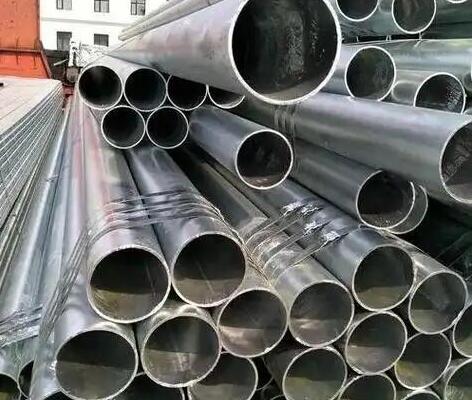
Hot-dip galvanized pipes have a thick zinc layer (up to 300μm), strong adhesion, and excellent corrosion resistance. Under standard atmospheric conditions, their designed service life can reach 50 years.
Electro-galvanized pipes have a thin zinc layer (usually 5-30μm), and their corrosion resistance is far inferior to that of hot-dip galvanized pipes, making them extremely prone to rusting.
Usage Environment Affects Service Life:
1. Dry Indoor Use
In dry indoor environments, the service life of galvanized steel pipes is generally over 50 years because there are fewer corrosive factors in such environments. In places like office buildings and residences, the zinc layer is less prone to corrosion.
2. Outdoor Use (Industrial, Humid Environments)
In outdoor environments, galvanized steel pipes are exposed to air, moisture, and other corrosive substances, with a typical service life between 20 and 50 years. The lifespan varies greatly depending on the specific level of exposure. Coastal or industrial areas may approach the lower limit, or environments like industrial workshops or kitchens may have high humidity or corrosive gases.
If environmental pollution is severe or there is contact with corrosive substances, the lifespan may be shortened to 10-15 years. This is because salt or pollutants in the air accelerate corrosion. This lifespan can be achieved with measures such as thickening the zinc coating.
3. Underground Use
In underground environments, the service life of galvanized steel pipes depends on the corrosivity of the soil and the chemical composition of the groundwater. Generally, it can be used for 25-50 years.
In highly corrosive soils, such as those containing high concentrations of acids, alkalis, or salts, the service life may be shortened to 10-20 years. Cathodic protection or a higher level of anti-corrosion treatment (such as a
3PE anti-corrosion coating) is recommended.
4. Special Uses
If used as a water supply pipe, the internal components will quickly rust and corrode within a few years, polluting the water and endangering health. The use of galvanized pipes as water supply pipes has been banned in China since 2000.
5. Maintenance and Care
Regular inspection and maintenance can significantly extend the service life of galvanized steel pipes. Timely detection and repair of corrosion or damage can prevent more serious problems.
How to Effectively Extend Service Life?
1. Protection During Installation
Avoid Damage: Handle and install carefully to prevent bumps and scratches on the zinc coating. If the surface is scratched, be sure to apply zinc-rich repair paint immediately; otherwise, the damaged area will become the starting point for corrosion.
Cut Treatment: The exposed steel parts of the pipe ends after cutting must also be coated with anti-rust paint.
2. Surface Cleaning
Regularly remove dust, oil, and standing water from the pipe surface. If dirt adheres for a long time, it will create a localized damp environment, accelerating corrosion.
3. Anti-corrosion Upgrade
For pipelines in particularly harsh environments, consider applying an additional layer of epoxy paint or asphalt paint over the galvanized layer to create a "double-layer" anti-corrosion coating.
4. Soil Corrosion Treatment
If the pipeline must be buried in highly corrosive soil, in addition to conventional anti-corrosion coatings, cathodic protection (such as sacrificial anode method or impressed current method) is currently a very effective and widely used protective measure.
Read more: MS and GI Pipe Difference or GI Pipe Specifications and Uses
 sales@hu-steel.com
 English
 Español