What is 20G Seamless Steel Pipe?
20G Seamless steel pipe / tube refers to seamless steel pipe manufactured according to the Chinese national standard
GB/T 5310 (current version GB/T 5310-2023 "Seamless Steel Tubes for High-Pressure Boilers"), specifically designed for high-temperature and high-pressure environments. It is one of the most widely used carbon steel grades in power plant boilers, industrial boilers, and high-pressure pipeline systems.
In 20G, "20" represents a carbon content of approximately 0.20%, and "G" indicates boiler steel pipe. Compared to ordinary #20 (A53/A106 GR.B) steel pipe, 20G has stricter requirements for chemical composition, smelting quality, heat treatment process, and high-temperature performance.
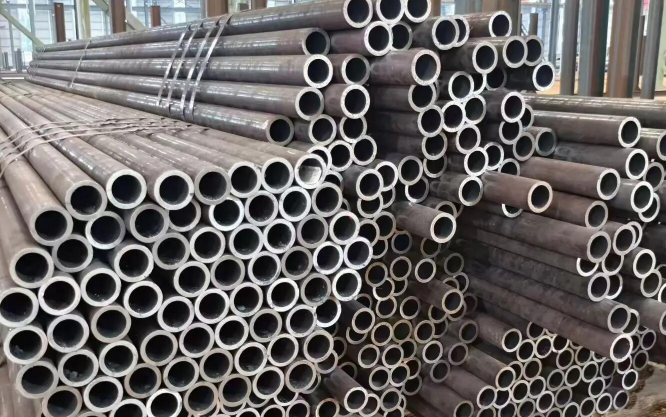
The essential differences between 20G and ordinary 20# steel pipes:
20G incorporates trace elements suitable for high-pressure environments, enhancing its physical properties such as bending and tensile strength;
20G must pass rigorous physical performance tests (bending, impact, etc.), while #20 steel does not have these requirements;
20G has strict limitations on residual elements (Cr, Ni, Cu, Mo), resulting in higher smelting quality.
Advantages of 20G seamless boiler tubes:
1. High-temperature strength and microstructure stability
20G possesses sufficient high-temperature yield strength and creep resistance within the 450℃-500℃ range. Its fine-grained microstructure after normalizing ensures microstructure stability under long-term high-temperature service, preventing performance degradation.
2. Extremely high cost-effectiveness
As a carbon steel, 20G's cost is far lower than alloy steels (such as 15CrMoG) and stainless steel, making it the most economical material choice for medium- and low-temperature boiler components. While meeting the requirements for operating conditions below 450℃, it has the lowest total life-cycle cost.
3. Wide Process Adaptability
Good Weldability: Carbon content controlled below 0.24%, low sensitivity to welding cracks, convenient on-site construction;
Excellent Cold Bending Performance: Can meet complex forming requirements such as boiler coils and U-bends;
Complete Specifications: Covers from small diameter pipes of Φ10mm to large diameter pipes of Φ530mm.
Mechanical Properties:
20G seamless boiler tubes possess good strength and toughness, capable of withstanding high temperature and high pressure environments. Their yield strength is generally not less than 245MPa, tensile strength is between 410-550MPa, and elongation is not less than 24%. This type of pipe maintains good mechanical properties even at high temperatures; for example, within an operating temperature range of 350-480℃, it can effectively resist the effects of steam pressure and temperature changes.
Heat Treatment Requirements:
20G seamless steel pipes must undergo normalizing treatment (880-940℃) to refine grains, homogenize the microstructure, and optimize comprehensive mechanical properties.
Chemical Composition and Quality Control:
- In addition to carbon content, the chemical composition includes appropriate amounts of manganese (Mn) and silicon (Si). The manganese content is generally between 0.35% and 0.65%, and the silicon content is between 0.17% and 0.37%. These elements contribute to improving the strength, toughness, and high-temperature oxidation resistance of the steel pipe.
- Quality control of the steel pipe is extremely stringent during the production process. Multiple steps are required, including chemical composition analysis, mechanical property testing, and non-destructive testing. For example, ultrasonic testing can detect internal defects such as cracks in the steel pipe, ensuring that the pipe quality meets the requirements for use in high-pressure boilers.
Important Temperature Limits:
Long-term operation of 20G seamless steel pipe above 450℃ may cause graphitization (decomposition of carbides into graphite), leading to a sharp decrease in strength. Therefore, for pipes used as heat-receiving surfaces, the maximum long-term operating temperature is recommended to be controlled below 450℃.
Applications:
1. Power Plant Boiler Systems: Low-temperature superheaters, low-temperature reheaters;
2. Petrochemical Industry: High-temperature pipelines, reactors, heat exchanger piping, and other non-corrosive media environments in oil refineries;
3. General Industrial Industry: High-pressure gas transmission pipelines, industrial boiler piping, pressure vessel connection pipelines;
4. Machinery Manufacturing Industry:
Oil drill pipes, automotive drive shafts, bearing rings, jack sleeves, construction supports, scaffolding, etc.
Specifications and Weight Calculation:
20G seamless steel pipes can be divided into hot-rolled pipes and cold-drawn pipes according to the manufacturing process.
a. Hot-rolled pipe: Outer diameter: 22-530mm; Wall thickness: 20-70mm;
Common sizes: 159×6mm, 219×10mm, 273×12mm
b. Cold-drawn pipe: Outer diameter: 10-108mm; Wall thickness: 2.0-13.0mm;
Common sizes: 32×4mm, 38×4.5mm, 51×5mm, 57×5mm
Theoretical weight per meter formula:
(Outer diameter - Wall thickness) × Wall thickness × 0.02466 = kg/m
Difference from 20# seamless steel pipe:
Although both have similar carbon content, 20G places greater emphasis on physical performance testing, such as bending, impact, and tensile strength, and contains trace elements more suitable for boiler pressure vessels. They cannot be arbitrarily interchanged.
 sales@hu-steel.com
 English
 Español