How to Select Seamless Steel Pipes for Thermal Power Plants?
A thermal power plant is a high-temperature, high-pressure, and complex environment. Different parts of the plant have vastly different performance requirements for
seamless steel pipes (SMLS Pipe). Material selection must comprehensively consider operating temperature, pressure, media characteristics, and long-term operational safety and reliability, while also taking economic factors into account. Generally, pipes can be categorized into two main types based on their application: high-temperature, high-pressure pipes and general low-pressure pipes.
Seamless Steel Pipe Material Selection for Thermal Power Plants:
The piping system of a thermal power plant is mainly divided into two categories: high-temperature, high-pressure pipes and general pipes.
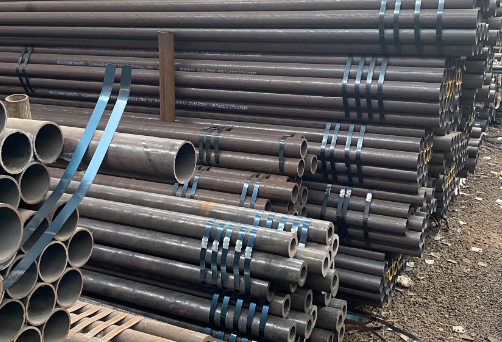
1. High-Temperature, High-Pressure Piping System
This type of pipe is mainly used to transport high-temperature, high-pressure steam, serving as the "main artery" of the power plant, and requires extremely high material performance. Its main applications include: main steam pipes, high-temperature reheat steam pipes, low-temperature reheat steam pipes, headers, connecting pipes, etc.
Pipe Performance Requirements: Excellent high-temperature creep strength and endurance strength, good oxidation resistance and thermal fatigue resistance, and reliable welding and processing performance.
Recommended Materials (Seamless Alloy Steel Pipe):
P91/T91 (10Cr9Mo1VNbN): Currently the mainstream choice for subcritical, supercritical, and some ultra-supercritical units. It is strengthened by adding V, Nb, and N elements to P9 steel, resulting in significantly better high-temperature strength, creep performance, and oxidation resistance than traditional P22 steel. It exhibits stable performance at 580–620℃ and offers high overall cost-effectiveness.
P92/T92 (10Cr9MoW2VNbN): Based on P91, approximately 1.8% tungsten is added, further enhancing high-temperature strength and creep rupture strength. Suitable for ultra-supercritical units with higher parameters, it allows for operating temperatures approximately 20–30℃ higher than P91.
P122/T122 (11Cr-0.4Mo-2W-1CuVNb): High-chromium steel with excellent oxidation and high-temperature corrosion resistance, and higher high-temperature strength. Suitable for advanced ultra-supercritical units operating above 620℃.
Traditional Applicable Materials:
P22 (2.25Cr-1Mo) is still used in subcritical units; 12Cr1MoVG is a commonly used pearlitic heat-resistant steel in Chinese power plants for superheaters and pipes with wall temperatures ≤570℃.
2. Boiler Heating Surface Tubes
Common boiler heating surface tubes mainly include: water-cooled walls, superheaters, reheaters, and economizer pipes. These are internal boiler tubes, directly subjected to flame radiation and high-temperature flue gas erosion, operating under the most demanding conditions.
Pipe Performance Requirements: In addition to high-temperature strength, these seamless steel pipes must possess extremely high resistance to flue gas corrosion and oxidation, good resistance to fly ash abrasion, and excellent heat transfer performance.
Material Selection:
Water-cooled walls (medium and low temperature section): SA210-C (carbon manganese steel), 15CrMoG, etc.
Superheaters/reheaters (high temperature section): This is one of the parts with the highest material grades. Select materials according to temperature and corrosion environment from low to high:
a. T91/P91 (medium-high temperature range);
b. TP304H, TP321H, TP316H (
austenitic stainless steel, used in high-temperature ranges with high requirements for oxidation and corrosion resistance);
c. TP347H (stabilized with niobium, good resistance to intergranular corrosion)
d. More advanced materials: Super304H (18Cr-9Ni-3CuNbN) and HR3C (25Cr-20Ni-NbN). These two are high-performance materials for high-temperature heating surfaces in ultra-supercritical units. The former is known for its high strength, while the latter excels in its superior resistance to flue gas corrosion.
3. Steam Turbine Tubing
Steam turbine tubes include steam pipes and extraction pipes. Although the temperature and pressure of the environment are still very high, the requirements for corrosion resistance are relatively lower than those for
seamless boiler tubes.
Commonly Used Materials: Materials similar to those used in main steam pipelines are often selected, such as P91, P22, and 12Cr1MoVG.
4. General Piping Systems
General piping systems mainly involve medium and low-pressure pipelines, covering water supply, condensate, low-pressure heaters, and various drainage and discharge pipelines under medium and low-pressure conditions.
Pipe Performance Requirements: Good medium-temperature strength, toughness, resistance to erosion corrosion, and weldability.
Common Materials for Seamless Steel Pipes:
20G (GB 5310): The most widely used carbon steel seamless pipe, suitable for steam pipelines with wall temperatures ≤430℃ and heating surfaces ≤450℃, economical and practical.
Q235B / Q355B (GB/T 8163): Used for conveying low-pressure media such as water, gas, and oil at normal temperatures.
15CrMoG: Suitable for water supply pipelines with slightly higher temperatures, with wall temperatures reaching ≤550℃.
Factors to Consider When Selecting Materials for Thermal Power Plants:
1) Standards and Specifications: Materials must comply with power industry standards and the material's own international/national standards (e.g.,
ASTM A335,
ASME SA213, China's GB 5310).
2) Manufacturing Process: All high-temperature and high-pressure components must be manufactured using seamless processes (hot rolling or cold drawing);
welded pipes are strictly prohibited.
3) Quality Assurance: Suppliers should provide complete quality certification documents and conduct incoming inspections, including chemical composition, mechanical properties (especially high-temperature creep testing), non-destructive testing (UT, RT, etc.), and metallographic analysis.
4) Economic Efficiency: While ensuring operational safety and design life (typically 20–30 years), the material solution with the best overall benefits should be selected, taking into account both initial investment and long-term maintenance costs.
Read more: Low, Medium and High Pressure Boiler Tube or Boiler Tube Size Chart
 sales@hu-steel.com
 English
 Español