What is a Cold-Formed Rectangular Steel Pipe?
A cold-formed
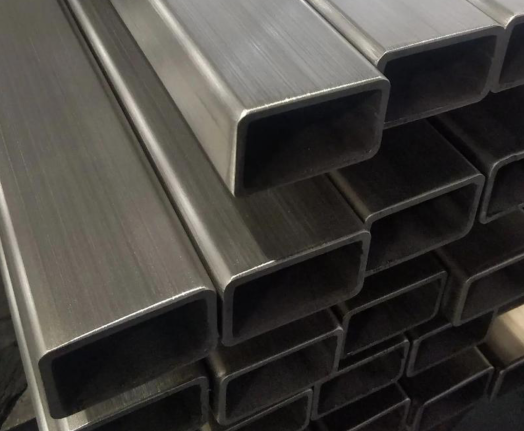
rectangular steel pipe is a hollow steel pipe manufactured by bending steel strip or plate into a rectangular cross-section shape through a series of continuous rolling dies at room temperature (or below the recrystallization temperature), and then welding the seams together using high-frequency welding or other methods.
Simply put, it is a rectangular steel pipe rolled directly by cold rolling without heating. The manufacturing process of rectangular pipe mainly includes: raw material preparation, room temperature cold rolling, welding, straightening, cutting, and surface treatment.
Characteristics of Cold-Formed Rectangular Steel Pipe:
Advantages:
1. High Dimensional Accuracy and Excellent Surface Quality
Due to cold processing, the product dimensions are precisely controlled, the surface is highly smooth, and there is no oxide scale produced by hot rolling, resulting in a better aesthetic appearance.
Surface roughness Ra≤0.8μm, allowing for direct electroplating or spraying, eliminating the need for polishing.
Compared to the oxide scale on the surface of hot-rolled pipes, the corrosion resistance of cold-rolled pipes is improved by more than 50% (ASTM A500 test data).
2. High Efficiency and Low Cost
The continuous and highly automated production process results in high material utilization, making it the most economical method for manufacturing rectangular steel pipes. Compared to hot-rolled pipes, cold rolling eliminates the need for heating, reducing energy consumption by approximately 40%, and allows for the production of thinner-walled pipes.
3. High Flexibility: The same production line can produce various specifications of rectangular and square pipes by changing the molds, enabling rapid response to market demands.
4. Optimizable Cross-Sectional Properties: By altering the forming process, pipes with different corner shapes (e.g., rounded corners, right angles) and wall thickness distributions can be produced.
Disadvantages and Limitations:
1. Existence of Weld Seam: The pipe body has a longitudinal weld seam, which is a potential weak point. Although modern high-frequency welding technology is mature, its reliability is still lower than that of
seamless pipes under extremely harsh pressure and fatigue conditions.
2. Residual Stress: Cold bending generates residual stress in the material, which may affect subsequent processing or performance under specific environments.
3. Wall Thickness and Size Limitations: Typically used for producing thin-walled to medium-thick-walled pipes. Producing pipes with extremely thick walls or ultra-large cross-sections is quite difficult.
4. Corner Performance: Due to the intense cold deformation experienced in corner areas, their toughness may be slightly lower than that of flat areas.
Common Standards:
Europe:
EN 10219 "Cold-formed welded structural hollow sections"
American:
ASTM A500 "Cold-formed welded and seamless carbon steel structural tubes"
China: GB/T 6728 "Cold-formed hollow sections for structural purposes"
Main Applications of Cold-Formed Rectangular Steel Pipes:
Cold-formed rectangular steel pipes are the most widely used rectangular steel pipes due to their excellent cost-effectiveness, and are found in various industries:
1. Building Structures: Medium-sized specifications such as 80×40×2mm are preferred for curtain wall joists, stair railings, beams and columns of building steel structures, and roof trusses and girders of large public buildings such as stadiums and airports. Note that galvanized versions (zinc coating ≥80g/㎡) should be selected for coastal areas.
2. Machinery Manufacturing: Shells, supports, guide rails, and conveyor frames for various mechanical equipment. High-precision cold-rolled tubing (e.g., 30×15×1mm) is recommended for use in automated equipment guideways, with tolerances meeting H7 standards.
3. New Energy Industry: Photovoltaic brackets commonly use 60×40×2.5mm specifications, requiring wind pressure resistance ≥0.6kN/㎡.
4. Vehicles and Transportation: Body frames and chassis components for automobiles, trucks, buses, and subways.
5. Warehousing and Logistics: Support structures for heavy-duty racks and storage sheds.
6. Infrastructure: Bridge railings, light poles, and signal towers.
7. Home Decoration: Furniture frames, stair handrails, and display racks.
Comparison with Hot-Formed Rectangular Tubes:
Cold-Formed Rectangular Steel Tubes: Cold roll forming + welding process.
Features: High dimensional accuracy, good surface finish, high production efficiency, lower cost, suitable for large-volume purchases.
Typical Standard: EN 10219
Hot-worked rectangular steel tubes: Hot-expanded after high-temperature rolling/extrusion or welding
Characteristics: Generally lower dimensional accuracy, rougher surface, but better toughness and ductility, and lower residual stress. Slower production efficiency and higher cost.
Typical Standard:
EN 10210
Conclusion:
Cold-formed rectangular steel tubes are efficient and economical structural materials manufactured through cold rolling and welding processes, meeting over 80% of the market demand for rectangular tubes. They are the preferred choice when your project is cost-sensitive, requires large-volume production, and is used in conventional building and mechanical structures. Only when facing extreme conditions such as extreme low temperatures, high fatigue, heavy corrosion, or special pressure conditions should you consider more expensive hot-worked or seamless tubes.
Read more: EN 10210 Hot-Formed Structural Square Tube Selection Guide
 sales@hu-steel.com
 English
 Español