In modern construction and high-end equipment manufacturing, the performance requirements for structural materials are becoming increasingly stringent.
Hot-formed structural square tubes under the
EN 10210 standard, with their homogeneous cross-sectional properties, excellent toughness, and reliable durability, have become the preferred material for critical projects such as bridges, marine engineering, heavy-duty factories, and earthquake-prone buildings. This article aims to clarify the concept and how to select these
high-end square tubes to help you make informed technical decisions in your projects.
Does Seamless Square Tube refer to EN 10210 Square Tube?
No. They overlap but are distinct. Seamless square tube specifically refers to square tubes formed integrally in one piece through processes such as piercing, hot rolling, or cold drawing, without any welds. Compared to welded square tubes, seamless square tubes, due to their continuous structure, typically possess superior pressure-bearing capacity and fatigue strength.
What is EN 10210 pipe?
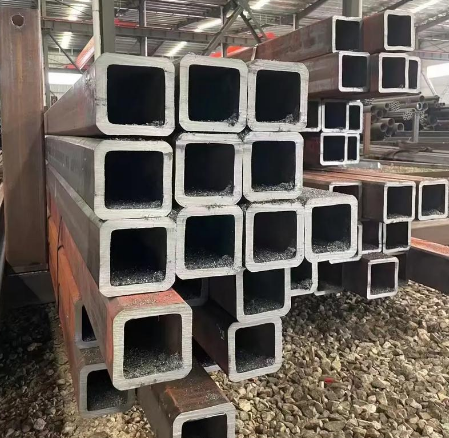
EN 10210 is the European standard for hot finished structural hollow sections of non-alloy and fine-grained steel. It doesn't specify "seamless" pipe in the traditional sense, but rather square pipes formed through hot-working processes (such as hot rolling, hot extrusion, or integral hot expansion after welding). This process eliminates internal material stress, resulting in highly uniform cross-sectional properties (including the weld area). This leads to high standards in strength, toughness, especially low-temperature impact resistance and corrosion resistance, with overall performance comparable to or even surpassing some seamless pipes.
The core of EN 10210 standard pipes lies in their hot-working state. They can be produced through two main processes:
a. Seamless hot rolling: Direct hot rolling, resulting in
seamless pipes.
b. Post-weld hot working: First welded into a pipe, then integrally hot-expanded or hot-rolled. This process completely eliminates weld stress, fusing the weld area microstructure with the base material, achieving uniform properties.
The core difference lies in the manufacturing process: seamless square tubing emphasizes a "seamless" manufacturing process, while EN 10210 certified square tubing emphasizes the final state and performance of "hot-worked" tubing. It may be made using a seamless process or a process of homogenization through hot working after welding. It provides the market with high-end hot-worked products with performance comparable to seamless tubing, offering a wider range of choices.
Factors to Consider When Purchasing EN 10210 Square Tube:
1. Application Scenarios
When selecting EN 10210 square tubing, the first consideration should be its application scenario. Due to its high toughness, good fatigue performance, and excellent weldability, EN 10210
carbon steel square tubing is preferentially used in applications with extremely high safety and durability requirements, such as building structures, machinery manufacturing, the automotive industry, and shipbuilding. For example, in the construction industry, hot-formed square tubing is often used in critical support structures and frames, effectively bearing the weight of the building and external loads; in machinery manufacturing, it can serve as transmission components and load-bearing members, improving the overall stability and service life of equipment. Clearly defining the application scenario is a crucial first step in selecting high-quality hot-worked structural square tubing.
Typical Applications:
Critical Load-Bearing Structures: Main trusses of large stadiums, transfer trusses of high-rise buildings.
Dynamic Load and Fatigue-Sensitive Parts: Crane booms, main bridge structures.
Harsh Environments: Offshore platforms, chemical structures, facilities in low-temperature regions.
Nodes requiring high uniformity of cross-sectional performance.
Note: If the project is only a standard static frame and cost is sensitive,
EN 10219 cold-formed welded pipe may be a more economical choice.
2. Size and Wall Thickness Selection
When purchasing, pay attention to the size and wall thickness of the thermoformed square tubing. Square tubing specifications are expressed as: outer side length (A) × outer side length (B) × nominal wall thickness (t) × length (L). For example, a 130*130*4-8 square tubing refers to a square tubing with a side length of 130 mm and a wall thickness between 4 mm and 8 mm.
When selecting, the wall thickness must be determined through structural calculations to ensure that it meets the requirements for strength, stiffness, and stability. Choose an appropriate wall thickness based on actual needs. Thicker wall thickness provides greater load-bearing capacity and resistance to deformation, but it also increases material costs. A proper assessment of project requirements and selection of the appropriate wall thickness is crucial.
Note: Wall thickness tolerance requirements should be clearly defined during procurement. For critical components, a "positive tolerance" or "minimum wall thickness" guarantee can be specified.
3. Material Grade and Performance Requirements
Steel material is also a key factor to consider when purchasing hot-formed square tubing. Hot-formed structural square tubing under the EN 10210 standard typically uses low-alloy high-strength steel or carbon structural steel, which has good weldability and processing performance.
The EN 10210 standard mainly includes steel grades such as S235, S275, and S355 (corresponding to minimum yield strengths of 235, 275, and 355 MPa). Among them, S355J2H is the most commonly used grade, offering good low-temperature impact toughness while ensuring strength.
When selecting, specific material information, including chemical composition and mechanical property data, should be obtained from the supplier to ensure that the selected product meets project requirements. Request material certificates (certificates 3.1 or 3.2) conforming to EN 10210 standards from suppliers, and verify that key data such as steel grade and impact energy (KV value) meet design specifications.
4. Surface Treatment and Corrosion Protection
When purchasing hot-formed square tubing, pay attention to its surface treatment and corrosion resistance. Hot-formed square tubing typically leaves with a "hot-rolled black skin" finish or has undergone sandblasting (shot blasting). If corrosion protection is required, it should be determined according to the corrosion environment category defined in ISO 12944:
C2-C3 (General Outdoor): High-quality anti-corrosion coating system.
C4-C5 (High Corrosion, Coastal):
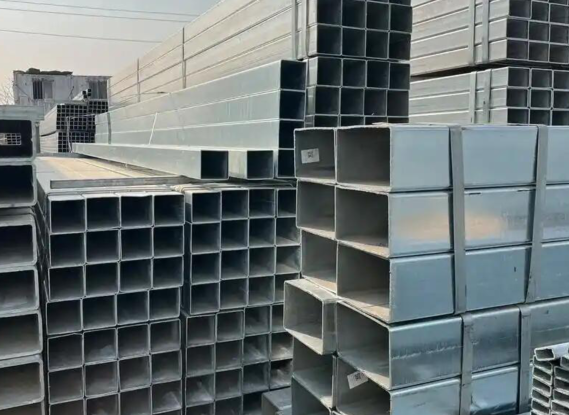
Hot-dip galvanizing or a "galvanizing + coating" composite system is a reliable choice.
These treatments improve the corrosion resistance of the steel pipe and extend its service life. In humid environments or environments with corrosive media, it is recommended to choose carbon steel square tubing with anti-corrosion treatment to ensure it is not prone to rust or corrosion during use.
5. Supplier Evaluation and Qualification Verification
During the selection process, the supplier's reputation and service, as well as their qualifications, should be considered. Choosing a reputable manufacturer or supplier ensures guarantees in terms of quality, delivery time, and after-sales service. When communicating with suppliers, inquire about their product quality control processes, testing standards, and whether they provide relevant quality certification documents, such as EN10210 certification.
6. Procurement Budget
The purchaser should also have a reasonable budget. EN 10210 pipes are more expensive than ordinary welded pipes, but their superior performance reduces safety risks, lowers maintenance costs, and extends structural lifespan, thus demonstrating greater long-term value in critical projects.
The price of EN 10210 thermoformed square tubing is affected by various factors such as raw material prices, production processes, and market supply and demand. When developing a budget, these factors must be comprehensively considered to ensure that project costs are controlled while maintaining quality.
FAQs:
1) What are the commonly used steel grades included in the EN 10210 standard?
The main steel grades are classified based on minimum yield strength:
S235J2H: Yield strength ≥ 235 MPa, basic grade
S275J2H: Yield strength ≥ 275 MPa, commonly used grade
S355J2H: Most commonly used, yield strength ≥ 355 MPa, combining strength and toughness
S355K2H: Higher impact toughness requirements
S460NH: High strength grade, yield strength ≥ 460 MPa
2) When must EN 10210 square tubing be selected?
When your project meets any of the following conditions, it should be given priority:
1. Critical load-bearing structures: main trusses of large stadiums, transfer floors of high-rise buildings
2. Dynamic/fatigue loads: crane booms, bridge main bodies, frames of vibrating equipment
3. Harsh environments: offshore platforms, low-temperature areas (below -20°C), chemical environments
4. High safety requirements: buildings in earthquake zones, densely populated areas
5. Complex joints with extremely high requirements for weldability and toughness
3) What quality documents should be requested when purchasing European standard square tubing?
Material Certificates:
3.1 Certificate: Manufacturer's Declaration (Most basic)
3.2 Certificate: Third-party Testing Report (More reliable)
The testing report should include:
Chemical composition analysis (C, Si, Mn, P, S, etc.)
Mechanical properties (yield strength, tensile strength, elongation)
Impact test results (KV value, especially for J2H and K2H grades)
Dimensional inspection records
4) How to choose in a marine environment?
Recommended material: S355J2H or S355K2H (ensuring low-temperature toughness)
Corrosion protection: Hot-dip galvanizing or thick-film epoxy heavy-duty anti-corrosion coating is preferred.
5) What if small batches or special specifications are needed?
Small batches: Most reputable steel mills have minimum order requirements (usually 3-5 tons). Small batches need to be purchased through large trading companies, which will affect the price and delivery time.
Special specifications: Non-standard sizes/wall thicknesses can be customized, but mold fees and longer production cycles are required, and the minimum order quantity is higher.
Conclusion:
The selection of thermoformed structural square tubing under EN 10210 certification requires comprehensive consideration from multiple aspects. Clearly defining the application scenario, selecting appropriate dimensions and materials, paying attention to surface treatment, choosing reputable suppliers, and setting a reasonable budget are all crucial steps in ensuring the purchase of high-quality thermoformed structural square tubing. This article aims to help readers make more informed decisions when selecting carbon steel structural square tubing, thus ensuring the smooth progress of projects.
Read more: Material Selection for Square and Rectangular Tubes or EN 10210 Square Tube Size Chart
 sales@hu-steel.com
 English
 Español