sales@hu-steel.com
 English
 Español
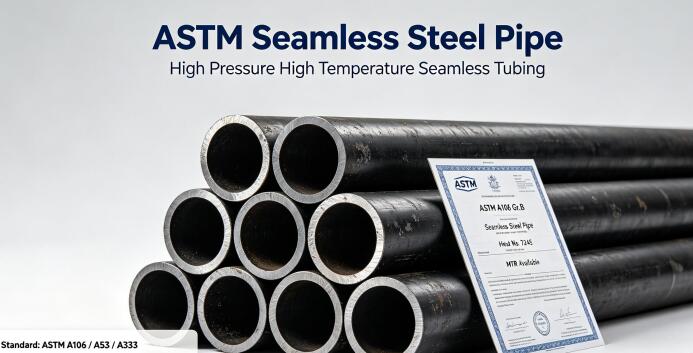
ASTM standards (such as ASTM A53 and ASTM A106) are widely used for seamless steel pipe. Quality inspection is essential to ensure that the pipe meets the required material, dimensional, and performance specifications. This guide covers the key inspection categories, test methods, and selection guidelines to help engineers and buyers understand the quality assurance process.
| Category | Key Test Methods | Purpose |
|---|---|---|
| Chemical Composition | Infrared C/S analyzer, Spectrometer | Verify material grade (e.g., ASTM A106 GR.B) |
| Dimensional & Shape | Micrometer, Caliper, OD/ID gauges | Ensure compliance with specified sizes |
| Surface Quality | Visual inspection, Ultrasonic, Eddy Current | Detect surface cracks and defects |
| Mechanical Properties | Tensile test, Hardness test, Flattening test | Confirm strength and ductility |
| Corrosion Testing | HIC test, SSCC test | Evaluate resistance to corrosive environments |
| Metallographic Analysis | Low/high magnification inspection | Assess microstructure and grain size |
| Thread & Coupling | Thread gauge inspection | Ensure thread quality for oil/gas applications |
ASTM Seamless steel pipe quality inspection mainly includes the following items.
1. Chemical Composition Analysis
Instrument analysis and chemical analysis can be used. For chemical analysis of the sample, there are sub-melting samples, ingot drill cuttings, and pipe samples. Smelting samples generally use instrumental analysis; pipe samples of finished products use chemical analysis and analysis together. Commonly used chemical analysis instruments are: infrared carbon and sulfur analyzer, direct reading spectrometer, X-ray fluorescence spectrometer.
2. Dimensional and Shape Inspection
Check the contents include: wall thickness, diameter, length, curvature, ovality, port slope and blunt angle, and the shape of the cross-sectional shape of the steel pipe.
3. Surface Quality Testing
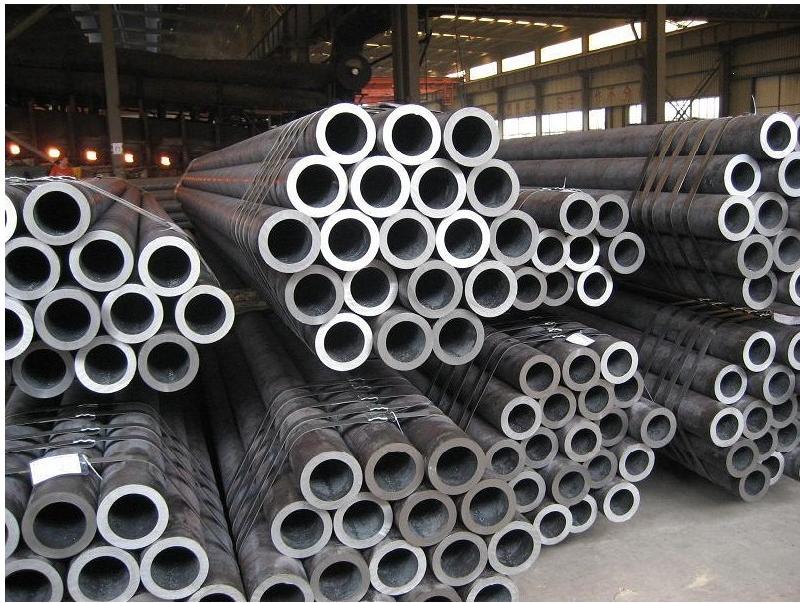
Artificial eye examination and non-destructive examination are used. There are many nondestructive testing methods, such as: ultrasonic flaw detection, eddy current testing, magnetic particle inspection, magnetic flux leakage testing, electromagnetic ultrasonic flaw detection, and penetration testing.
● For surface or near-surface defects: Eddy current testing, magnetic particle testing, magnetic flux leakage testing, and penetrant inspection are suitable.
● Penetrant inspection is limited to the inspection of open defects on the surface of the steel pipe.
● Magnetic particle inspection, magnetic flux leakage testing, and eddy current testing are limited to ferromagnetic materials inspection.
● Eddy current flaw detection is more sensitive to point defects, while other flaws are sensitive to cracks.
● Ultrasonic flaw detection has a relatively rapid response to the test of the surface of the steel pipe, but there are still some difficulties in the qualitative analysis of the steel pipe, and the ultrasonic inspection is also limited by the shape and grain size of the steel pipe.
4. Mechanical Properties and Corrosion Testing
Mechanical properties tests (tensile test, ductility test, hardness test), hydraulic test, and corrosion test (intergranular corrosion test, hydrogen cracking resistance test - HIC, sulfur sulfide stress cracking test - SSCC) are performed at room temperature or at a certain temperature.5. Technology Performance Test
Including flattening test, ring pull test, flaring and curling test, and bending test.
6. Metallographic Analysis
Including low magnification and high magnification inspection.7. Thread Parameter Testing for Petroleum Pipe
Including coupling detection, pipe thread detection, and pipe body and coupling after tightening test.
d. For corrosion resistance: HIC and SSCC tests are critical for sour service applications (e.g., oil and gas pipelines).
Q1: Which ASTM standards apply to seamless steel pipe quality inspection?
A: The most common standards are ASTM A106 (high-temperature service), ASTM A53 (general-purpose), and ASTM A333 (low-temperature service). Each specifies different inspection requirements.
Q2: What is the most important quality inspection for seamless pipes?
A: Ultrasonic testing and tensile testing are generally considered the most critical. Ultrasonic testing detects internal defects, while tensile testing verifies mechanical properties.
Q3: How does chemical composition analysis affect pipe quality?
A: Chemical composition analysis ensures the material meets the required grade specifications (e.g., carbon content, alloying elements). Deviations can compromise strength, weldability, and corrosion resistance.
Q4: What is the difference between NDT and destructive testing?
A: NDT (Non-Destructive Testing) does not damage the pipe; it includes methods like ultrasonic, eddy current, and magnetic particle inspection. Destructive testing involves cutting or breaking samples for mechanical and metallurgical analysis.
Related resources:
Related information
Copyright @2017 Hunan Standard Steel Co.,Ltd and Husteel Industry Group All Rights Reserved